Krootchey – Qu’est-ce Qu’il A (d’plus Que Moi Ce Négro Lá) [DE167]

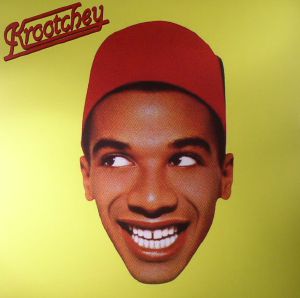
Philippe Krootchey was a musician, DJ, radio and television host born in Versailles, France in 1954. In 1984 Krootchey released his debut single Qu’est c’qu’il a (d’plus que moi ce négro là)’ on disco label Casablanca Records. Subsequently the single was re-released the same year but sung in English as Whatazzy’. For this release he teamed up with former Love International bandmate Fred Versailles, who shared his love for Kraftwerk and Yellow Magic Orchestra as well as glam rock and 70’s black American soul music. Fred remembers, The idea was to send a message about racism against black people with a humorous tone. The French title translates to What has this nigger got, that I do not have’ Reversing the racial scales, Philippe (who is black) would get the girls and the fame, making white people jealous. It was Philippe’s tactful way to joke about racism he had experienced and overcame.’ The result is a slick synthetic funk and electro boogie reminiscent of Grandmaster Flash and Afrika Bambata. Philippe rap and subverting racism at the same time. On the B-side is Voodoo’ a slowed down instrumental dub version that stretches out the original to over 7-minutes. Sadly on September 2, 2004 Philippe Krootchey died of a cerebral aneurysm, just short of celebrating his 50th birthday.

listen

Krootchey – Qu’est-ce Qu’il A (d’plus Que Moi Ce Négro Lá) [DE167]

Shoc Corridor – A Blind Sign [DE164]

SHOC CORRIDOR - A Blind Sign (reissue)

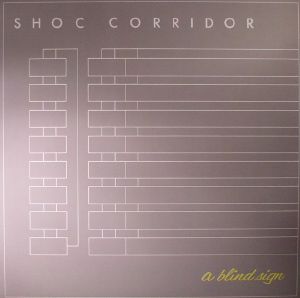
Shoc Corridor was the London post-punk quartet of Paul O’Carroll (Voice, Synth), Andy Garnham (Synth, Drum), Chris Davis (Guitar, Bass, E-Bow) and Nogi Prass (Synth) named after the Sam Fuller film from 1963. The group recorded a 4-song demo during 1981 in a tiny flat Chris shared with Nogi in Notting Hill. As their collection of instruments grew they set up studio a few blocks away in Andy’s flat at 20 All Saints Road. There they re-recorded Sargasso Sea’ along with On Reflexion’ on a TEAC reel-to-reel 4-track machine. In the summer of ’82, the band was booked into Decibel Studios in Stoke Newington for two and a half days with Mark Easton of Shout Records, where they reworked the two songs. The group usually worked through studio experimentation rather than constructing their songs in a conventional way. Their equipment list included a Korg MS-20, Wasp, Pro-One, Roland TR-808, WEM Copicat, guitars, bass, e-bow and an assortment of effects pedals. On Reflexion’ began as a Blancmange backing track, since Stephen Luscombe would sometimes use Andy’s 4-track, Korg MS-20 and drum machine. Chris has memories of Paul disappearing from time to time to the neighboring graveyard for inspiration, where they had to procure him from to lay down vocals. Their debut 3-song 12′ single, A Blind Sign’, was released in October 1982 on Shout Records. For this re-issue we’ve included the original skeletal Sargasso Sea’ 4-track demo from 1981. Evocative and dreamy, the music escorts you on a tour of icy landscapes, with Paul’s rich vocals guiding the way.

listen

Shoc Corridor – A Blind Sign [DE164]

Bill Converse – The Shape Of Things To Come [DE158]

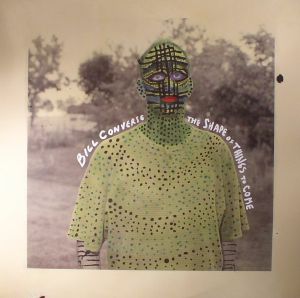
Dark Entries present the sophomore album from Austin, Texas analogue hardware enthusiast Bill Converse. Immersed in the early days of the 90s midwest rave scene, Bill began DJing at a young age in Lansing, Michigan. Luminaries such as Claude Young, Traxx, and Derrick May were key early influences. Techno, noise, ambient and tape processing are all part of his uncanny sound palette. ‘The Shape Of Things To Come’ is a 70 minute journey spread across two pieces of vinyl. It’s comprised of seven tracks recorded directly to tape with no overdubs, made at Converse’s home studio. At the time of recording, Bill was sending this material to Josh Vance (Josua Dorje Ngodup) for feedback. Most of the time Josh would respond in the form of artwork, and then Bill would create another track inspired by this feedback chain. Converse has dedicated this series of tracks to him. The songs on this album reveal a sublime influence from Detroit techno, early Chicago house, and Acid. For this album Converse slightly bumped up the tempos geared for dancefloor energy. Built around vintage synthesizer lines and gritty drum machine percussion, the tracks evoke how things have changed and how they have come to be.

listen

Bill Converse – The Shape Of Things To Come [DE158]

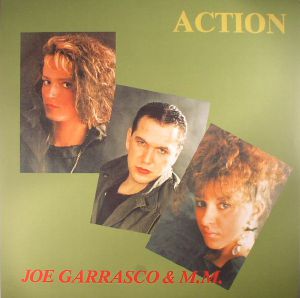
Joe Garrasco & M.M – Action [DE160]

Dark Entries presents a 4-song EP of songs by the Italo Disco duo. In 1985 Domenico Ricchini teamed up with Joe Garrasco, a DJ at Free Club a Super Dancing Discotheque in Braone, Italy. Their first composition together was another hit single for Joe Yellow, “I’m Your Lover” released in 1986. In Spring 1986 the duo began working on a new song for a yet unnamed side project. They spent a few days at 33 Studio in Milan and recorded “Love Sex For Sale” with Jimmy Mc Foy on vocals. This project was titled Garrasco’s and the single was released in 1986 on Fuori Di Testi. Unsatisfied with the mix, they booked a fresh session at Regson Studio in Milan to re-record the song. The result was re-naming the projecting Joe Garrasco & M.M. (for the band Marita – Marillena) and the song as “Action” released on Out Records in 1986.

listen

Joe Garrasco & M.M – Action [DE160]

M&G – When I Let You Down [DE159]

M&G was the duo of Maurizio “Sangy” Sangineto and Mirko Galli from Vicenza, Italy. Sangy began his music career in 1979 with Italian disco group Firefly and recorded a solo album ”Steps” in 1980. Two years later he co-founded Italo-disco band The Creatures and synth-funk crossover act The Armed Gang. He met young DJ Mirko Galli at L’Altro Mondo Studios in Rimini. In 1986 the pair spent a few days at Sandy Dian’s Recording Studio working on what would become their sole 12” maxi single “When I Let You Down”/ “Boogie Tonight” released on Sensation Records.

listen

M&G – When I Let You Down [DE159]

Solitary Dancer – Dualism [DE154]

Dark Entries releases ‘Dualism’, the sophomore E.P. from contemporary Montreal-based duo, Solitary Dancer. They are known for their elegant, richly-sculpted sound design and knack for propulsive club rhythms that eschew rigid 4/4 drum patterns. ‘Dualism’ opens with “Anything”, equal parts Drexciya and Dopplereffekt — full of low-end bass stabs, blipping synths; swelling and washing to a cinematic close. For the first time on a Solitary Dancer record, vocals make an appearance in the guise of a male companion who’s lamenting a lost lover. “Losing Touch” takes a classic electro beat, and through the use of elegiac pad washes, distorted bass and menacing vocals, morphs into persistently engaging shapes. The B-side’s ”Emails 2 Myself” is a suspenseful corralling of intriguing sonic elements. Its fractured 707 beats combine with melancholic strings and features vocals by Marie Davidson. Also included is the instrumental version of “Emails”, accentuating the bass drum, snare, hi-hat and melodic synth tones, sailing into the subdued evening sun of the future.

listen

Solitary Dancer – Dualism [DE154]

From Nursery To Misery – Pixies In The Woods [DE153]

From Nursery to Misery were three teenagers who grew up together on the same street in Basildon, Essex. Formed in 1987, the band was comprised of vocalists (and identical twins) Gina and Tina Fear, along with keyboard player and producer Lee Stevens. Lee invited the twins to over to record some music with him, suggesting they try singing over some instrumentals he had written and recorded on a newly purchased 4-track. They played a sum total of four gigs before splitting in 1991. Their recorded output, however, was relatively prodigious, with the band appearing on over 22 compilations, as well as self-releasing two album-length tapes ‘The Oak Tree’ (1989), and ‘Equilibrium’ (1990), and a split EP with Germany’s Nostalgie Eternelle, ‘Art is the Tool’ (1990). All these releases were home-produced, hand-made cassettes distributed and swapped via the Mail Art scene. ‘Pixies In The Woods’ is a 13-track career spanning compilation including three previously unreleased tracks. Tracks range from no-fi synth pop overlaid with ethereal, child-like vocals, to audio collages of animal noises and harrowing, double-speed monologues. Lee’s expansive synth productions, informed by the Blade Runner soundtrack, early electro records, and 4AD acts like Dead Can Dance, provided a rich, spacious platform for Gina and Tina’s sung-spoken introspective lyrics. Their songs are disarmingly direct and unfiltered, the product of three self-confessed misfits exploring difficult, often intensely personal issues.

listen

From Nursery To Misery – Pixies In The Woods [DE153]

Helena Hauff – A Tape [DE149]

Dark Entries present ‘A Tape’, a double LP of early work by Helena Hauff. ‘A Tape’ is a compilation of Helena’s earliest recordings from 2011 and 2014, originally released on limited cassette by Handmade Birds in 2015. Clocking in at over 50 minutes, this collection spans Hauff’s musical universe, from jacking acid-techno to krautish zone-outs and scuzzy feedback interludes. It’s tempting to consider it Helena’s debut album, but she views these tracks as mostly forgotten sketches left on the cutting room floor. It a gripping collection of deep, sinister analog synth sequences, industrial dissonance, and heavy percussion. Her equipment set up was a Roland Alpha Juno 2, Juno 60, TB-303, TR-707 and TR-808. Both of the discs end with Hauff stepping outside of the intentionally stiff, robotic rhythms, instead showing her skill at crafting less conventional electronic sounds.

listen

Helena Hauff – A Tape [DE149]

Silvia – Silvia LP [DE152]

Silvia is the name of a Neue Deutsche Welle (NDW ”New German Wave”) project created Tommi Stumpff and Silvia Nemanic. The pair met in Düsseldorf in the late 1970s and started dating when Tommi was the singer of punk band Der KFC. Silvia was absolutely inexperienced in musical things, she said, “I’ve played the recorder.” Tommi rented Klangwerkstatt studio for a few days in January 1982 to record his an album with his bandmate Ferdinand Mackenthun aka Käpt’n Nuss of Der KFC, but finished earlier than expected. With one extra day that was already paid for, they quickly wrote some more songs and recorded them. All they needed was a singer, so they asked Silvia. Simply titled “Silvia”, the record was released in mid-1982 on cult label Schallmauer Records, which had released many German punk, NDW, and New Wave records in the 80’s. Tommi and Käpt’n Nuss played all instruments and wrote the lyrics. Since Silvia had a very deep voice, Tommi slightly pitched up her vocals to sound higher on the recordings. The album displays Tommi’s transition from punk rock to cold electronics, EBM and eventually Techno. Tommi’s instrument set up was a Sequential Circuits Pro One and Moog Prodigy controlled by a Fricke sequencer and a Korg SQ-10 Analog Sequencer. Silvia urges the listener to save themselves and says “No miracle will happen You die tomorrow, young and guilty” evoking the urban Zeitgeist of the Cold War. All songs have been remastered for vinyl by George Horn at Fantasy Studios in Berkeley. Housed in the original jacket featuring a full color of Silvia on the front with hand drawn magenta type. Each copy includes a replica insert of the original lyrics sheet in German and a postcard featuring a black and white photo of Tommi and Silvia. Sadly Silvia passed away in 2003 and this reissue is dedicated to her.

listen

Silvia – Silvia LP [DE152]

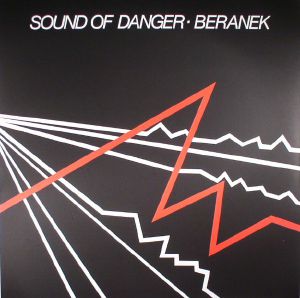
Beranek – Sound Of Danger [DE147]

Espen Beranek Holm is a Norwegian musician and comedian, born 1960 and began his music career as a clarinetist. Inspired by early synthesizer bands Kraftwerk and The Residents, he began making experimental pop music. His debut single Dra te’ hælvete’ was released in 1981 and was immediately banned by national TV/radio channel NRK due to explicit lyrics. This gave the young artist tons of publicity, helping the single spend almost 6 months on the national charts. Beranek returned to the Starholm Studios in Oslo from June – September 1981 to record nine new compositions. His debut album, Sound of Danger’, was released on Mind Expanding Records in November 1981. Nowhere near as accessible as the previous single, the album fared poorly commercially. Withdrawing from the single’s fun, kitsch pop, the album is cool and static, driven by thin rhythm boxes, cold synths, and glacial guitars. Taking heavy cues from David Bowie, all of the songs are sung in a nasally English accent, a rare occurrence in Norway at the time. The lyrics are melancholic, but tinged with paranoia. There are also upbeat tracks that evoke a prog or glam sensibility a la King Crimson, Alan Parsons, or Roxy Music.

listen

Beranek – Sound Of Danger [DE147]

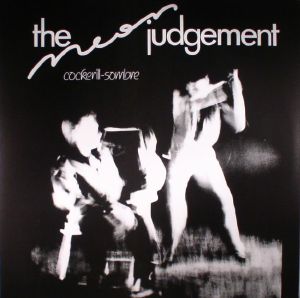
The Neon Judgement – Cockerill-Sombre EP [DE148]

The Neon Judgement hail from the small town of Leuven near Brussels, Belgium and gave birth to the New Beat and EBM scenes worldwide with the release of their first two cassettes ‘Suffering’ (1981) and ‘TV Treated’ (1982). Always a consistent duo of Dirk Da Davo (synthesizers, vocals) and TB Frank (guitar, drum machine, vocals) The Neon Judgment worked in a parallel world alongside Suicide, Cabaret Voltaire, and the Deutsche Neue Welle. In 1983 they released the infamous 4-song ‘Cockerill-Sombre’ EP containing the dance-floor smash “The Fashion Party” on Anything But Records. Dirk Da Davo says, “First we recorded and mixed the drum parts and effects on 4-track, then we bounced this mix to 2 tracks again what left us with 2 more channels to use for vocals and additional instruments.” Veering between minimalistic industrial drones, odd new wave-ish synth pop and dance music, underlain by cold, mechanical rhythms. The band combine brash and seedy lyrics, with raw synthesizer stabs and repetitive drum machine beats both aggressive and danceable. ‘Cockerill-Sombre’ was recorded in a small basement room under the watchful eyes of Ludo Camerberlin from A Blaze Colour.

listen

The Neon Judgement – Cockerill-Sombre EP [DE148]

De-Bons-en-Pierre – Crepes EP [DE139]

De-Bons-en-Pierre is a project from Beau Wanzer & Maoupa Mazzocchetti.  While Beau was visiting Brussels he stopped by Maoupa’s house to jam for a bit. All songs were recorded on April 4, 2016 between 11:00am and 11:00pm, as single live takes.“Crepes” is a 6-track EP, titled so because they ate crepes the majority of the session. Beau says, ”There was a bit of a language barrier. We’d mostly just laugh and nod when something sounded cool to us.” The equipment set up included a Roland TR-808, TR-606, SH-101, CR-78, CR-8000, two Syncussions and effects. Over 23 minutes of garbles, sludgy synths and leviathan rhythms. Surfing the slippery slope between industrial and electro, but never quite falling in, just a dip of your pinky toe to to test the temperature.

listen

De-Bons-en-Pierre – Crepes EP [DE139]

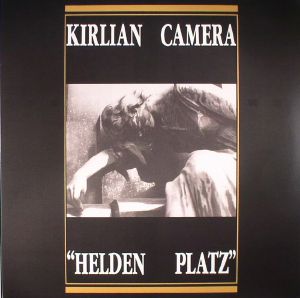
Kirlian Camera – Helden Platz [DE143]

Dark Entries is proud to release “Helden Platz”, a long out of print 12” maxi single from seminal Italian electronic act Kirlian Camera. Keyboardist/vocalist Angelo Bergamini founded the project in Parma in 1979 and named it after an electronic device that photographs the electromagnetic halo around objects and living beings. By 1980, Angelo had recruited singer Simona Buja, keyboardist Fabrizio Chiari, and bassist Mauro Montacchini. Their demo cassette, “Dawn”, attracted the attention of Italian Records, a popular independent label. Over the next few years the band would release their first mini-LP, “Kirlian Camera”, the full length “ It Doesn’t Matter, Now”, and the singles “Communicate,” “Edges,” and “Blue Room”. The latter was a significant hit, eventually landing them a deal with Virgin Records. By 1987 the line up consisted of Angelo Bergamini on all instruments, Charlie Mallozzi on electronic drums and Simona Buja on vocals. Virgin wanted the band to provide another hit single in order to exploit the success of “Blue Room”, refusing to release the band’s less commercial material. In 1987 the band went Lark Studio at Carimate Castle, Italy to record with Italo disco producer Oderso Rubini. Thanks to the insistence of Bergamini, the label agreed to release “Helden Platz”, German for “Heroes’ Square,” in 1987. The song features Kirlian Camera’s brand of dark wave, marked by haunting melodies, slow moving synth washes, and orchestral strings. The song features the stark, dramatic vocals of Simona Buja, who sings about the “Blue blood of Winter” in a tale of Germany and Austria during World War II. Included here is the extended 12” mix, the 7” edit, plus the original B-side “Burial”, an instrumental that evokes a funeral procession soundtrack.

listen
Kirlian Camera – Helden Platz [DE143]

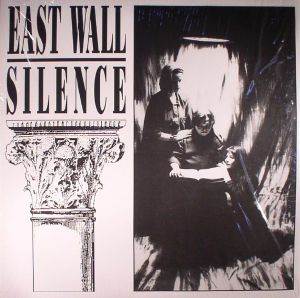
East Wall – Silence [DE145]

East Wall was an Italian electronic dark wave band started by Fabrizio Chiari (ex keyboardist of Kirlian Camera) and Wilma Notari in 1982. After a series of demos and live performances, the duo recruited Angelo Bergamini of Kirlian Camera to help with arrangement and synthesizers. They released their debut single ‘Eyes Of Glass’ in 1985 which had huge success in Germany, leading to a deal with ZYX. By 1991 the band consisted of Fabrizio Chiari (Synthesizer, Electronics, Keyboards), Tiziana Wells (Vocals, Synthesizer) and Angelo Bergamini (Synthesizer, Piano, Arrangement). At the beginning of the year, they recorded their next batch of songs at Prominence Studio in Cremona and A Love Sound Studio in Piacenza. “Silence” was self released by the band in 1991. The lead track ‘Silence’ was a left-over song by Kirlian Camera recorded in 1985 with vocals by Simona Buja under the alias Lorenza Larini. It was recorded largely using a variety of now-classic Roland, Yamaha, and Oberheim synthesizers. The album displays East Wall’s maturity and unique aesthetics, with instrumental pieces reminiscent of Angelo Badalamenti’ Twin Peaks score. Tiziana Wells sings with pure emotion, hypnotic at times, upbeat and carefree at others. Frankie Teardrop (of the Wierd party and the Systems of Romance blog) describes this album as “possibly the closest thing to darkwave freestyle that exists.’ We decided to expand the album, releasing it as a deluxe double LP cut louder at 45 RPM. We have also included an unreleased extended version of ‘Ice Of Fire’ and the bonus track ‘Intro’, found on the DAT tapes Fabrizio Chiari sent us.

listen

East Wall – Silence [DE145]

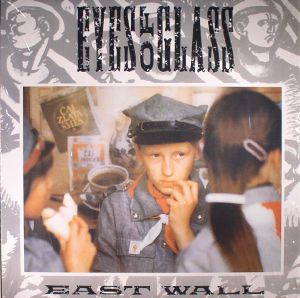
East Wall – Eyes Of Glas [DE144]

To accompany their re-release of East Wall’s superb 1991 debut album, Silence, Dark Entries has decided to put out the Italian band’s forgotten debut release, 1985 single “Eye of Glass”. Tending towards the darker end of the Italo-disco spectrum, but blessed with typically cheery synthesizer melodies and skewed female vocals, it’s a record that seems far more inspired by the earlier British new wave synth-pop movement than pleasing the clubs of Rome or Rimini. The vocal version is accompanied by a subtly different instrumental, which includes waves of warm synths and offers more prominence to the band’s bubbly electronics, throbbing arpeggio bassline, and delay-laden drum machine hits.

listen

East Wall – Eyes Of Glas [DE144]

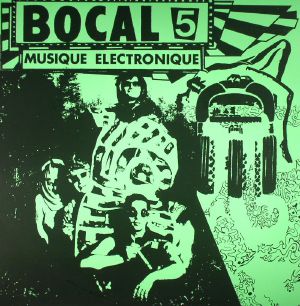
Bocal 5 – Musique Electronique LP [DE137]

Bocal 5 were a No Wave art group composed of Doc Pilot (synths, vocals), Zouka Dzaza (bass), Florian Guillou (synths), Mickey Lepron (electronic drums, bass) and Evy Tinguette (lead vocals). The project was born in November 1980 in Tours, France as the brain child of Doc Pilot. Between 1981 to 1986 Bocal 5 recorded one 7” single and a cassette-only album before taking a year off in 1984 to launch X-Ray Pop. Influenced by Erik Satie, Brigitte Bardot, Suicide and Young Marble Giants, they call their music ”minimum naive new wave.” “Musique Électronique” is a 19-track compilation of songs recorded across 1983, most of which have never been released on vinyl before. 16 tracks appeared on the “From Bocal 5 To X-Ray Pop” album originally released on cassette by Sound of Pig in 1984. Both tracks from their debut 7” originally released in MB5 1984 are included and show a progression in sound as a result of newer recoding equipment and techniques. Also present is a song from the tape compilation “Andreas N°3 L’Animal” released by Fraction Studio in 1984. Armed with a Korg 770, MS-10, Prophet Pro-One, Roland TR-707 and TB-808 they crafted their own brand of quirky synthesized electronic pop. Songs are short, concise and well structured; richly textured, moving at a quick speed with hardly a pause. Evy’s pouting, tongue-in-cheek vocals (sung in French) come together for a catchy, sensuous, danceable, eccentric psychedelic ride. This collection shows the group’s sense of humor, vitality and carefree playfulness.

listen

Bocal 5 – Musique Electronique LP [DE137]

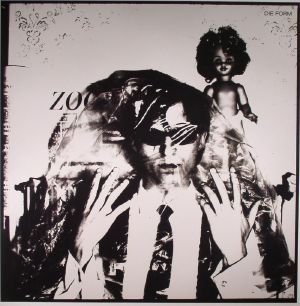
Die Form – Zoo LP [DE136]

Die Form is a French post-industrial and electronic band formed in 1977-1978. The name ‘Die Form’ means ‘(the) form/shape’ in German and is a play on the English homonym ‘deformed’ and on the French homonym ‘difforme’ (deformed). Die Form is the primary project of electronic musician and multimedia artist Philippe Fichot. He began by recording a number of experimental cassette releases in the late 1970s and formed the Bain Total label to release these early cassettes, as well as various side projects such as Krylon Hertz, Camera Obscura, Eva-Johanna Reichstag, Hurt and Fine Automatic. In 1982 Die Form released their debut vinyl album, “Die Puppe” in a limited edition of 1,000 copies. “Zoo” is a compilation of 10 tracks recorded during the “Die Puppe” sessions from 1980-82. These were the first esoteric electronic experiments, often improvised. Underlying themes of eroticism, death, and other ‘taboo’ subjects become apparent in both the music and the album artwork, which Philippe also produced. The album was recorded with entirely analog equipment, including a Roland MC4 Micro-Composer, TR-808 Rhythm Composer, ARP 2600, and Kawai 60F recorded to a Revox B77 reel to reel tape machine. Songs range from hypnotic, minimalistic proto-IDM to daring experimental sound manipulation. 4 of these songs were featured as a bonus 7” to accompany the 1989 vinyl reissue of “Die Puppe” but remixed for the project. The remaining 6 songs were also remixed and released on CD in 2001.

listen

Die Form – Zoo LP [DE136]

Jago – I’m Going To Go [DE133]

cs622941-01a-med

Jago was the studio project of Michele Violante created in Milan, Italy in 1983. The line-up also included Luciana Cirrillo aka Kynsha, who wrote lyrics and sang back up vocals. The name Jago comes from Iago, the main antagonist in Shakespeare’s ‘Othello’. In those years, Michele produced a lot of songs and published material for Full Time Records. “I’m Going To Go” was recorded at Forum Studio in Rome in 1983 and released on Full Time the same year. He made an electro-funk demo with a Gibson Les Paul, but during practice the song became soulful funk but arranged with new wave electronics. The song revolves around a slick atmospheric bassline, driving electronic percussion, and tight rhythm guitar and synths. The setup for the recording was a Casiotone MT-40 keyboard, Boss DR-55 and Sequential Circuits Drumtraks drum machines, an Akai cassette recorder, and a Revox A77 for multi-tracking. Lead vocals were done by session musician Bruno Kassar, delivering Kynsha’s playful lyrics along to the lead melody. Also on the A-side is the Instrumental Version which became a hit in New York after Larry Levan played it repeatedly at the Paradise Garage. Full Time asked Levan’s long time friend Frankie Knuckles to make a remix. It was released in 1985 as the “Plant Mix”, and is included here on the B-side. This was Frankie’s first released remix, although the record label misspelled his name as ’Frankye’. The remix clocks in at over 8 minutes, and is a dub edit made using the stereo master of the instrumental track.

listen

Jago – I’m Going To Go [DE133]

Expansives – Life With You [DE131]

Gianluigi “Gigi” Farina and Francesco Rago are to be counted among Italo disco’s true originators. Operating as a duo under many monikers, they brought us masterpieces such as Wanexa’s “The Man From Colours”, ‘Lectric Workers’ “Robot Is Systematic”, and Decadance’s “On And On”. Their sound is propulsive and ethereal in equal measure – dense, psychedelic, and tinged with melancholy. Their first composition was under the name Expansives. “Life With You” was recorded in Milan in 1981 and released on Leader Records in 1982, and features then 16-year old Xenia Monneret on lyric-writing duties. They wanted to incorporate a more electronic sound to break the classic disco mold, and in the process, they created an early, raw example of what would come to be known as Italo Disco. A thumping bass synth and processed drums set the groove, while Francesco sings of his loneliness. Tension is released when he later breaks into a Bee Gees-esque falsetto, but in the context of such an unusual song, the uncanny becomes familiar, the familiar becomes uncanny. Unfortunately they were not able to afford a professional recording studio and had to re-record each take over the same reel of tape. This caused a subtle surface noise buzz that adds to the warm analog feel of the song. On the B-side is the instrumental version with extended breaks, drum claps and dubbed out bass line.

listen

Expansives – Life With You [DE131]