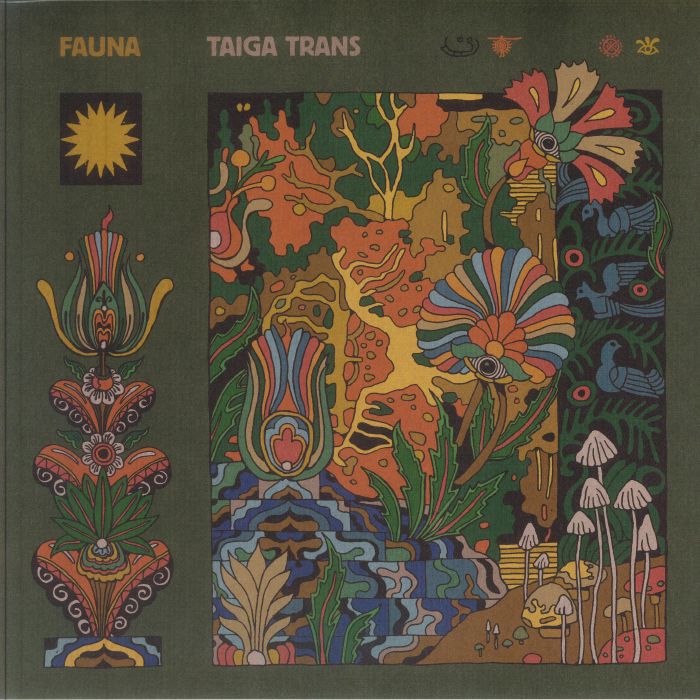
Taiga Trans, the debut album from Gothenburg-based group Fauna, is a hypnotic collision of krautrock propulsion, psychedelic ritual, and subterranean rave energy. The eight-piece Swedish outernational collective channels a multicultural, multidimensional sound that feels both deeply rooted and otherworldly. Think Goat’s feral mysticism, Can’s motorik drive, and a dancefloor at its most transcendental. Electronic textures whoosh like solar winds. Quiet percussion sighs and chatters. A jaw harp sets up a twanging bounce. An ancient saz introduces a taut riff. Suddenly a high-strung electric guitar scorches and a deep, booming bass groove drops with a four-to-the-floor kick drum thud.
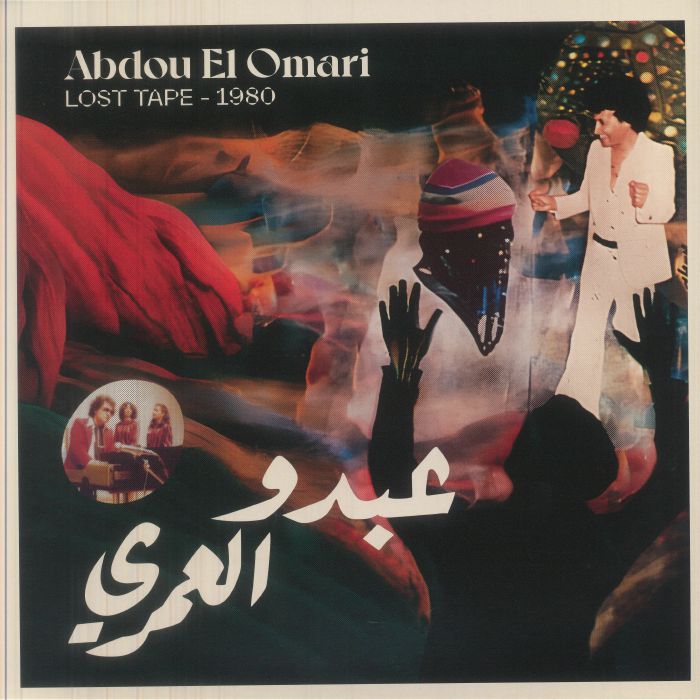
Abdou El Omari was born in 1945 in Tafraout, south of Agadir — a village suspended between the pink granite peaks of the Anti-Atlas and the waves of the Atlantic. A landscape already musical in itself. He grew up in the dry mountain light, surrounded by the rhythms of nature and Berber’s culture. Very little is known about the man — a veil of mystery still surrounds his life, only deepening the fascination. His name remains discreet, but his music continues to travel. It seems to drift from another time, another world, or perhaps from a dream shared between the blue nights of Casablanca and the silent dunes of the Sahara. In the 1970s, as Morocco was transforming, Abdou El Omari shaped a sound of his own — a visionary blend of spiritual jazz, psychedelic funk, Moroccan traditions, and early electronic experimentation. Today, his work is resurfacing, rediscovered by a new generation of listeners in search of lost horizons. This record stands among its rarest and most precious fragments.
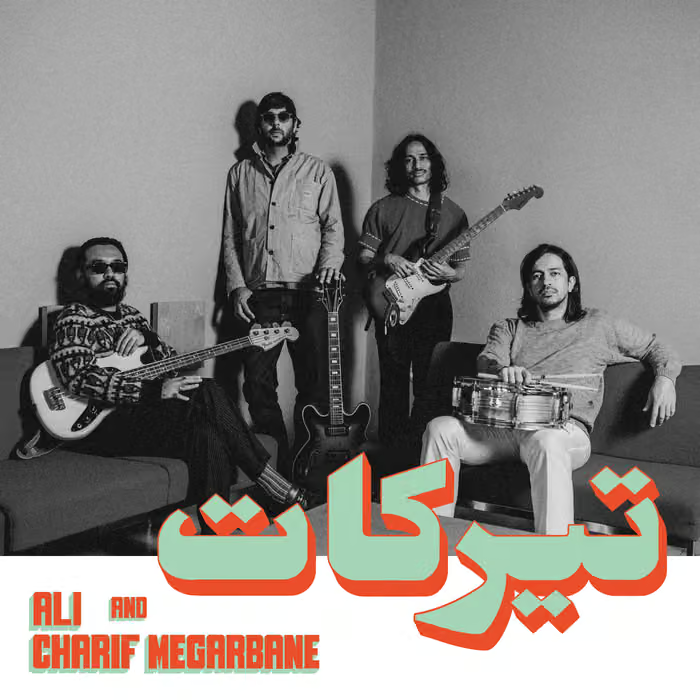
‘Tirakat’ brings together Jakarta-based trio Ali and Lebanese composer and multi-instrumentalist Charif Megarbane in a collaboration shaped by long-standing cultural exchange between Indonesia and the Arab world. Ali’s blend of 1970s Indonesian psychedelic funk, Melayu traditions, disco grooves and Arab melodic forms meets Charif’s long-running exploration of cross-regional sound, rooted in a shared musical vocabulary rather than genre. Rather than approaching the project as fusion, Tirakat reflects a way of making music that feels already interconnected. Melodies, grooves and textures move fluidly without signalling their sources, grounded in a performance-led process shaped by intuition, repetition and trust. Western instruments are played through techniques and sensibilities formed in Indonesia and Lebanon, emphasising circulation of influence. The title ‘Tirakat’ refers to a Javanese practice of discipline, patience and devotion, derived from the Arabic tariqa (“path” or “method”). This layered meaning mirrors the album’s focus on process and continuity. The result is a record that feels both contemporary and timeless, where Indonesian and Arab sounds intersect naturally through groove, texture and melody.
ARMOR, a new alias from Pascal Pinkert (Ambassade / Dollkraut). La Balade de Misrakis is the first single from the upcoming album Love Chaos, out this spring. A few years ago he visited Turkey and Lebanon to collaborate with artists such as trip-hop legend Zeid Hamdan and Egyptian singer Maii. While many of these recordings found their way into Dollkraut releases, revisiting the material sparked the need for a new outlet. With ARMOR, Pinkert dives deeper into the space between folk traditions and electronic experimentation. Hypnotic drones merge with Middle Eastern percussion, while subtle rhythmic structures fuse with immersive soundscapes.
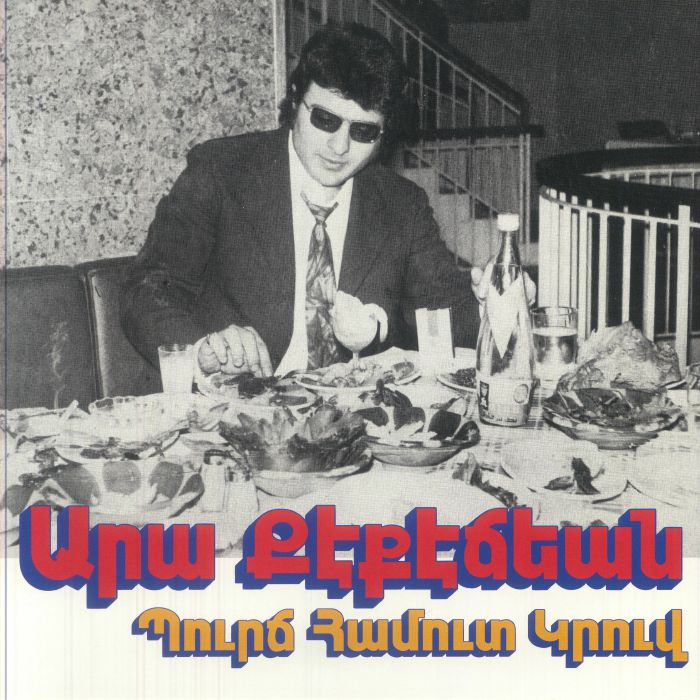
Bourj Hammoud Groove shines a spotlight on the music of Armenian-Lebanese pioneer Ara Kekedjian, who was a defining voice in Beirut’s Estradayin pop scene. Fusing disco rhythms, shimmering synth-pop and Armenian melodic sensibilities, Kekedjian created music that was rooted in his community but also sounds somehow universal. Named after Beirut’s vibrant Armenian district, this compilation brings together his most essential recordings and is accompanied by an insightful booklet with liner notes by Darone Sassounian and rare archival photos. It’s a top-tier bit of archival curation that celebrates a musical legacy that bridges cultural history with danceable grooves.
PRAED return to Discrepant with the album ‘The Dictionary of Lost Meanings’. Known for their signature blend of Egyptian Shaabi, free jazz and improvisation, the Lebanese duo behind PRAED – Raed Yassin and Paed Conca – now assemble a full orchestra for the second time taking the music to a deeper, rooted level. The duo revisit their unique blend of Arabic heritage and free jazz sensibilities with an album that keeps pushing further into strange and unexpected directions.
“This spring, I released my new album Ninety Nine Eyes. Since then, I’ve been working independently to build a tour that brings this music to life on stage — across a wide stretch of Europe, from the Balkans to Amsterdam, and onward through cities like Warsaw, Skopje, and Rome.
This journey has been fully self-initiated: reaching out to venues, confirming shows, navigating logistics — all in the spirit of keeping the music alive and shared. But none of this would exist without the incredible help of a group of local promoters who believe deeply in this music. We’re building this tour step by step, city by city — and their trust and dedication are the backbone of this road.
To sustain this momentum, I need a small push of support to help cover basic travel needs and flight tickets for the upcoming legs of the tour.
Now, I’m turning to you for support to raise 1000–1200 euros to cover essential costs: international flights and basic logistics for the upcoming leg of the tour. To make this happen, I’m opening up a very personal part of my archive:
I’m offering the first three unreleased tracks that shaped the sound of Ninety Nine Eyes — the moment when my music started to shift and evolve after Mulid El-Magnoun. These tracks are not available anywhere else.
Alongside that, I’m sharing a small collection of hand-sewed fabric eyes — each one stitched by my partner and the art director of the project, Alaa Eideh. These are not just artworks — they are extensions of the journey we’ve both taken with this album.
If Ninety Nine Eyes spoke to you — or if you believe in the road that music can carve across borders — your support means everything.”
‘Casablanca’ first started as a party exploring the depths of Arabic grooves from Northern Africa and the Middle East, brought to life by two musical legends…Parisian digger Victor Kiswell, known for his journey through the world’s rarest records and influential NTS radio sets, and Dez Andrés, a Detroit native whose roots in the city’s hip-hop and house scene are matched by his love for soul, fun, and jazz. The two artists have stepped into the studio to bring the same energy and ethos from their party to this album.
Egyptian composer YUNIS’ Ninety Nine Eyes is a work that exists outside time—equally at home in the temples of antiquity and the neon-lit voids of speculative futures. This double-sided LP (Part I and Part II, 15:14 / 16:03) merges ceremonial percussion, interstellar synthwaves, and wordless incantations into a 31-minute ritual for the infinite. Born from a three-year metamorphosis between studio and stage, and rooted in a Takhmira (a Zar ritual poem), Ninety Nine Eyes channels the archetypal quest—a search for the “land where light is seated.” Its soundscapes evoke the grandeur of forgotten civilizations and the hum of celestial machinery: droning mizmar lines and drowning tombak and duff rhythms dissolve into maximalist synth storms; choirs of phantom voices rise like starlight through the static of ages. Structured like a Sufi Hadra, the LP’s undulating peaks pull at old ways of communing with the divine—Part I builds tension, a breath before the storm, while Part II erupts into unfettered synth-drenched trance, gates flung open—only the listener can close the circle through their own interpretation.
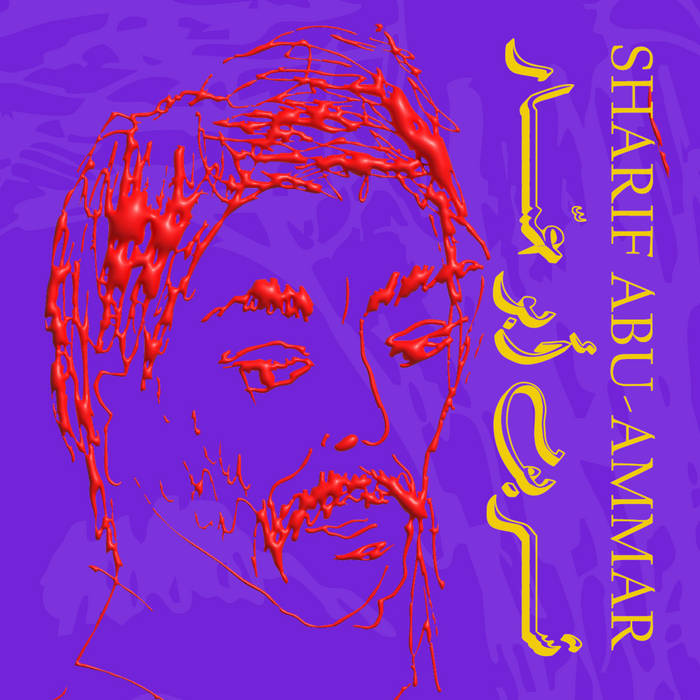
Sharif Abu Ammar (b. 1968) is a sonic agitator, cultural theorist and elusive musician who emerged from the late ‘80s transnational acid house circuits. Blurring the lines between history, memory, secrecy, and the future, he was raised between the shadow of colonial histories and the neon glare of global capitalism. His work fuses decolonial critique and the commodification of underground music, subverting both the hedonism of the scene and the exotifying gaze of the West.
El Khat’s 3rd album ‘Mute’ belies its title as it careens out of the speakers with a raucous intensity. Formed in the garages and warehouses of Jaffa and now based in Berlin, the group’s ever-expanding vision makes a defiant stand against complacency, conflict and division. Skittering drums and brass, a jagged organ, hypnotic Yemeni melodies and one-of-a-kind DIY percussion and string instruments, all meld together in an infectious, heady soundscape. Sometimes wildly raw, sometimes lush and enveloping. Always uncompromised and adventurous.
The track ‘Abyadh Aswad’ is a manifestation of Ali’s self-described Middle Eastern beats with Southeast Asian twists, specifically influenced by Indonesia. It offers tropical cruising vibes and tranquil melodies, incorporating Arabic lyrics and repetitive desert-like riffs. Floating melodies and background vocals inject a psychedelic element into the track. The lyrics themselves translate to ‘Black and white in one vision.’ On the B-side, there is an instrumental track titled ‘White Stallion.’ It’s a simply cinematic funk track with psychedelic elements and hypnotic repetitive riffs. This track aims to capture the adventurous landscape of Indonesia through music, offering a flat, chill, and contemplative vibe that would suit a cinematic soundtrack.
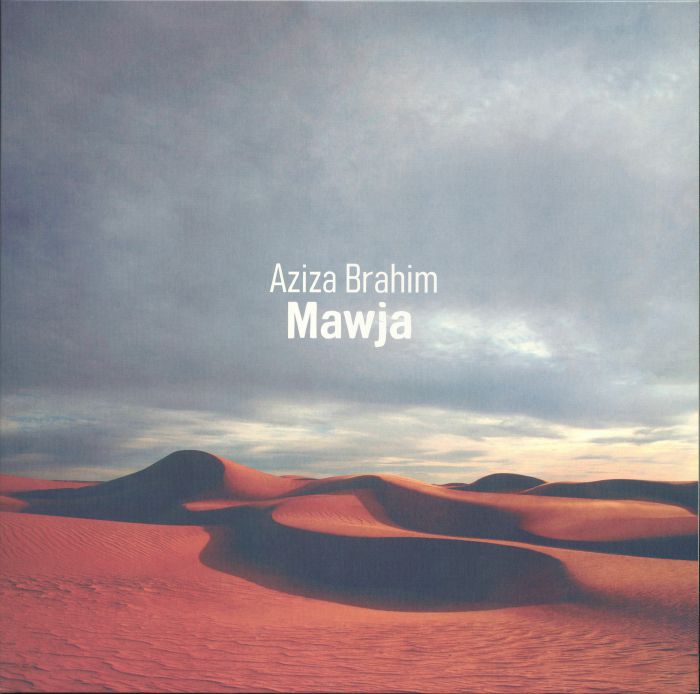
Sahrawi singer-songwriter activist Aziza Brahim’s fifth album Mawja (Wave in Hassaniya Arabic) is fashioned from a simple but powerful foundational palette: Saharan and Iberian percussion entwining with stately guitars and warm, enveloping bass. The album is co-produced by Brahim with long-time collaborator Guillem Aguilar.
(Emotional) Especial looks to the emergent producer that is Chez De Milo for a new EP that collides the energy of Glastonbury, historic echoes of the free party scene and the psychedelic electronics of Bristol and the West Country into four fresh new cuts here. ‘Et Al’ is a mystic late-night house cut with crisp hits and spooky synths keeping you on edge, while ‘Gieser’ is dark and paranoid as the churning beats and snaking leads tempt you into the shadows. ‘Kremer’ keeps you locked in a synth-heavy and transcendental suspense at the heart of the dancefloor with Egyptian folk samples and ethnic grooves and ‘Thus One’ is a razor-sharp electro closer.
A new compilation explores the far reaches of the post-punk, experimental and electronic landscape in Switzerland on Senza Decoro: Liebe & Anarchia in Switzerland 1980-1990 curated by producer / DJ Mehmet Aslan. The first single is ‘Kabyl Marabù’ by Dr. Chattanooga & The Navarones. Based out of the Italian-speaking part of Switzerland in Chiasso, the band started out playing “rupturing, dispersed sounds,” before honing their sound into a melting pot of folk, rockabilly, punk, new wave, Latin and African influences and electronics. Hallucinatory and visionary, they used their own hybrid language within their lyrics, drawing on elements of English, Spanish, French, German and even Japanese. The band’s guitarist, Franco Ghielmetti aka F.J. de Bratislava, lived in Paris for a while and frequented a local hotel / bar run by the Kabyle people (a Berber community from Kabylia in the north of Algeria). Influenced by their music and the marabout business cards collected from shops in the neigbourhood, ‘Kabyl Marabù’ is a tribute to their Berber friends, singing the names of the marabouts and using words, noises and memories from a trip to Morocco.
“Marzipan” is Habibi Funk’s first full length contemporary release courtesy of Beirut’s multi-instrumental phenom Charif Megarbane, also known as the man behind prolific Cosmic Analog Ensemble. The LP is a journey into Charif’s styling, one he terms ”Lebrary”: a vision of Lebanon and Mediterranean expressed through the kaleidoscopic sonics of library music. Drawing from artists that encapsulates the HF sound, such as Ziad Rahbani, Ahmed Malek and Issam Hajali, Charif translates these influences into an LP that is equally at home in 2023. “Marzipan” is a sonic journey that seeks to capture the full scope of Charif Megarbane’s habitus in 17 tracks. Megarbane finds a sonic through-line in his surrounding soundscapes as he draws on the chaotic energy of the crowded Beirut metropolis (“Souk El Ahad”), the warm atmosphere of the Lebanese countryside (“Chez Mounir”), or the lushness of a Mediterranean beach resort (“Portemilio”). Reflecting the aural composition of his direct surroundings into kaleidoscopic instrumentation provides a unique insight into how one musical phenomenon transposes sight into sound.
The album Malaka is Ali’s desire to incorporate Middle Eastern culture (specifically music) with the elements of 70s Indonesian rock, cinematic soul, funk, disco, and afro beat to create a new groove and sound straight from the contemporary and vibrant Indonesian music scene. The title “Malaka” itself, represents the entrance where the Middle Eastern first come to Indonesia through trading in Malacca Strait / Channel many centuries ago. With all lyrics written in Arabic, this album builds on the influence of Middle Eastern art and music, which over centuries has assimilated itself deep into Indonesian culture and way of life. This album is trying to capture those long journeys, the “cultural dialogues” of our ancestors way back in the past, and bringing it back with modern touch through musical language. Malaka promises to deliver diverse and unique sounds (experience), with the mix between Middle Eastern and South East Asian cultures, in term of music. Which can’t be found in any other parts of the globe.
Evocative and spooky contemporary prog. Meine U Teksi has absolutely nailed it to fetishist levels. It sounds like the synths were the only thing keeping the castle warm the night this was recorded. The whole record it’s made even more unnerving by the fact that the 4th track doesn’t exist.