Oráculo Records has always had a special interest in pushing electronic music towards unexplored territories, and it is precisely within this microcosm that IP307 emerges. Blending the most dub-infused and mechanical forms of electro with industrial, EBM and even post-punk, the project delivers a hypnotic, forceful and deeply cathartic sound. Behind IP307 is Israel Padilla, founder of Banshees Records and one of the leading figures of the industrial scene in the Iberian Peninsula. With “IP307.1”, he presents six interconnected compositions, each with its own distinct identity while contributing to a coherent vision of seemingly opposing styles, reimagined into a singular language.
Originally released as a tape in 2022 with the Comedy of Errors boxset. 11 songs 49 minutes. La Union Metalurgica untitled tape. Hailing from Barcelona, Spain. The new masters of true Spanish industrial. Following the now cult and under the radar L.I.E.S. LP, these new tracks solidify their standing in the world of bizzare machine music. Broken equipment and pig sounds included … this has it all MS-20 chirps, human voices being tortured, and jacked the fuck up rhythms.
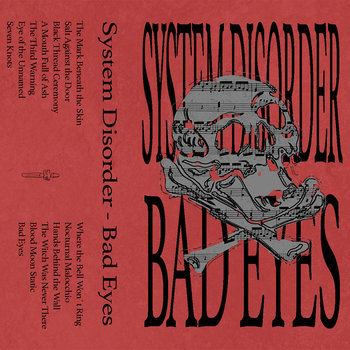
‘Bad Eyes’ is a Post-Punk Electronic Noise thirteen-track album from System Disorder, built from 808s, 909s, guitar, noise and a collection of rough electronic sounds. Rhythms shift, guitars cut through the machines, and fragments appear and disappear without always resolving. Recorded over time, assembled without a fixed formula, and left with all the rough edges intact. Now available for pre-order on Gravitational Waves.
Glaring’s release is a glorious feast of emotions. A journey into the deep, a fast rise above the sky, then back down again into the gloom. It’s incredible how many places she can guide you to. A mesmerising voyage through life, death, and everything in between. See the world through her eyes, let her machines obliterate you.
Erik Eviston is a music producer from the southwest of Ireland, based in Berlin. His work combines electronics with voice, guitar and sounds drawn from the physical world, treating found objects and instruments alike as sources of rhythm, texture and atmosphere. His coding background extends his exploration of sound into the unseen systems that shape it. Here he comes with an industrial EBM EP for Detriti.
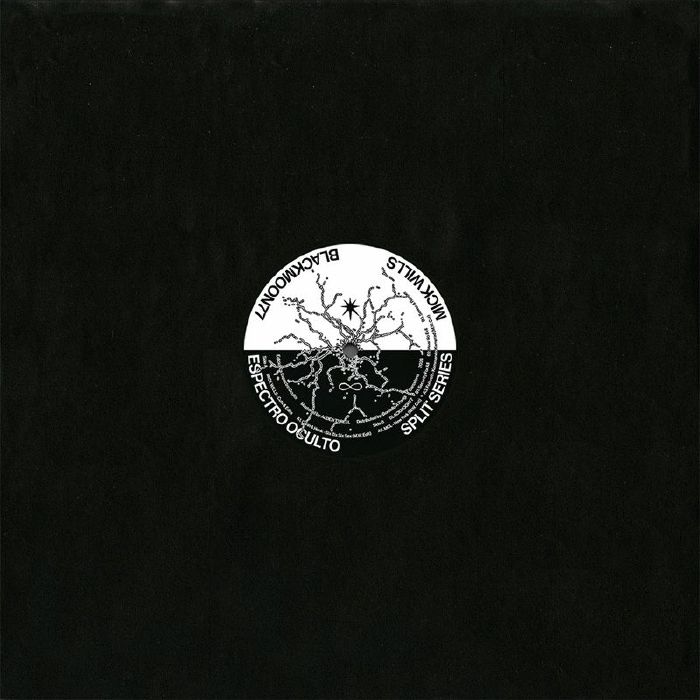
Ediciones Espectro Oculto returns with EOD003, its third release and the opening instalment of a new Split Series — a side each for two artists who deal in the shadows: Mick Wills & Blackmoon77. Mick Wills handles the A-side in familiar territory, mining the margins of European DIY synth culture for cuts & edits. A1, “Six Six Six Sex,” resurrects a forgotten wave track laid down in 1983 by Venlo duo Carin & Henk, Carin Kollenbrander’s conspicuous, sexed-up vocals carrying the unmistakable spirit of the early-’80s minimal synth underground. A2 cuts “New York” by MCL a new beat staple first issued on German’s Boy Records, tightened into a playful, dancefloor-ready tool. Closing the side, Mick Wills turns to Folkvett’s “Kommando Kamprad” — originally out on Pater Noster Ltd. in 2012 — an ethereal, out-of-body drift that pulls the mood inward. On the flip, Blackmoon77 doubles down on her signature across three originals: dark, raw and hypnotic wave built for bold & audacious DJs and fierce dancers.
Control Fields presents his debut release on X-IMG with tracks “Friction Code” & “Black Anomaly”. Control Fields is a new dark electronic project by Georgian producer Nikoloz Kikvadze, based in Tbilisi. Built around the mechanics of noise & urban decay, Nikoloz draws inspiration from the styles of EBM, dark techno & industrial to build his uniquely hypnotic & mesmerizing grooves, textures, and evolving mechanized sequences.
The veteran Italian producer Unconscious returns to X-IMG with two tracks of his signature brooding & abrasive blood soaked sound. “Tutto è una copia” (everything is a copy) is a broken beat prowler that compliments the more 4/4, yet equally evil, “Cold Hearts”.
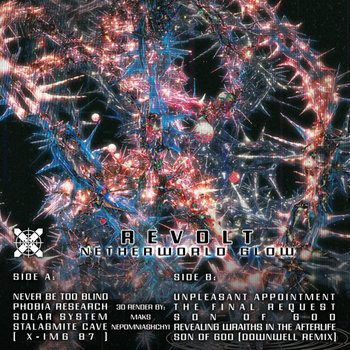
Revolt returns to X-IMG with his new album “Netherworld Glow” featuring 8 new cuts of cutting edge techno body music plus a lethal remix by Downwell. Revolt is a Warsaw based producer originally hailing from Lviv, Ukraine and has been operating at the forefront of the techno-electronic body music underground with his sharp original productions and excellent remixes. With “Netherworld Glow”, Revolt takes his production skills to new heights with this latest and highly finessed album; aggressive, powering basslines paired with piercing and mechanized percussion are topped off by intricately woven hypnotic grooves & pads, taking his signature sound to other realms. This retro futurist & sci-fi influenced album is his most refined work to date and marks a meteoric trajectory for this talented young artist.
‘Made By Humans’ is a new compilation by Wie Ein Gott Records, bringing together a selection of the label’s favorite contemporary underground artists. Set in a not-so-distant future, music creation has become heavily automated. Algorithms compose, mix, and master tracks with surgical precision, gradually sidelining human creators. Over time, people are no longer seen as contributors but as inefficiencies, until they are removed from the process altogether. The tipping point comes when a Nobel Prize is awarded to an entity CPK1310-5L for discovering a mathematical model nicknamed God’s Formula: a set of harmonic ratios and progression templates capable of generating the “perfect” song. With it, machines begin spawning infinite near-perfect variations across all known genres, optimally structured, flawlessly balanced. Amid this sterile sonic landscape, a new music movement emerges. Rooted in imperfection, accidents and emotional intensity, qualities machines discard as noise, it refuses to conform. This music stutters, distorts, bleeds. To bypass the algorithmic gatekeepers, it’s shared through HUMDRM, an anti-DRM encryption system accessible only to biological listeners, unlocked using heartbeat verification. These tracks are marked as “Made by Humans.” Rare and difficult to trace, these sonic artefacts ripple through the underground until they begin taking over dim basements and industrial warehouses across the world. Featuring contributions by Pink Stiletto, Brood Faye, Sleek Teeth, Desolate Discotheque, Blood Handsome, Fuedal, Blood Rave, Abby Knives & Manuel Matarasso, Dildox, Healng, Static Ghost, Temptrix, Inhalt, GOD TONGUE and Leere Menge, the compilation captures a raw spectrum of industrial EBM, dark disco, rave and post-club experimentation shaped by human volatility rather than machine perfection.
Damage Code is the result of the convergence of two long-standing figures from the underground industrial and EBM scene: Carlos Grabstein (89s✝︎) and Ben Bunzen (Hammershøi). Released in partnership with Miseria records, their first collaboration unfolds through proto-industrial sequences, oppressive atmospheres, repetitive structures, and distorted transmissions, all wrapped in body-driven percussion that pulls the listener into a controlled state of sensory overload. Harsh yet precise, ritualistic yet futuristic, the record advances with relentless intensity while maintaining a raw, physical energy throughout. Somewhere between the diseased electronics of Front Line Assembly and the primitive industrial tension of Esplendor Geométrico, Digital Slave channels a sound that is both confrontational and hypnotic. With “Digital Slave”, Damage Code opens a new portal into industrial body music: dense, punishing, and engineered to trap the mind inside its circuitry.
The NE21 stands as one of the most mysterious and elusive projects within the contemporary post-punk and minimal wave landscape. With only two previous releases – through Domestica and She Lost Kontrol – the project has already secured an unquestionable place among the essential names of the genre. After five years of complete silence on the release front, “No Zone” marks their long-awaited return. The record expands the project’s unmistakable universe: cold synth lines, suspended atmospheres, hypnotic rhythms, and a haunting sense of isolation that moves between Trisomie 21 minimal wave austerity and Neon’s emotionally charged post-punk tension, aligned with other Italian wave visionaries such as DsorDNE while connecting with newer tendencies in electronic krautrock and proto-experimental music. Everything in “No Zone” feels deliberate and restrained, unfolding a ghostly elegance, balancing shadowy electronics with sharp melodic instinct. With “No Zone”, The NE21 not only return—they reaffirm their singular position as one of the most distinctive and enigmatic voices operating in the darker edges of underground electronic music.
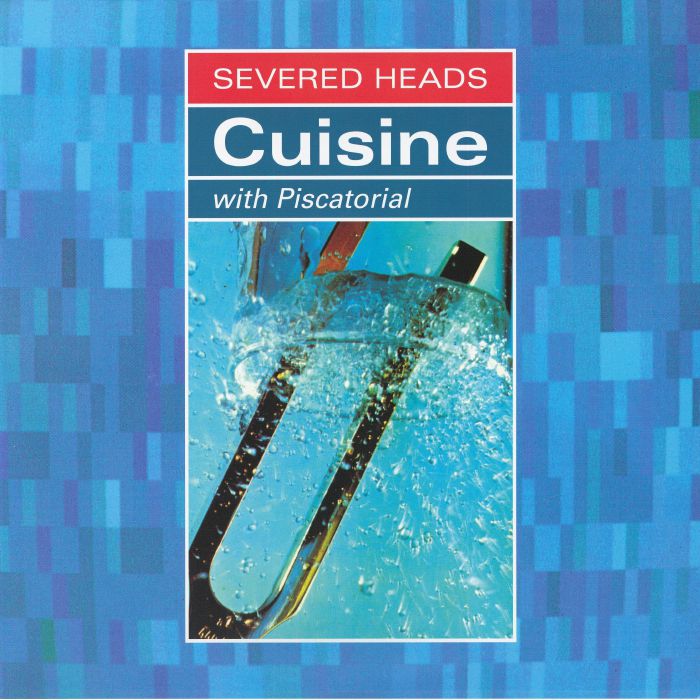
Severed Heads reattach themselves to Dark Entries for an expanded reissue of their 1991 opus ‘Cuisine (With Piscatorial)’. As originary Aussie industrial legends – although founder Tom Ellard would balk at being branded as such – Severed Heads shaped the continental subcultural sound with their kitchen electronics, chaotic tape loops, and infectious nursery-rhyme-esque melodies. Cuisine (With Piscatorial) was the long-running project’s ninth album, and is a commentary on the state of music. Ellard explains: “The whole food joke is really about what music’s about and how disposable it is; people have records like they have cups of coffee.” The album also presents a turn away from the dancefloor formalism of the era, which Ellard dismissed as already sufficiently explored. Cuisine brings us punchy pop kernels of the prime Heads variety, all clocking in around three minutes. Cuts like “Pilot in Hell” and “Ugly Twenties” rank among the band’s best through their deadly skewering of synth pop tropes. But the album also offers us a Piscatorial section, where Ellard felt free to “go fishing for ideas.” Here we get a taste of the project’s demented cut-up sensibilities, like on the “Quest for Oom Pa Pa” suite, where vintage jazz records are collaged into an angular nightmare. This double-LP reissue is the first time that Cuisine (With Piscatorial) will appear on vinyl, with a previously unreleased early version of “Seven of Oceans.”
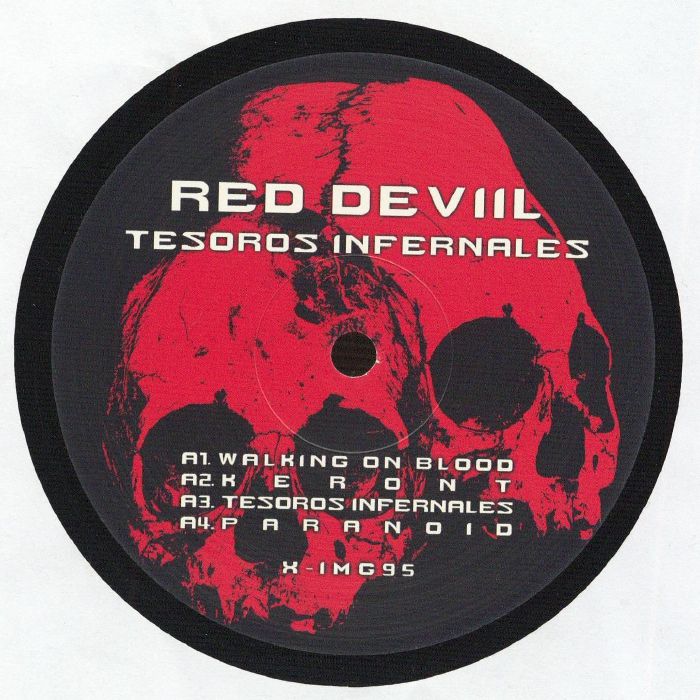
Red Deviil returns to X-IMG with their first ever vinyl release titled “Tesoros Infernales” featuring five original cuts of their uniquely sinister Techno Body Music topped off by three exquisite remixes by distinguished veterans of the underground dark electronics scene. The LP consists of forty minutes of brooding, groovy & cutting edge tracks with a bonus digital track included with the attached download code. Remixers include Filmmaker, Arnaud Rebotini & Mind | Matter.