Mark Churcher aka A-Eno-Acid returns with his debut LP, “The Last Jack” on Chicago Bee Records. A raw transmission from the underground — deep, hypnotic and unapologetically acid. Rooted in the late-1980s sound of warehouse parties, pirate radio and underground dancefloors, this is an album built for DJs, dancers and heads who know. 808s, squelching 303s and hypnotic grooves — pure acid house energy.
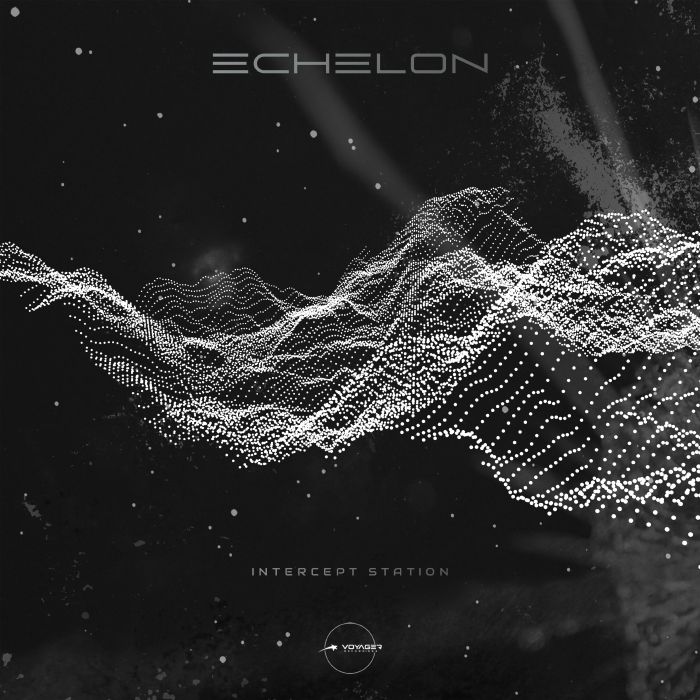
Jeroen Search lands on Voyager under his sci-fi “Echelon” alias with a stunningly deep 8 track album. Jeroen has been at the pinnacle of Techno music for a number of decades and has released on countless major techno labels. As Echelon, he has released on Jeff Mills’ Axis Records and also on Srie Records Argentina. On Voyager, the remit was to go experimental with nothing off limits, and it shows within this stunning album.
The second release in the Inner Tension Extra series, Nocturnal Shadows, is a collection of ambient and experimental works by Blazej Malinowski. Created as a deeply personal exploration of atmosphere, emotion and inner states, the album moves away from the dancefloor into more abstract and immersive territories. Nocturnal Shadows marks another side of Malinowski’s musical language – slower, darker and more introspective, where texture, space and silence become as important as the sound itself.
Originally released as a tape in 2022 with the Comedy of Errors boxset. 11 songs 49 minutes. La Union Metalurgica untitled tape. Hailing from Barcelona, Spain. The new masters of true Spanish industrial. Following the now cult and under the radar L.I.E.S. LP, these new tracks solidify their standing in the world of bizzare machine music. Broken equipment and pig sounds included … this has it all MS-20 chirps, human voices being tortured, and jacked the fuck up rhythms.
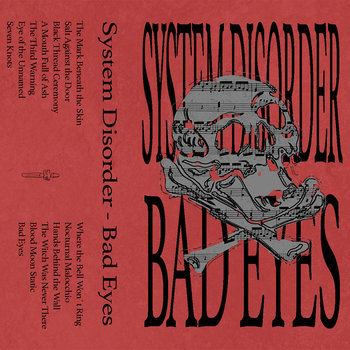
‘Bad Eyes’ is a Post-Punk Electronic Noise thirteen-track album from System Disorder, built from 808s, 909s, guitar, noise and a collection of rough electronic sounds. Rhythms shift, guitars cut through the machines, and fragments appear and disappear without always resolving. Recorded over time, assembled without a fixed formula, and left with all the rough edges intact. Now available for pre-order on Gravitational Waves.
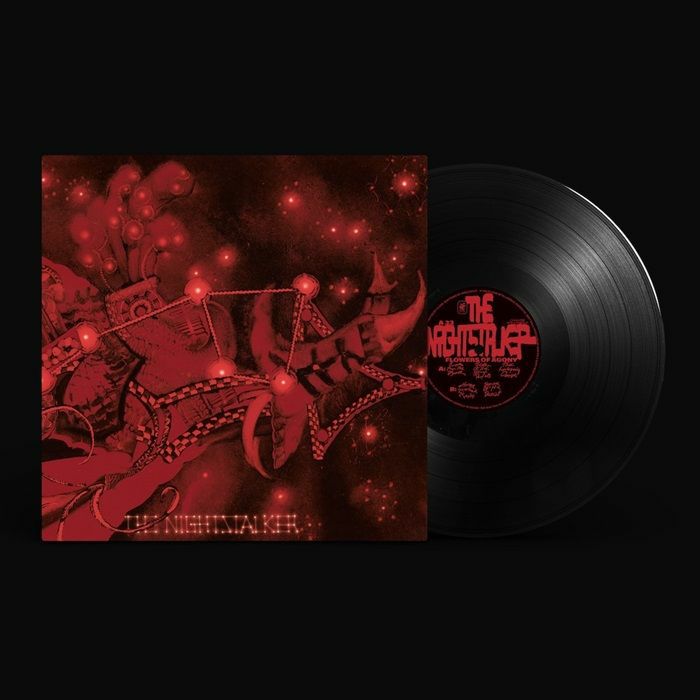
The third part of “The Nightstalker” Saga emerges from the depths of dystopia, the last part of a Childhood Intelligence original tale written/produced by Dan Piu & Gary Rich. “Flowers Of Agony” presents yet another shade of the duo’s analogue machine soul. Technoid brain dance electro from alien mysterious worlds. The album travels through various types of electro infused works, the live-arrangement dynamics and “The Nightstalker” Klangbild shines through each of the traxx, taking the listener through psychedelic cybernetic universes with strong techno force, bridging elements of the past works and taking them further into the future. Deep mind Influence intensifies the more listening time spent. This last chapter of a 3-Story Saga, is the essence, yet evolution of an analogue band, a 20 year friendship – the current zeitgeist & the partnership with Childhood Intelligence. For the future listener, we hope you might unravel the keys to this puzzle and find your own means to define and represent your true self in underground culture.
Music aged in time, resonating from the surface to the core through layers and sediments of stones – the strata. Four morning recording sessions with a separation between them of between three and ten months – a chronozone that will rest for a time and on which the next one will be added, thus forming the total of the six pieces of the album – becoming six strata. A slow-moving album that develops landscapes of subtle but continuous evolution, where we find layers of diverse nature created from different procedures, bathed in the calm waters of wabisabi, where melancholy, immensity, insignificance, the potential of the unemerged, coexistence and simplicity converge at the same time
VRIL returns to Delsin with KRUX. The crucial point, the moment where everything converges. On KRUX, a new direction was chosen, built on the strong foundation of VRIL’s dub-driven sound. For the first time, VRIL presents multiple artist collaborations on his new album. Working closely with friends and fellow musicians has been a crucial part of shaping KRUX where five collaborations with Aurora Halal, Verraco, René Wise, AZARI and ATEQ form the core of a 13-track journey. Framed once again by the visionary artwork of Daniel Martin Diaz, KRUX captures a moment of convergence: between generations, humans and machines. Fusing past, present and future into a singular moment.
Glaring’s release is a glorious feast of emotions. A journey into the deep, a fast rise above the sky, then back down again into the gloom. It’s incredible how many places she can guide you to. A mesmerising voyage through life, death, and everything in between. See the world through her eyes, let her machines obliterate you.
Three decades into their extraordinary journey, the legendary Istanbul-based collective BaBa ZuLa return with XXX – a hypnotic, uncompromising and undeniably vital statement of artistic freedom. Weaving together shapeshifting rhythms, hypnotic saz-driven atmospherics, and deep sonic rituals, the new album celebrates a band that has spent the past thirty years continuously redefining the possibilities of Turkish psychedelic music.
The nights in Hong Kong did not remain a secret for long. Word spread silently through the feline world, and the gatherings grew until the music no longer belonged to a single hidden basement. The cats had found something of their own. Their new destination became Macau. Long after midnight, when the casino floors fall silent and the roulette wheels come to rest, they emerge from hidden passages and forgotten service corridors to throw their own secret parties. The gaming tables become dance floors. The remixes played during these nights were all commissioned by the legendary feline Primadonna Disco Queen Beast (PDQB), reimagining tracks from the original Pussy Disco album. The most celebrated DJ cats perform with nothing but their claws, tracing the grooves like perfectly balanced styli. Their oversized ears become living loudspeakers, carrying every microscopic detail through the vast halls. Before dawn, the music fades. The cats disappear without a sound, leaving the roulette tables exactly as they found them. When the first employees arrive, there is no sign that anything happened during the night. Over the years, PDQB commissioned countless remixes of tracks from Pussy Disco. The eleven collected on this double vinyl were all played during the legendary Sunrise Sessions – the final hours before daybreak, when the parties reached their absolute peak. These are the remixes the cats returned to again and again, making them the undisputed classics of Macau’s underground feline nightlife.
‘Get Mean’ is a meditation on love, loss, and survival. Across the record, Boy Harsher, the duo of Jae Matthews and Augustus Muller, confronts grief and heartbreak head-on, tracing the difficult process of moving through loss and discovering a path toward renewal. At its core, ‘Get Mean’ is a redemption album – a document of one of life’s most painful chapters and the strength found on the other side of it.
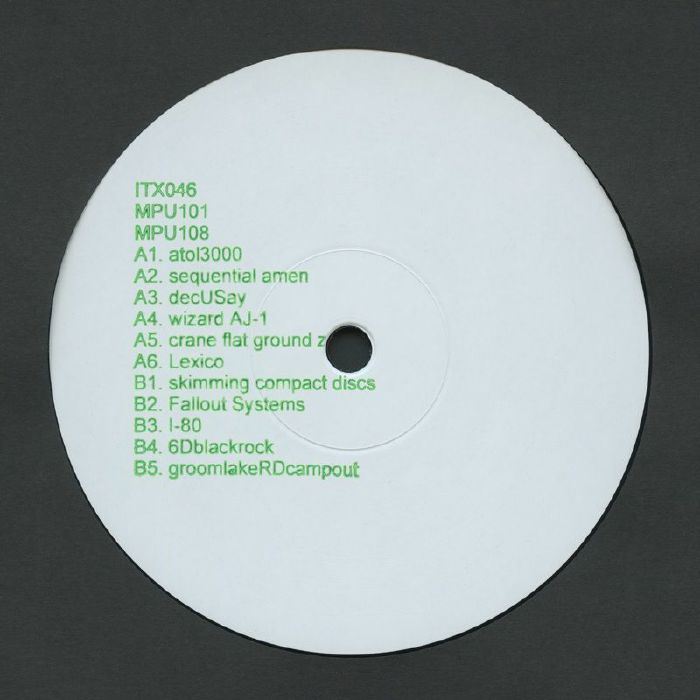
MPU101 is an enigmatic artist who has been tied to the cult Munich label Illian Tape for a while. The latest from the Poland-born, Bavaria-based producer is a glassy-eyed ambient album that is not polite background music, but more a world-building soundtrack. There are gentle MPC beats on occasion, swirling chords and pixelated pads, and plenty of forlorn moods. There is a fragility and vulnerability to much of the sounds that makes it feel like they were made on battered old hardware and dusty keyboards pulled from a storage facility that hasn’t seen daylight in years. It’s beguiling and beautiful and a great way to mentally escape.
Music From Memory presents ‘Miraggi’, the debut release by Argento, a new project conceived by composer and producer David August. Written between Berlin and the Tuscan coast, the record unfolds as an imagined soundtrack to the Mediterranean, shaped by memory, longing and a profound connection to landscape. The earliest sketches emerged during extended periods spent along Italy’s Tyrrhenian coast, where the shifting light, vegetation and ever-changing presence of the sea became lasting creative impulses. At the same time, an immersion in Italian library music of the 1970s and ’80s quietly informed the project’s tonal language, while traces of jazz fusion and Balearic ambience surfaced not as direct references but as distant echoes. Built around a dialogue between synthesizers, electronics, acoustic percussion and environmental recordings, ‘Miraggi’ balances rhythmic movement with spacious, cinematic composition. During the recording process, August was joined by drummer and percussionist Lorenzo Setti, whose performances and co-writing became an integral part of the album’s evolving rhythmic language. Across extended improvisations and recording sessions, August and Setti gradually shaped a musical language that feels both deeply personal and quietly transportive, allowing atmosphere and place to become as important as melody or rhythm. The title ‘Miraggi’ (‘Mirages’) emerged organically, evoking a longing for something that remains just out of reach — something that cannot fully be grasped or lived. It suggests a suspended state between perception and imagination, akin to a hallucination or a dream. In this sense, ‘Miraggi’ reflects the project’s inner narrative: an imagined soundtrack shaped by desire, memory and the spiritual abundance of the Mediterranean Sea.
UK techno lynchpin James Ruskin celebrates 30 years of Blueprint with a remastered edition of his ”Further Design” LP. James Ruskin has been a constant presence in techno for over three decades. He defined the sound of British techno through his DJ sets, productions, and the releases on his influential Blueprint label. His stripped-back, functional, and forward-thinking sound has remained utterly uncompromising, with performances around the world while never straying from underground ideals.