‘Mirage’ is a musical phenomenon that arises in the atmosphere due to refraction and total internal reflection of analog sound rays at the boundary between layers of trance of varying density, tribal ambient, and futuristic dub. Thanks to this effect, the observer sees imaginary images of distant objects that are normally hidden behind the horizon, as well as their distorted shapes or reflections.
‘Neoclash’ is DJ Hell’s new work. The Electroclash of the early 2000s is reconstructed here, its characteristic codes extracted and reshaped into a modern, reflective form. Neoclash is a cultural experiment – music as a medium of reflection, a structure for space and time, and a vehicle for exploring the tensions between technology, the body, and perception. Electroclash now – or a manifesto for the aesthetic relevance of electronic club music, combining strong old-school references with a new understanding. DJ Hell, a.k.a. Helmut Josef Geier, delivers a contemporary reinterpretation of the Electroclash genre. International Deejay Gigolo Records was the pulse of the movement 25 years ago – and Hell, its very namesake. Godfather of Electroclash reloaded. 25 years and many milestones later, DJ Hell returns to his roots with Neoclash, proving that Electroclash in 2025 can sound not nostalgic, but forward-thinking and visionary. Neoclash builds a bridge between past and present within electronic dance culture and club music.
Mr. G, aka Colin McBean, presents a remastered, 23-track compilation entitled ‘OG Retrospective’. ‘The day I found my original studio masters and got my rights back was the starting point, and then I realised it’s 25 years on and it’s time to recode, remaster and reevaluate because I’ve never looked back properly. I’ve always been like a bat out of hell, never quite thinking I’m good enough or great at what I do, but it’s important to celebrate, because there’s nota lot of people still here, still doing it after this length of time’.
After a six-year hiatus, Efdemin returns with ‘Poly’ – his fifth studio album, released on the recently revived Berghain-affiliated label, Ostgut Ton. As the title suggests, ‘Poly’ explores multiplicity: of rhythm, texture, style, and emotion. Across eleven meticulously sculpted textures, the album weaves a multidimensional web of sonic references, nodding to the origins of techno while pushing resolutely into uncharted terrain. The overall tone of ‘Poly’ is mild and playful, introvert and at times dreamy. The music is rich in sonic expression and breathes the spirit of musical concepts that have been refined over the course of decades.
Timothy returns to Dungeon Module with six raw but playful house trax influenced by the early days of Chicago when you could still hear the wave influence. 12 bit drum machines, haunting strings, metallic percussion, cavernous flanger, stuttered vox. An antidote to over slick 90s house pastiche. This album is a fine example of the style Timothy has refined for years, from the psychedelic slam jak of ‘Junior’s Revenge’, to the heads down funk of title track ‘Home Of The Cone’.
Echo Instinct is the new AV electronica project from Kat Day and Nicholas Wood of The KVB. Electronic Soundscapes For Post-Industrial Urban Decay gathers a collection of recordings and improvisations made between 2021 and 2025, crafted from a patchwork of synthesizers, drum machines, manipulated samples and field recordings. Inspired by the ever-changing concrete cityscapes of their former home in Berlin and the derelict, overgrown red-brick factories surrounding their new base in east Manchester, the album isn’t a soundtrack for a dystopian future — it’s a journey through the modern ruins of the world we live in today.
‘Vibe Ride’ is the sixth release of Adam Rudolph’s Hu Vibrational project and marks his 60th release as a leader or co-leader. “With every record, the goal is to explore new creative territory,” explains Rudolph. Vibe Ride continues a deeper exploration of a trance-like groove and a conceptual framework known as Sonic Mandala. This album marks the most complete realization of that idea, partly due to the group’s experience touring beforehand. That time on the road helped to refine ideas and strengthen musical chemistry. The recording process unfolded organically—likely due to the long-standing collaboration within ensembles like Go: Organic Orchestra and Moving Pictures, where the musicians have developed a deep familiarity with the shared musical language.”
The album was composed in 2007 and done with Roland JX305 synthesizer + Yamaha W7-32 Poly synth/sequencer, with additional sampling in Sony Sound Forge, using real dialogues between cosmonauts in Earth orbit.
Bourj Hammoud Groove shines a spotlight on the music of Armenian-Lebanese pioneer Ara Kekedjian, who was a defining voice in Beirut’s Estradayin pop scene. Fusing disco rhythms, shimmering synth-pop and Armenian melodic sensibilities, Kekedjian created music that was rooted in his community but also sounds somehow universal. Named after Beirut’s vibrant Armenian district, this compilation brings together his most essential recordings and is accompanied by an insightful booklet with liner notes by Darone Sassounian and rare archival photos. It’s a top-tier bit of archival curation that celebrates a musical legacy that bridges cultural history with danceable grooves.
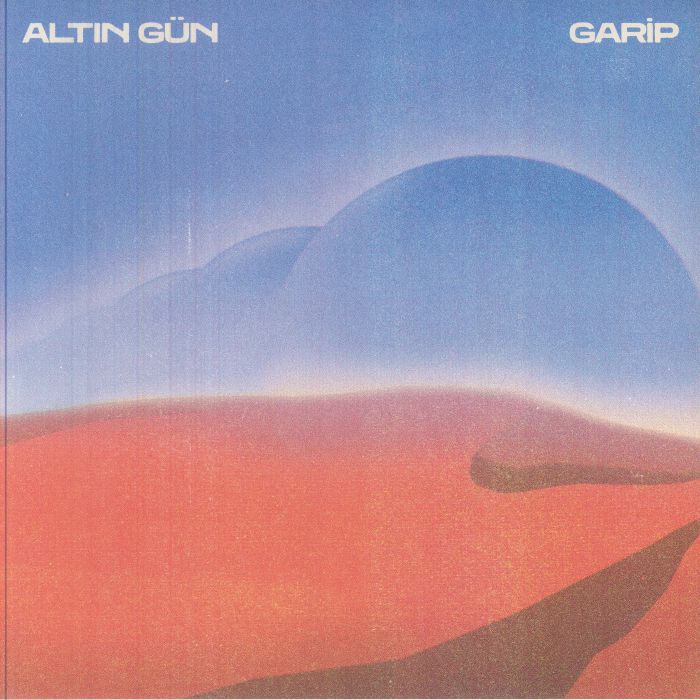
Following up on the success of Moog Edits, “Moog Edits 2 – 10 Dokuz” takes the listener deeper into the sonic world of Turkish psych-funk and disco-folk. This new album is a continuation of the journey, bridging the gap between tradition and modernity with its seamless fusion of moog organ, modular synthesizer, bass guitar, electric saz and rhythmic percussions. Where the first album painted a rich landscape of Turkish psychedelia, 10 Dokuz introduces more intricate layers of rhythm and sound. Drawing inspiration from Ottoman and Turkish music, this record delves into the complex and often mesmerizing world of “aksak” rhythms—specifically the 9/8 meter (sounds are 4/4 + 5/4 beats or easily 2+2+2+3 beats). 10 Dokuz means that “Ten and Nine” which means 19, first 10 tracks 2/4, 4/4, 8/8 and 3/4 rhythms, the last 9 tracks are 9/8 rhythms which is mostly using Ottoman and Balkan areas. The combination of synthesizers, analog effects, and traditional instruments such as darbuka, and electro baglama creates about 70 minutes a vivid auditory landscape.
Delsin invites you to submerge into the prismatic electronica of Xenia Reaper. Across nine tracks of exquisitely rendered sonics, the shadowy producer engages in the time-honoured craft of introspective sound manipulation, folding gaseous pads into dissected breaks and running heavyweight machine pulses through achingly beautiful synthesis.
Between 2023 and 2025, L.F.T. split his time between Hamburg and Berlin, slowly piecing together what would become his most ambitious work to date. The result is ‘Hell Was Boring’ a double album that plays like a fever dream, unfolding as a dark, mythical tale about life, death, and the strange spaces in between. L.F.T. – the alias of German producer and multi-instrumentalist Johannes Haas – has always thrived on tension: between punk urgency and electronic precision, between raw emotion and mechanical repetition. On Hell Was Boring, those tensions are amplified. Drawing on the spectral drama of Bauhaus, the melancholic minimalism of Linear Movement, the futuristic romanticism of Gary Numan, and even the sly swagger of Falco, the album feels at once deeply personal and part of a much older musical lineage. The sound is stripped down to its bones: drums snap and rattle from a Roland TR-808, TR-707 and Korg KR-55; basslines growl from a Roland SH-101 and Korg MS-20; shards of guitar cut through clouds of tape hiss. Everything was tracked to a Teac Tascam 80-8 reel-to-reel, giving each track a lived-in, imperfect warmth. Nothing is overpolished – L.F.T. wanted the listener to hear the edges, the grit, the moments when the music almost comes apart. Along the way, he invited friends and long-time collaborators into the fold – Das Kinn, Rosaceae, Felix Kubin, Children Of Leir, and Konstantin Unwohl – each leaving their own fingerprints on the record’s world of shadows and static.
Two years after their debut on Berlin’s Mannequin Records, Leroy Se Meurt return with their second album, ‘Hier Pour Toujours’. Far from nostalgic, the record mirrors the bleakness of our times: history repeats itself, the future looks dark, and the duo’s fierce electronic punk is its perfect soundtrack. Drum machines set the march, synths flood the space, loops spiral to exhaustion, and vocals lead this orchestra of machines straight into the fire. Leroy Se Meurt sharpen their roots into something even more relentless—bold slogans, narrative fragments, and anthems made to be shouted together. ‘Hier Pour Toujours’ isn’t any more optimistic than their debut—but it still insists on belief. The end hasn’t come yet, and maybe, just maybe, there’s still light waiting on the other side.
Hailing from Raw Culture, Anna Funk Damage returns with his third release on the Roman label, delivering a record as fierce as it is intimate. ‘Tarantola’ was born out of a winter suspended between contrasting emotions – melancholy, anger, love, confusion – distilled into a sound that transforms personal fragility into collective energy. There’s no pursuit of perfection here, but rather an urgency running through the veins, taking shape across supersonic punk, wave, ambient and industrial. Hailing from Raw Culture, Anna Funk Damage returns with his third release on the Roman label, delivering a record as fierce as it is intimate. Tarantola was born out of a winter suspended between contrasting emotions – melancholy, anger, love, confusion – distilled into a sound that transforms personal fragility into collective energy. There’s no pursuit of perfection here, but rather an urgency running through the veins, taking shape across supersonic punk, wave, ambient and industrial.
East Kilbride’s Scott Fraser finally comes good on a 25 year promise to his younger self with his debut solo album on his own label DX Recordings out of London. This record represents the closing of this chapter and the opening of a new one. A truly international and collaborative project pulling together the help and talent of friends around the world with mastering by Radioactive man Keith Tenniswood, cut by Frank Merritt at The Carvery and world class US visual art and design legends, Tim Saccenti and Nick Martin on photography, artwork and design.
Ajomasé is the groundbreaking debut album by legendary Nigerian percussionist Gasper Lawal. Originally released in 1980 on his own label CAP, Strut are proud to now bring this unique album back to the racks. Lawal’s style was forged through decades of high-level percussion work with the likes of Stephen Stills, Barbra Streisand, George Clinton & Funkadelic, Manfred Mann, Alexis Korner, Vangelis and Ginger Baker’s Air Force band. Dissatisfied with existing genre labels and production norms, Lawal began recording his own album in 1976 at Vangelis’ own studio in London’s Marble Arch before switching to long, drawn-out night shifts at Surrey Sound Studios, using downtime between The Police’s sessions for Outlandos D’Amour. Lawal meticulously self-produced, composed, and overdubbed the album over four years, assembling an elite group of musicians from both Nigeria and the UK. The instruments used were often hand-built, including a powerful one-of-a-kind drum carved deep in the Nigerian bush. “This music is not about trends, about what is commercial or a “sound” of a particular moment,” explains Lawal, “it is about music to be felt, that gives pleasure. It is nurturing and meditative.”
From the crypts of Parisian funk obscurity comes the long-lost Halloween holy grail, Disco Frankenstein from Ice AKA Lafayette Afro Rock Band. A teasing album of horror-disco oddities originally released as a compilation—a misnomer cloaked in mystery, as the tracks themselves hail from the group’s playful experiments in the mid-to-late ’70s. This album unearths a twisted treasure trove of grooves, originally scattered across obscure side-projects and international pressings, brought back to life by Strut on blood-soaked vinyl exclusively for Halloween 2025.
‘Birds of Paradise’ draws on d’Souza’s global club experience while deepening his connection with the natural world. Built around classic Roland drum machines and iconic vintage synths, the record is a joyful, body-driven celebration of rhythm and movement, but one grounded in ecology and place. The album’s spiritual centre lies in Saligao, Goa, near d’Souza’s maternal homeland where his Auntie Florie (where the name is derived from) is buried. Where he found his ‘paradise’ nearby, staying in a converted fisherman’s hut and recorded dawn choruses from a riverside studio overlooking mangrove-lined waters. Environmental textures from Japan also make their way into the music, creating a sonic map rooted in lived experience.
PRAED return to Discrepant with the album ‘The Dictionary of Lost Meanings’. Known for their signature blend of Egyptian Shaabi, free jazz and improvisation, the Lebanese duo behind PRAED – Raed Yassin and Paed Conca – now assemble a full orchestra for the second time taking the music to a deeper, rooted level. The duo revisit their unique blend of Arabic heritage and free jazz sensibilities with an album that keeps pushing further into strange and unexpected directions.
Jennifer Touch releases her next LP ‘Aging at Airports’ on Fabrika Records. The idea for the record title came before the music even existed as Touch was spending an increasing amount of time in airports while touring. In her own words: “It felt like I waste a large part of my life waiting for the next show to come, to entertain and perform my music and build timeless moments with others. This waiting, the slowly ticking time at the gate, was in complete contrast to what I want to do as an artist: to be in flux, to create things that will last forever. The airport, as a busy hub, was like a symbol of this ambivalence. And a reminder: every second, whether waiting or on the move, I have to accept that I am fading, that my creative power, my face, and my body are fading. As a (performing) artist, everything feels like a strange contrast. While you want to stay true to yourself and speak authentically from the soul, you are also expected to appear forever young, and powerful. Artists are often wanted to distract people, but creating this art forces me to confront my own transience. I feel the struggle to fit into this powerful artificial framework that the world has set and the desire to break free from it.”