Legendary electro producer Carl Finlow makes his return to Science Cult with a 2×12 LP on white vinyl. From start to finish “Plasmoids” delivers with expertly crafted electro. Mr Finlow’s production skills are present across a variety of styles from the cyber funk inspired “Trimonogogo” to the retro-styled “Relic”. This is an album not just for fans of Carl Finlow’s work, but a showcase of electro at its finest.
Chicago legend Boo Williams’ “Depths Of Life” fuses classic melodic deep house with spacey acid and hard swung rhythms in Boo’s signature style. It includes 10 crisp signature tracks, wrapped in a cosmic view of jazzy moods and hypnotic melodies.
This album is one of the best selling album in Turkey’s musical history. “Modern Oyun Havaları” which means “Modernised folk-dance Music” was first released in 1973 by Kent (Kent Ses ve Plak Endüstrisi). Esin Engin who was a singer, arranger and composer almost the youngest and one of the most outstanding musicians of Turkey. He was the first arranger who used both native and pop music instruments correctly without changing the characteristics of Turkish music’s rhythms and melodies. His albums were also the best-selling records among tourists from all over the world that came to see the priceless natural and historical treasures of Turkey. In this album, you’ll find a good selection of modernized hits of the most famous Turkish belly dance Wedding house melodies.
Hambourg’s electro duo Fallbeil composed by Wosto and Kluentah, is still pretty unknown despite they’ve been releasing a bunch of EP and a couple of LP on label like Mannequin, Killekill sub-label Boidae or New York Haunted and more recently on their own label Teerpappe to name a few. Macadam Mambo presents now a compilation of irresistible dark atmospheres slow electro tunes with very raw textures, complemented by few little skits to generate a brilliant album around the story of the Mockturtle.
Evocative and spooky contemporary prog. Meine U Teksi has absolutely nailed it to fetishist levels. It sounds like the synths were the only thing keeping the castle warm the night this was recorded. The whole record it’s made even more unnerving by the fact that the 4th track doesn’t exist.
From New Jersey via The Netherlands: longstanding US craftsman Joey Anderson makes his debut on Deeptrax with his inspiring new album ‘Exotic Sequence’. His fourth LP to date, ‘Exotic Sequence’ is a fully instrumental deep dive into both Joey’s machines and mindset.
Channelling his own explorations in search of the soul inside the machine, VRIL draws from the deep well of his live performances to present his third LP for Delsin, Animist. Inside lie 12 pieces which seem to probe at the unknowable distance between tangible consciousness and the astral plane, imbuing even the most seemingly synthetic of materials with a living essence. Given his illustrious back catalogue, it’s no surprise to hear VRIL conjure explicitly electronic music with such loaded emotional impact and seemingly organic animus, but in the process he also toys with the idea of how far the technology’s spiritual potential can reach.
The whole Shape of the Roots project by D_Roots in one go. On part1, 4 serious, energetic, sharp, melancholic electro tunes. Rock solid dance floor material from this super talented Italian producer. On part 2, 4 tracks focusing on the deeper side of his production skills for beautiful, driving Detroit electro/techno, the LP digital package comes with 2 bonus track.
Arp Frique returns with a new album after a string of releases, leaving the cratediggers and dancefloor tastemakers with underground classics like Nos Magia, Voyage and Nyame Ye. On ”Analog People Digital World’ he embraces the digital coldness of Yamaha’s classic DX7 synthesizer to create a refreshing listening experience using only the FM synthesis-based sounds from this machine to find new heat for an analog world, reflecting on the digital revolution we are living through. The album features Ghanaian songstress Mariseya (Omampam, Jah Kingdom, Digital World, Roi Salomon), Cape Verdean OG Americo Brito (Go Now Wetiko) and Surinam funkstar Sumy, who joins the record on the opening track “Spiritual Masseuse”. Arp Frique closes the album with “Duncan Truffle”, a very intense and wobbling instrumental echoing Bootsy and Bernie Worrell on a solo exercise. Expect an analog-digital exploration of lofi funk, highlife, zouk and reggae.
In 1975, under the oppressive air of military dictatorship in Brazil, brothers Lelo and Zé Eduardo Nazario invited bassist Zeca Assumpção to join their musical experiments in a basement under Sao Paulo’s Teodoro Sampaio Street. As teenagers, the trio had already been playing together in Hermeto Pascoal’s Grupo, alongside guitarist Toninho Horta and saxophonist Nivaldo Ornelas, and it was while working together under Hermeto’s direction that the Paulista rhythm section (as they were then known) began to realise their own potential. With many nightclubs and venues closed in the mid-70s and government censors dictating the output of radio, TV and art galleries, many Brazilian artists fled during the years of dictatorship. But underground, Grupo Um were fusing avant garde ideals with contemporary jazz and Afro Brazilian rhythm; making phenomenally free and expressive music – in stark contrast to the sterile, conservative conditions being imposed above ground. Starting Point was to mark the inception of one of Brazil’s most daring instrumental groups. Their debut now sits in the lofty echelon of otherworldly 70s Brazilian music, alongside the likes of Marcos Resende & Index’s self-titled debut, Cesar Mariano & Cia’s Sao Paulo Brasil, Azymuth’s debut and indeed Hermeto Pascoal’s Viajando Com O Som. But just like all of those titles, which were either shelved or largely ignored at the time, Grupo Um – so radically ahead of their time – struggled to find a label to release their debut album. So Lelo kept the tapes safe in his archives, which is where they sat for almost half a century. Finally, almost fifty years later, this mesmerising piece of history is here, and it was only the beginning.
Fringe Society makes a return to Wrong Era with his the album ‘The Art World’. We are invited into his delicately sculpted soundscape through abundantly transcendent tracks. This release transports you to one of Fringe Society’s mesmerising live sets and a dimly lit Mullholand overlook. ‘The Art World’ embodies his consistently slick approach to production and breathtaking sonic atmospheres. A true force to be reckoned with.
For Erika’s second album “Anevite Void”, she explores her live process as it permeates everything she does, including documenting the process of life in the elaborate sci fi mythology she created. Erika began performing live in Ectomorph in 1997 when she was gifted a TR-606 by BMG and asked to join the group. This grew to her building her own studio, performing solo as Erika, collaborating with people like Jay Ahern and Noncompliant, and performing as a member of Circle of Live. Her depth of thought and clarity of vision has led to her mentoring people on live performance through the In Bloom platform, where she has made a large impact on many up and coming musicians. “Anevite Void”, Erika’s new album, finds her organically writing songs for her live shows, allowing them to take shape through performance, and later recording them in the studio, making this the first album she has entirely written and produced on her own. Mixed by long time collaborator BMG, she finds this record as the launching point for a new process for her.
Blackploid has become one of Central Processing Unit’s stalwarts in the past couple of years. Martin Matiske’s project contributed a trio of EPs to the label across 2021 and 2022, with each of them showing off the kind of electro chops and production sensibilities that made Blackploid an ideal fit with the Sheffield imprint. Now, for CPU’s first release of 2023, Matiske levels things up with the debut Blackploid LP Enter Universe. Across these twelve tracks, Matiske leaves us in no doubt that he’s a prime mover in the world of modern electronic music. Enter Universe does not let up from start to finish, delivering a dozen pieces of leftfield electro that draws from the sound’s greats while also showcasing an unpredictability and flair that is all of Blackploid’s own.
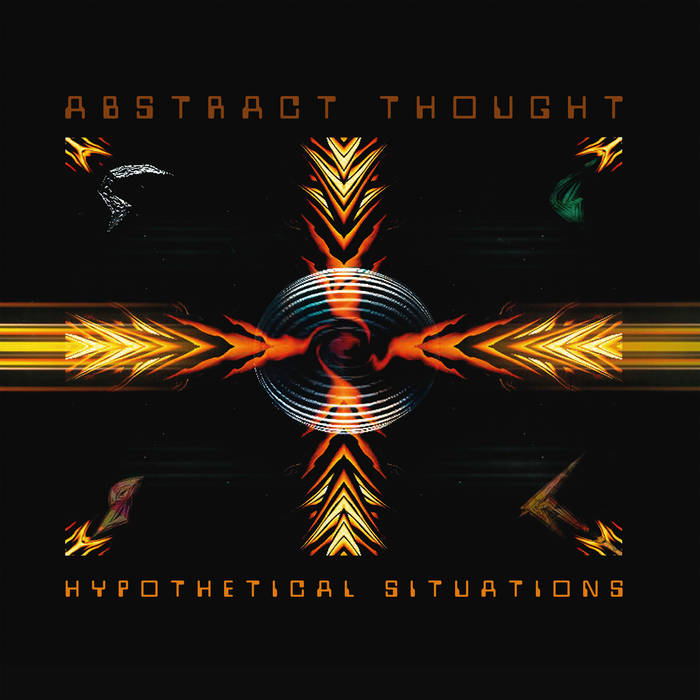
Re-issue of Drexciya’s 4th storm! Another seminal work of 6 Futuristic deep & Drexciyan Electro/Techno tracks. Hypothetical questions translated into music by the visionaries of contemporary electronic music. ”Music beamed through Dimensional Waves by Abstract Thought…” First released in 2003 on Kombination Research. Remastered from the original session tapes.
In collaboration with Meidosem and Infrastition, Minimal Wave presents Kintsugi, a new album by the highly lauded French group Martin Dupont. The album features lush re-works of their old songs, originally released on their highly sought-after 1980s albums. The French band is known for making beautiful, heady electronic, with striking, poetic vocals. A hard-to-classify group from Marseille with a cult following and some mainstream success, Martin Dupont has inspired some of the luminaries of the contemporary music scene crossing many genres from trip-hop to electro to techno. Kintsugi reassembles their old spirit that is colorful, enthusiastic, and delicate, yet also melancholy and mysterious. A mixture of hot and cold, light and dark. Martin Dupont’s music is considered electronic though they also incorporate guitars and clarinets. They are described by many as New Wave, though their music truly transcends genres.
The Spy debuts on Mechatronica with a dark, cosmic and hypnotising collection of tracks. On Snakeskin, the Dutch DJ and producer dips into electro, wave, techno, industrial and UK bass to mold an album that distinctly showcases his variety of styles and musical output, from gloomy slo-rollers to futuristic floor anthems and beyond.
Lost recordings that defined the modern sound of the Sahara. This album contains the first recordings of modern music from the Sahara and mark the birth of the genre that is known in the West as ‘Desert Blues’ or ‘Desert Rock’. Ahl Nana changed the folk music of the Sahara to modern, cosmopolitan music by using Western instruments like the electric guitar. They paved the way for artists like Ali Farka Touré, Tinariwen, Mdou Moctar or Bombino. Although the group is still active today, they only recorded 2 LPs and a handful of singles. All these recordings took place in 1971 at the Boussiphone studios in Casablanca. The records were never distributed and therefore remained unknown for almost 50 years, until Radio Martiko discovered a batch of unsold factory stock a few years ago. On this album, you will find a selection of these revolutionary recordings.
Zehra presents the debut album “Istehlal” by the Mohamad Zatari Trio, consisting of musicians from Syria, Iran & India. The trio merges traditional Middle Eastern sounds with contemporary vibes including interpretations of Hossein Alizadeh & Riad Al-Sunbati classics. In a contemporary globalized world where music has lost its borders and is fighting a constant – yet particular – stream of Western commodification, the Mohamad Zatari Trio stands out as an original cultural artefact, aiming at transcending the boundaries between different music worlds. Founded in 2019 the ensemble had its first public appearance in 2020 at the Outernational Virtual Festival. comprising the performers Sara Eslami (Iran) on tar, Avadhut Kasinadhuni (India / Romania) on tabla and Mohamad Zatari (Syria) on oud. Their debut Istehlal plunges into its own aesthetics, politics and sound intricacies and represents the combined efforts of three musicians hailing from different, yet deeply rooted cultures. Over the course of eleven songs, the album transcends stylistic, ideologic and geographic boundaries and reflects on the human condition in an interconnected and interrelated technological world.
Following the re-release of Drexciya’s essentials ‘Neptune’s Lair’, ‘Hydro Doorways’, ‘Harnessed The Storm’ and ‘Digital Tsunami’, the reissue series continues with Transllusion’s ‘Opening Of The Cerebral Gate’ and the ‘Mind Over Positive And Negative Dimensional Matter’ 12”. Produced by the late James Marcel Stinson and released in 2001 via Supremat, a short-lived sub-label Tresor dedicated to a more abstract and experimental electro sound, ‘The Opening Of The Cerebral Gate’ was conceived as the second part of the so-called Drexciyan Storms – a whopping stack of seven albums by the Detroit pair released under di erent monikers within a single year. This phase marks a groundbreaking time for the duo, their cosmos breaking wide open, right at the dawn of a new technological era in electronic music production. All this is deeply reflected in Transllusion’s first album. This phase marks a groundbreaking time for the duo, their cosmos breaking wide open, right at the dawn of a new technological era in electronic music production. All this is deeply reflected in Transllusion’s first album.











 The Hipodrome Of Music