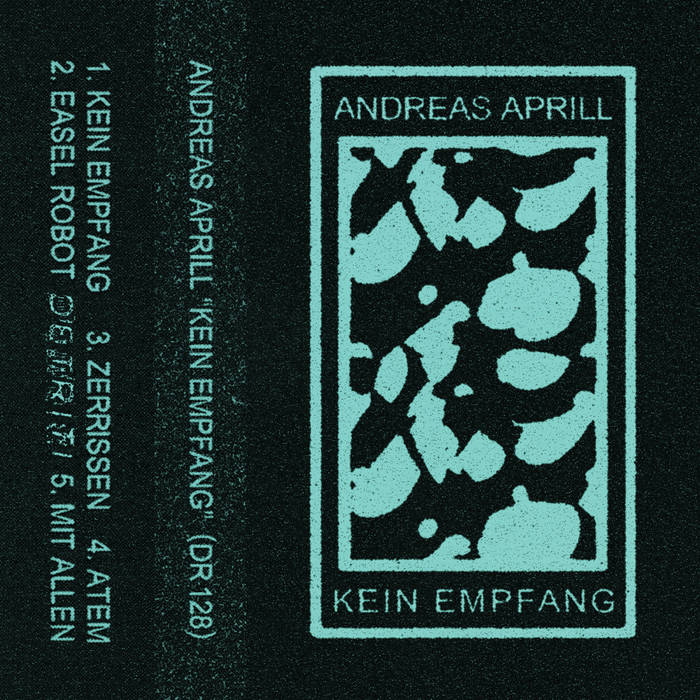
A deep dive into the raw, unfiltered experience of modern life, this album blends Ambient Noise Experimental with the relentless agony and struggle of societal pressure. Yet, through the chaos, a glimmer of freedom emerges—an unapologetic expression of self, breaking through the limits that confine us. A soundscape that’s both haunting and liberating.
Senking and DYL team up again. ‘Diving Saucer Attack’ is the first full-length record by the German artist and his Romanian collaborator, released through the Berlin-based Karaoke Kalk label. The six pieces, two of which were produced individually, both showcase the duo’s shared interests for dub-heavy, adventurous electronic music while also emphasising the productive friction generated by the subtle differences between their respective approaches.
Legowelt worked as a sound designer for the factory presets of Mirror, which ended up as Muse which is an 8 voice polyphonic bi-timbral synth. The entire album was recorded with an early prototype of of Moog Mirror.
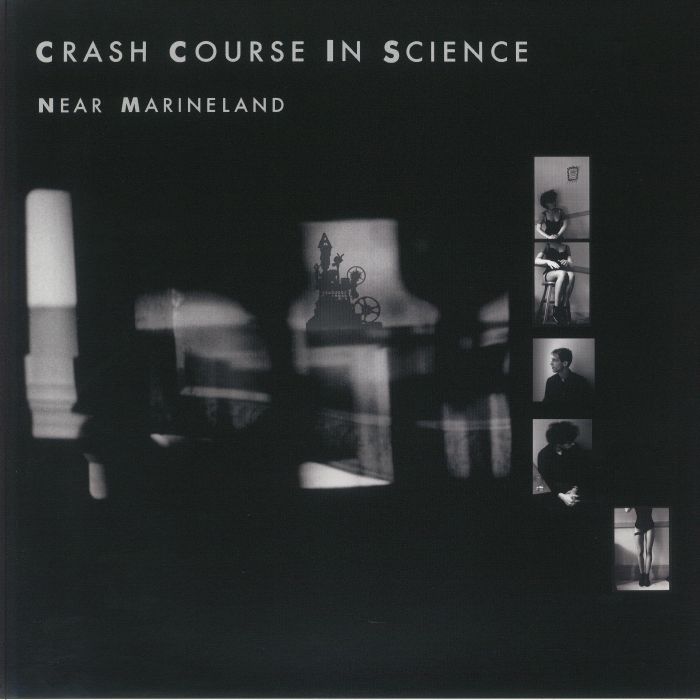
Dark Entries celebrates its 15th anniversary with legendary synth-punk deviants Crash Course in Science. Dale Feliciello, Mallory Yago, and Michael Zodorozny formed CCIS in 1979 after meeting at art school in Philadelphia. As a gesture born of equal parts punk irreverence and brute necessity, the band incorporated toy instruments and kitchen appliances into their aggressive, angular sound. Their anthems “Cardboard Lamb” and “Flying Turns” from 1981’s Signals From Pier Thirteen EP have been staples in adventurous DJ sets for over 40 years – yet some of their finest work is to be found on Near Marineland, a full-length LP recorded in 1981, but remained unreleased in its time. Near Marineland shows the band moving into more diverse and polished territory (although it’s still as abrasive as sandpaper). Tracks like “No More Hollow Doors” and “Jump Over Barrels” highlight CCIS’s singular knack for embedding infectiously monotone hooks in their stiff-yet-funky grooves. Elsewhere we see CCIS going fully unhinged, like on the searing “Someone Reads” or the demented “Pompeii Spared”, where a spray of honks is barely glued together by a frantic synthetic pulse. While this masterwork of malfunctioning analog electronics has surfaced on a few occasions – this first time stand alone remaster includes four never-before-released bonus tracks and includes a lyric sheet. Near Marineland is crucial listening for all devotees of synth-punk and minimal electronics.
Viernulvier Records presents its new LP release ‘Quadric Surfaces’ by iconic electronic producer Hieroglyphic Being aka Jamal R Moss. It collects the soundtracks Moss wrote for ‘Parallel Spheres’ & ‘Figures in Mynd’, two parts of an abstract animation film by visual artist Gabriela González Rondon. The film premiered in October 2023 during Videodroom / Film Festival Ghent.
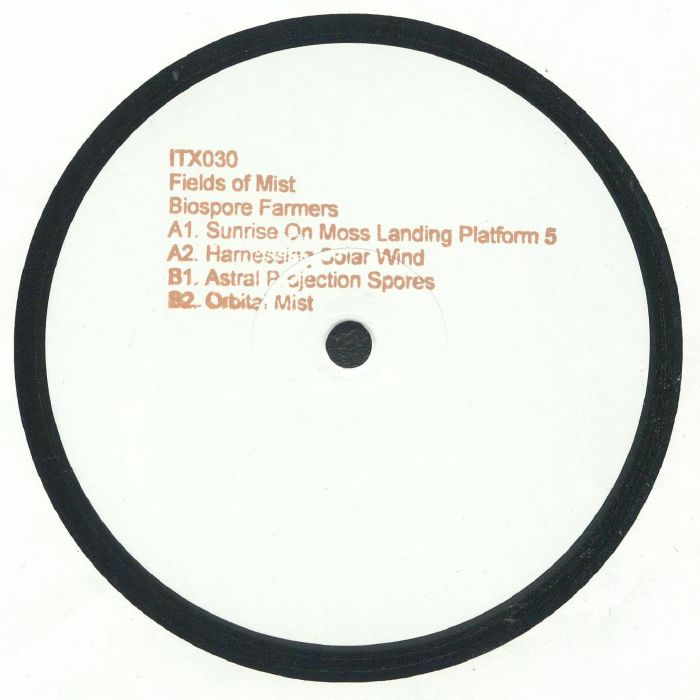
Munich label Ilian Tape has another entry in its fine ITX Series here called ‘Biospore Farmers’ from Fields of Mist, describing it as “Sunrise Beams Through Orbital Mist.” In less abstract terms, it is a gorgeously hazy and lo-fi electro-exploration. The first two cuts are slow, doleful and reflective with grainy pads and deep space ambiance swirling around nice rough-edged broken beats. The B-side picks up the pace with the brilliantly kinetic bounce of ‘Astral Projection Spores’ and then the skittish and celestial trip that is ‘Orbital Mist’.
Third episode of whispers of an ancient world. In these new interludes, the artist DMX Krew realizes his personal vision of the well-known story by Jorge Luis Borges, The Library of Babel. Borges takes as a starting point to explain the universe two realities that are essential for the world of libraries: the library, as a physical space, as a continent, which also contains the greatest wealth that can be conceived as it is the compendium and sum of everything. human knowledge and understanding. But this place, this library is not a silent, uninhabited, inert space, but rather something alive, full of activity, guarded by librarians and used by all men, in turn librarians in search of giving meaning to their nature, to what that surrounds him, to the past, present and future of humanity. And here we have the other reality: librarians. Borges interprets that each man is a librarian, someone who inhabits and explores the infinite hexagons of the Library, in search of his particular interpretation of the world. Although it also establishes the figure of the librarian as custodian of books, of knowledge, as an interpreter who knows how to decipher all the mysteries that the Library contains inside, an official who has unraveled the content of the infinite Library that requires subjects who know how to keep it. and at the same time help men, all of them librarians, to find meaning in everything.
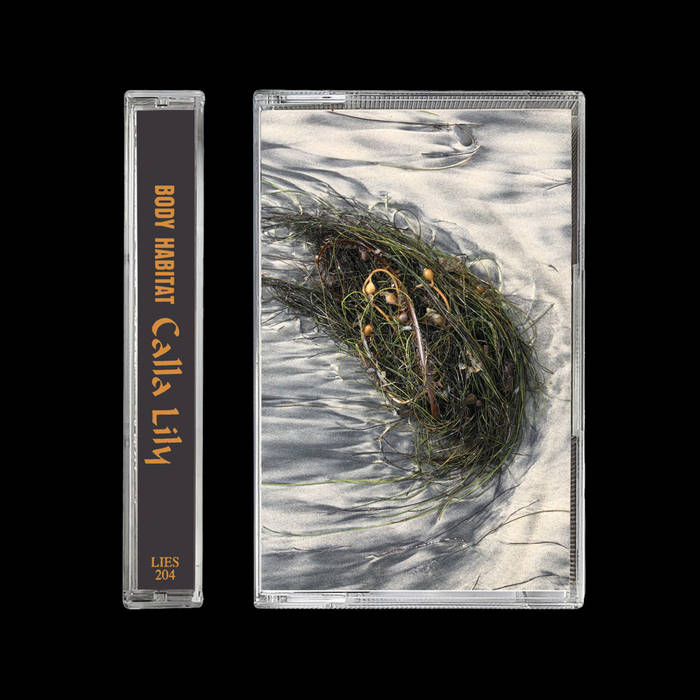
New release from the mysterious Body Habitat project, allegedly associated with the equally elusive German Army project, this is a 15 track tape full of broken industrial rhythms and seething sonic soundscapes, unrelenting California desert music.
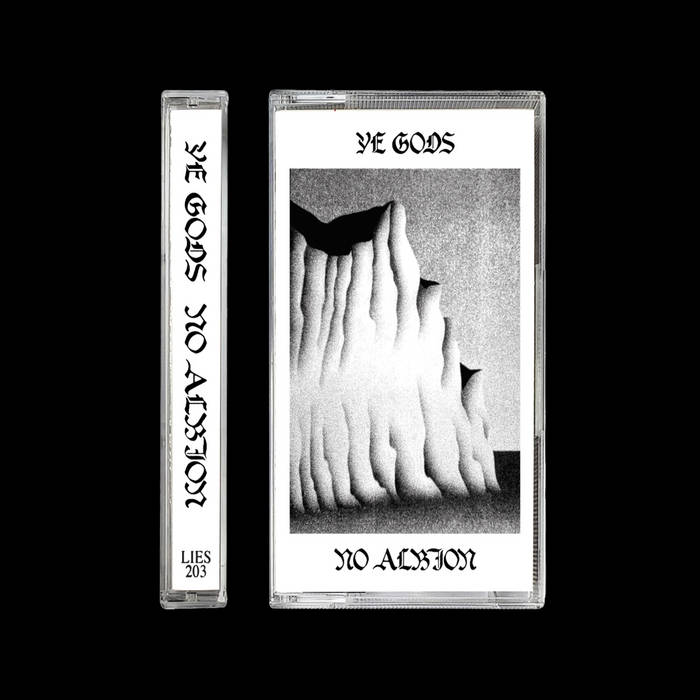
YE GODS returns to L.I.E.S. with a new fill length, “No Albion”. Seven tracks of haunting ritualistic electronics, coming from the darkest realm of your psyche. Chilling ambience, voices from your nitemares, wishing to escape this world.
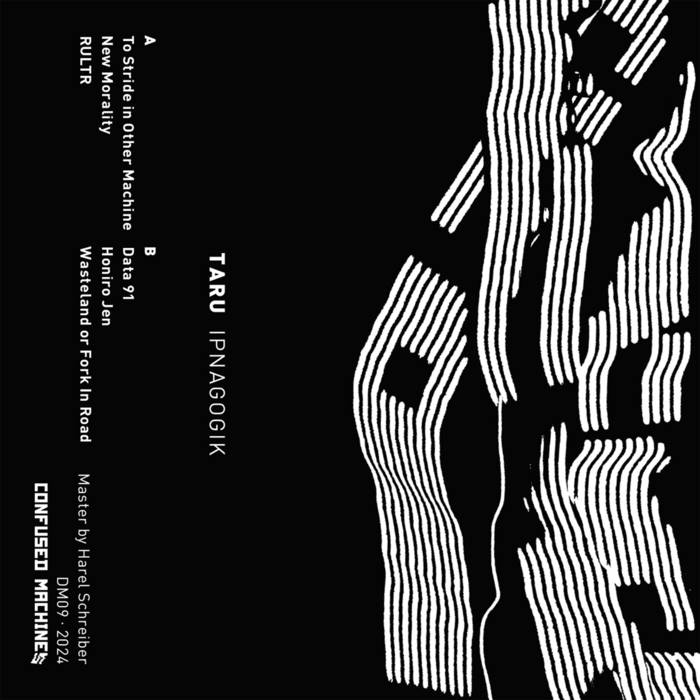
Confused Machines unleashes it’s first release for 2024 and it’s a mesmerizing journey led by Ruggero Lambo aka Taru, utilizing minimal synths, squeezing beats into tiny fractures and exploring syncopations to a certain visionary degree where the tension between self-consciousness and unconsciousness arouse, a vague memory of a near future becomes present.
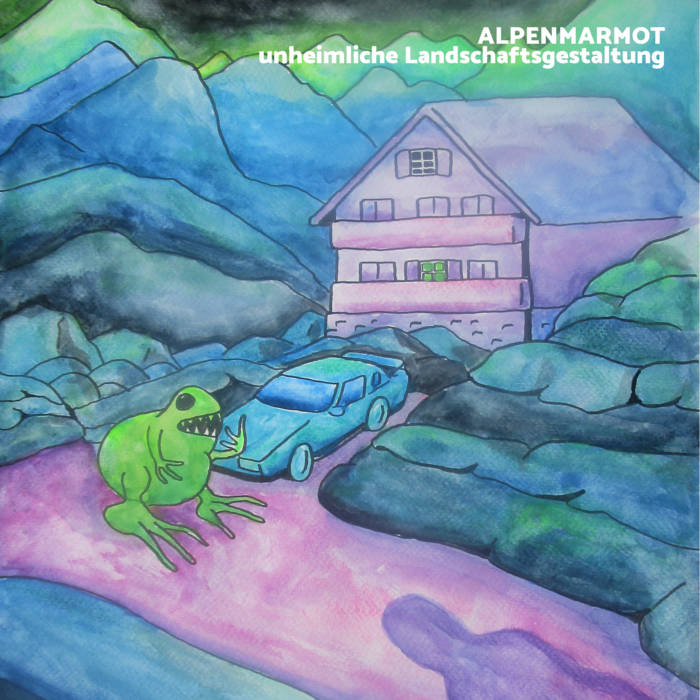
Alpenmarmot – Unheimliche Landschaftsgestaltung (translates as ‘eerie landscaping’) is my new power electronics industrial acid ambient noise project, Recorded at 1500 meters above sea level on the slopes of the Wildhorn mountain in Switzerland. Unfussy sewer-synths mixed with field recordings of the local Alpine nature and infrastructure. We hear mangled rusty cable cars, crumbling mountains, unknown nocturnal creatures and ofcourse the ever so cute Alpen Marmot.
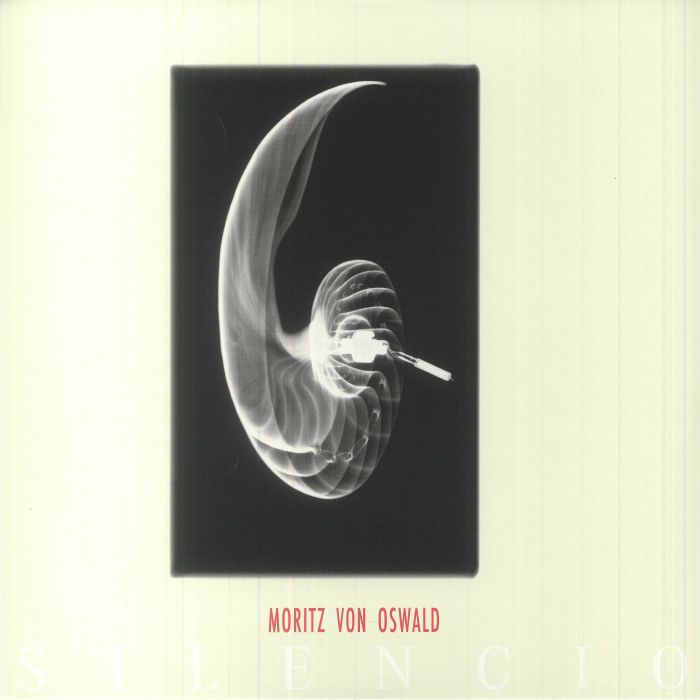
What are the differences and similarities between human and artificial sound, between oscillations generated by vocal cords and synthesizer voices, voltage amplified by speakers? On ‘Silencio’, his latest album for Tresor Records, Moritz von Oswald works with a 16-voice choir to explore this concept. Drawing from the ensemble works of long-standing inspirations Edgard Varèse, György Ligeti and Iannis Xenakis, von Oswald and Vocalconsort Berlin delve into the space between sounds, creating a deeply textured collection that shifts between light & ethereal and dark & dissonant. The vast dynamism of the human voice adds to the profound weight of electronics while offering up a rhythmic source and sonic noise palette unexplored in von Oswald’s repertoire. In Silencio, von Oswald dredges a dank murk, pulling clouds over a distant pulse. It hangs, ready to take on new forms.
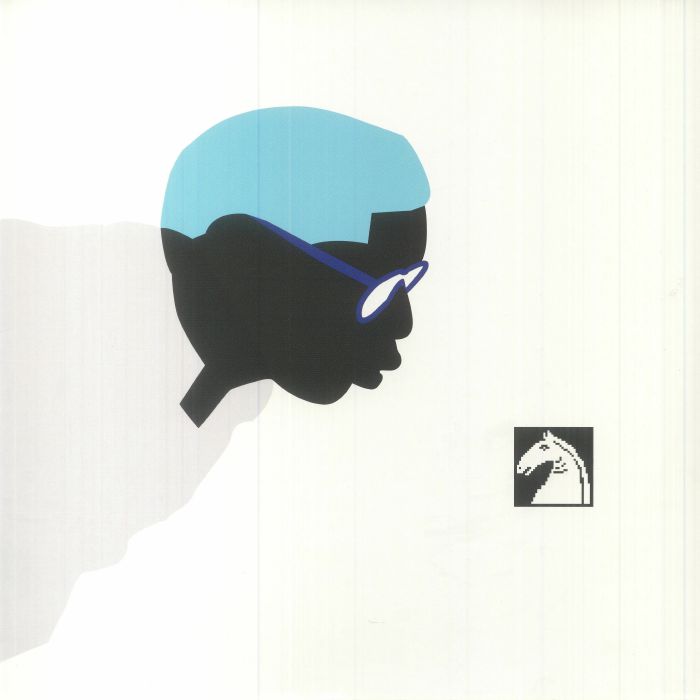
‘LXXXVIII’ is the ninth Actress album to be created by Actress (Darren Cunningham) and the very first presentation of Actress’ voyage into luxury sonics. A lifetime in the making, ‘LXXXVIII’ is the culmination of 25 years’ honing mind-shorting, soul-igniting audio infusions for dance floors, rave dens, festivals, and concert halls. ‘LXXXVIII’ pays dividends to meditate on an instrumental facet of its creation: game theory. Indeed, deep strategic thinking – more readily associated with economics and chess than artistic practice – was fundamental to Actress’ process as ‘LXXXVIII’ was channelled into existence.
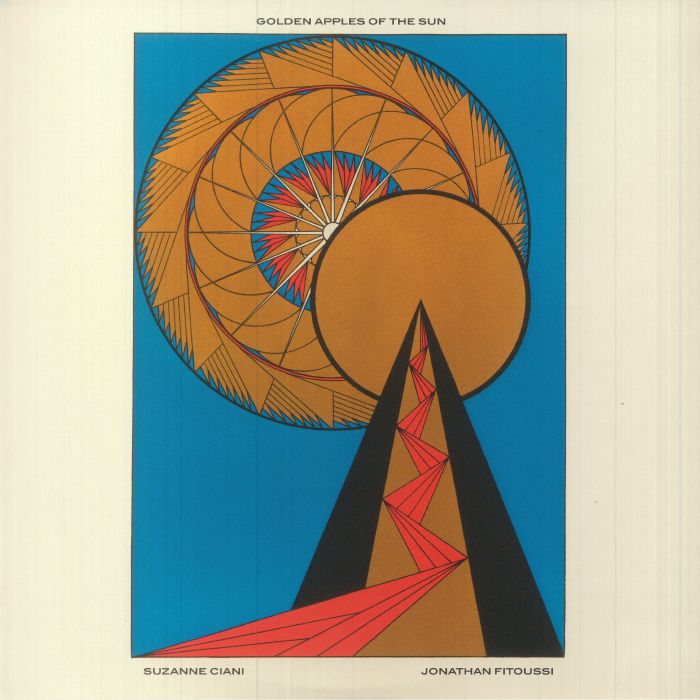
Obliques and Atmospheric present their new album “Golden Apples of the Sun”. It is the result of close cooperation between Suzanne Ciani and Jonathan Fitoussi. The American electronic music pioneer has joined the French composer to sign a four-hand album around mythical synthesizers like Buchla, Moog and Ems. Mainly recorded in California, facing the Pacific Ocean, the white sound of synthesizers mixes constantly with the sound of the waves and wind. The music generated is directly blended with the surrounding elements of nature. It is both organic and live, hypnotic and rhythmical, powerful and dreamlike.
A new compilation explores the far reaches of the post-punk, experimental and electronic landscape in Switzerland on Senza Decoro: Liebe & Anarchia in Switzerland 1980-1990 curated by producer / DJ Mehmet Aslan. The first single is ‘Kabyl Marabù’ by Dr. Chattanooga & The Navarones. Based out of the Italian-speaking part of Switzerland in Chiasso, the band started out playing “rupturing, dispersed sounds,” before honing their sound into a melting pot of folk, rockabilly, punk, new wave, Latin and African influences and electronics. Hallucinatory and visionary, they used their own hybrid language within their lyrics, drawing on elements of English, Spanish, French, German and even Japanese. The band’s guitarist, Franco Ghielmetti aka F.J. de Bratislava, lived in Paris for a while and frequented a local hotel / bar run by the Kabyle people (a Berber community from Kabylia in the north of Algeria). Influenced by their music and the marabout business cards collected from shops in the neigbourhood, ‘Kabyl Marabù’ is a tribute to their Berber friends, singing the names of the marabouts and using words, noises and memories from a trip to Morocco.
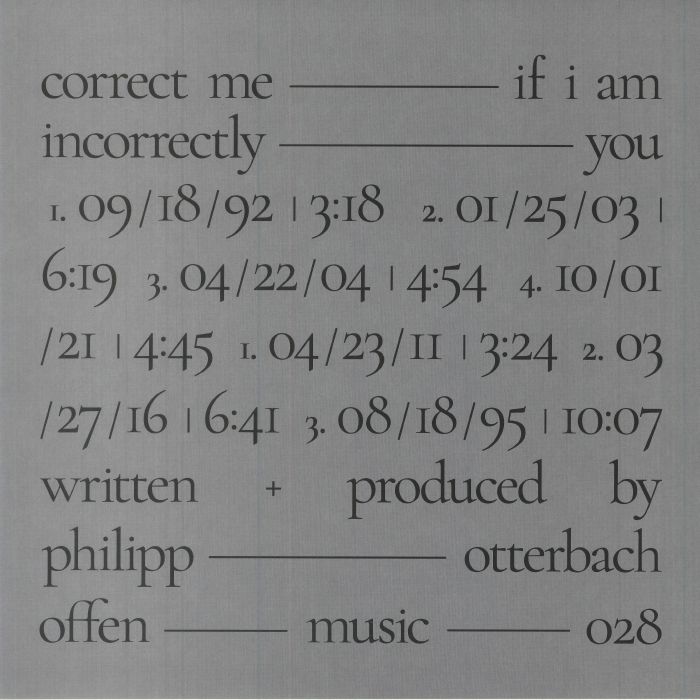
Berlin based Philipp Otterbach debuts on Offen with a seven tracks album, “Correct Me If I Am Incorrectly You”. Post-music phantasmagoria for the world in which the past became more unpredictable than the future. Deconstructed entertainment for hopeless romantics and testament to Otterbach’s unique artistic language.






 The Hipodrome Of Music