Philipp Otterbach – Sonidos Subterraneos Episode 223

Baba Zula, the legendary Istanbul band, remains the most experimental exponent of the hotly-tipped contemporary Turkish psych-rock scene. BaBa ZuLa are revered sonic trailblazers who have built a cult following in all corners of the globe and have counted members of Einstürzende Neubauten, Can and Nick Cave the Bad Seeds as their fans. Pulsing, hypnotic tracks powered by Turkish percussion, glitched electronics, deep bass, electric saz and dual male/female vocals. İstanbul Sokakları (Streets of Istanbul) is a vivid sonic and political statement from a band that continues to show us the future.
Birds aka Katie Wilkinson returns with “Into The Coral Sea / Ritualistic Healing” her third release on Höga Nord Rekords. Birds is a declaration of love to electronic music and psychedelia.

Som Imaginário are the stuff of MPB mythos. Integral to Brazil’s Clube Da Esquina movement in the early 1970s, a heady blend of progressive rock, folk, psychedelia, jazz and traditional Brazilian rhythm flows through the three studio albums the band recorded between ‘70 and ‘73. Flying the countercultural freak-flag amid the context of military dictatorship, the Brazilian prog lords shared much of the sense of experimentation and bountiful fuzz bequeathed by their tropicalismo forbearers. But armed with genius composers, arrangers and stupendously high-level musicianship, Som Imaginário introduced a potent harmonic complexity to Brazilian popular music, which would inspire generations of artists to come. On 4th October 1976, having finished a spell of recording and touring with Milton Nascimento, Som Imaginário performed a concert in celebration of Nature Day in Brasília. The recordings of the show would become “Banda Da Capital”, which, for the past half century, has laid dormant, waiting for its mystical power to be untapped.
Platform 23 returns to where it began, working the Vox Man Records to bring their compelling and unique archive to light, to create again a compilation from their cult cassette releases. Offering more than the sum of their parts, the best of two cassettes is compiled here in “Ethniques Psychedeliques”, a snapshot of contributions from far and wide, based on the warm expanse of ethnic world music with an idiosyncratic psychedelic nature throughout the selections, from the early 80s DIY post-punk scene.
Höga Nord Rekords presents the third album of The Exorcist GBG, an analog disco/psych band from Gothenburg, Sweden.

A wide selection of Oriental Turkish funk music for listening and dancing. The tracks are ranging from traditional Turkish Folk to funky belly dance sound and from electrified bouzouki beats to exotic fuzzy riffs. Mostly traditional tracks are taken from the zourna & hanging drum playing style that is practiced in this kind of music and in fact it usually plays at the weddings. Here played with the western instruments including bass guitar, hammond organ and drum set.

This album is one of the best selling album in Turkey’s musical history. “Modern Oyun Havaları” which means “Modernised folk-dance Music” was first released in 1973 by Kent (Kent Ses ve Plak Endüstrisi). Esin Engin who was a singer, arranger and composer almost the youngest and one of the most outstanding musicians of Turkey. He was the first arranger who used both native and pop music instruments correctly without changing the characteristics of Turkish music’s rhythms and melodies. His albums were also the best-selling records among tourists from all over the world that came to see the priceless natural and historical treasures of Turkey. In this album, you’ll find a good selection of modernized hits of the most famous Turkish belly dance Wedding house melodies.
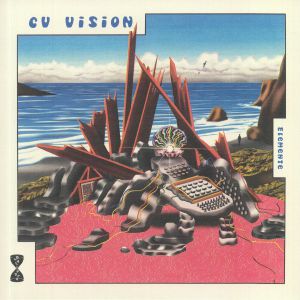
Berlin studio nut CV Vision washes ashore, surfing on sine waves with his second offering of 2021 and the fifth Patience release, “Elemente”. Following on from his recently released debut LP Tropical (South Of North), CV Vision takes his library chops, psych rock skills and analogue artillery and spreads them over two quarter hour sides, to brain melting effect. “Elemente” soars from cosmic to kosmiche. A dizzying homage to the natural world, the two pieces pay tribute to those animals that glide (Gleiten) and those that float (Treiben). The A side Gleiten tears off on a gnarly, loping odyssey, embarking from the sand to faraway lands, stopping in at Beppe Loda’s Typhoon, Conny Plank’s studio, Bob Chance’s garage via the Transfer Station Blue. The B side Treiben is a more sublime animal, steadily cruising at 20,000 leagues, traversing a mostly calm sea of bubbling arpeggiated synthesis before beaching somewhere on the Med in the late 70s. CV Vision is Dennis Schulze, a DIY boffin originally from Bayreuth who enjoys tinkering with electronics and cold water plunges. He has several more projects on the way in 2021. Patience is an outlet for exploring further beyond the break than usual. Inspired by the music perpetually on rotation at HQ – with E2-E4 representing the format’s high tide mark – each release will be one artist’s deep dive down one inspirational wormhole spread across two sides of vinyl, or two side-long sojourns making full use of a round 12” piece of plastic.
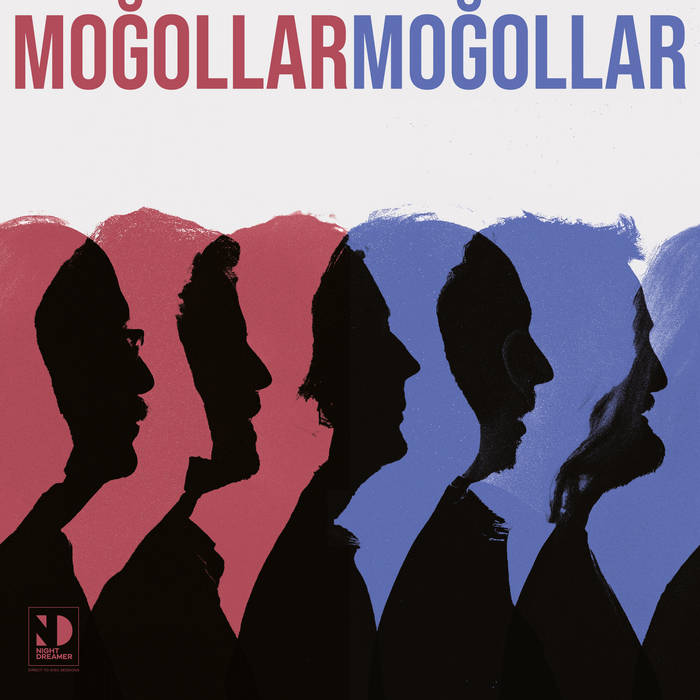
Legendary Turkish psych innovators Moğollar grace the Artone Studios in Haarlem for a masterclass in the original Anadolu psych roots, cutting a compendium of their rawest hits and most-wanted psychedelic rock classics. Formed at the end of 1967 with five young musicians, Moğollar were the original Anadolu psych originators. They were the first Turkish pop band who tried to blend the microtonal folklore and traditional instruments of rural Anatolia with Western pop and rock; they were the first Turkish psychedelic band to achieve overseas recognition. More than fifty years after first forming, Moğollar materialised in the Artone Studios to give a masterclass in fuzzed-out folklore and Turkish psychedelic roots for Night Dreamer’s Direct-to-Disc series – a fitting follow-up to Night Dreamer’s BaBa ZuLa set, coming straight from the group who laid the foundations of the genre. For this Night Dreamer session, Moğollar spent two days in the Artone studios, recording sides A and B on the first day, and C and D on day two. With BaBa ZuLa’s Murat Ertel adding contemporary sonic punch behind the boards, the band revisited their most renowned hits to lay down energised new versions, and dusted off some of the most sought-after cuts from their enormous catalogue. The result is a showcase set by a band that are one of true pioneers in global psychedelic rock, and a masterclass in the true roots of the Anadolu psych sound: fuzzed-out, committed, and straight from the source.
The psychedelia of Purple Desert Rain God is playful and innovative in a way that brings early Pink Floyd to mind, where classic blues elements were mixed with tape loops and tremolo/feedback guitars. But more than 50 years has passed since Barret’s trip through universe was caught on tape and the comparison stops there: Purple Desert Rain God is a new take on acid rock. Purple Desert Rain God is nature music and transcendental dance music and they overlap between genuine psychedelia and electronic music with filter sweeps on guitars and drums. Sudden bursts of drum fills brakes the monotonous groove and amplifies the feeling of lost control and the band often balances on what is considered a beat that is on time. However, they keep momentum and hammers the pulse on your eardrums, into your mind.
Rodion G.A. the Father of Romanian Electronic Music
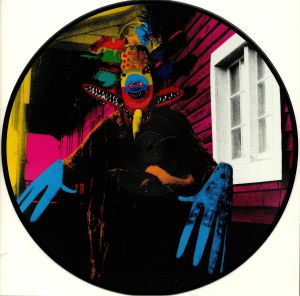
Minami Deutsch crushes negativity, sorrow, and depressive energy on their new Hoga Nord Rekords release, ‘Can’t get there’, a five-track EP. The Japanese psych-scene is being kept vital by picking up all the best influences from all the best psychedelic music and mixing that with a delicate touch of Japanese music tradition. On this EP, you hear all that you love and miss from the 70’s krautrock bands plus a cover on cult band Index’s song ‘Israeli blues’ from 1968. Also on this record are two remixes of the title track by HNR household names Jamie Paton and Mythologen. Listening to this, you get the feeling of leaving half your brain in a Volkswagen down an endless Autobahn in 1972 and one-half lost in the astral plane as boundless light, above space and time.
This latest collection for Artificial Dance comprises three freshly unearthed iterations coming from Hypnobeat. Spearheaded by James Dean Brown (also known from Perlon’s Narcotic Syntax) and Victor Sol, and featuring other rotating members, Hypnobeat is a true product of the open-ended spirit of DIY music that proliferated in the 1980s. The prescient project championed deft, machine-powered rhythm programming as its modus operandi long before the practice would become a dominant global cultural form. Since Hypnobeat was revived in 2012 with Helena Hauff joining JDB on stage for improvised live performances based on one 707 and three 808s, there have been a string of archival releases shining a light on the early and more recently recorded works of this forward-thinking venture.
Aggelos Baltas is a veteran of the global electronic music scene, responsible for a handful of celebrated EBM 12”s as Dream Weapons, and a particularly heady and open-ended brand of krautrock as Fantastikoi Hxoi. His newest project, Anatolian Weapons, was conceived as a way to bring together these two seemingly mismatched concepts, with the polyrhythmic percussion and wailing tones of Greek folk music serving as their unlikely bonding agent. “To The Mother Of Gods” is Baltas’ debut album for Beats In Space. Created in tandem with Greek folk musician Seirios Savvaidis, it is a work of simultaneous collaboration and subtraction whose meticulous construction becomes more apparent with every listen. An album-length exploration of what happens when the principles of dance music are applied to pre-digital musical modalities. Savvidis contributed stems of ten songs, which Baltas deconstructs and rearranges with appreciation of the ancestry of their lineage and of the deceptively ancient eerie, droning qualities inherent in the style. Occasionally augmenting Savvaidis’ recordings with his own, Baltas treats these elements as if raw materials for an architectural process. It is a record of psychedelic folk music.
Pete ‘Bassman’ Bain, one of the founding members of the UK cult psych rock band Spacemen 3, formed Alpha Stone after Spacemen 3 and his other band The Darkside split up in the mid-nineties. In 1996 the band recorded the album ‘Stereophonic Pop Art Music’ and it was released on Bomp! Records on Compact Disc. The album hasn’t had a ‘proper’ vinyl release until now, 2018, when Hoga Nord Rekords continues their collaboration with Pete Bassman by releasing the album. You can clearly hear that Pete Bassman was the driving force behind Alpha Stone; fuzz, synthesiser -sweeps, programmed drums and processed vocals are the cornerstones in Alpha Stone’s sound. Raga-like mantras, heard in Farmer C, lies track to track with more percussion driven grooves and psychedelic pop oriented songs. The album’s sound has obviously survived the 20+ years shelved in obscurity and proves the ‘Drugby’ sound still vital! It’s always hard to sum up a bands particular sound in a few words, but you could say that if you put guitar and bass, synthesisers, a drum machine, and Julian Copes record collection in the hands of an alien, you’ve got Alpha Stone.

Inversions announce their fourth record release – a further collection of unreleased tracks from Rodion Roșca’s archives, credited to his three-piece band Rodion G.A. The tracks are culled from several studio recording sessions, and one track recorded in Rodion’s home studio. The first sessions, at Radio Cluj over the period 1978-79, produced the basic instrumental backing for what would become “Nu Tu Vei Fi,” “Ore,” “Bătrânul Cais,” and “Moment.” Rodion applied the triplicate vocals and effects that would transform them into the finished tracks at home on his Tesla reel to reel machine. When the last session was complete, Rodion asked the engineer if he could record the instrumental tracks directly from the mixing console on to his Tesla machine. A genius stroke, as he was subsequently able to create many further tracks using various repeated rhythms and loops from this same material, tracks equally individual and unrecognisable from the source, such as “Uneori.” This earned him the accolades “Orchestra Man,” and the “First One-Man Band in Romania.” The second session, at the radio station in Bucharest in 1983, was more straightforward, with the tracks “Tamburași, “Satul De Roua” and “Tic Tac” all finished then and there. “Singur Pe Drum,” although written in Rodion’s teens, was not recorded until 2010 in his home studio. The record is a collection of tracks with a slightly rougher garage or psychedelic rock edge than the more electronic sounding works that have re-surfaced on recordings in the last few years.

Ukranian lo-fi genius Vakula is back and if audaciously tackling Steve Reich wasn’t enough, he’s taking on possibly his most ambitious project yet with “Dedicated to Jim Morrison”. The title says it all really, in this brazen tribute to the sixties rock legend. On the first side you’ve got “For Jim” with its bluesy, boozy, typically sixties rock, while “The Canyon Road” is definitely the track on here to really channel the sound of The Doors. Then the acoustic country twang of “Mississippi Delta” carries off a southern charm. On the flip you’ve got “The Human Abstract” which is one truly hazy affair and features some of William Blake’s’ spoken word poetry recited by friend Andrei Dubinin. “Airolg” sounds like, well, Van Morrison’s “Gloria” (once famously covered by The Doors) and “Tien Beach” features sublime tremoloed slide guitar, sounding like riding off into a sunset. This album is Vakula’s thoughts in time and out of season dedicated to Morrison, the poet, the musician, the soft mad child, the great man. ‘Enter again the sweet forest, enter the hot dream, come with us. Everything is broken up and dances’.
Exploratory Lebanese imprint Annihaya presents a stunning debut album opus by Rabih Beaini aka Morphosis under his birth name. As Rabih was born in Lebanon it is fitting he shares ‘Albidaya’ – meaning “The Beginning” in Arabic – with a label from his home country, who provide acute context for its mixture of electronics, psych rock, folk and jazz. Impressively it was mostly recorded over the course of one day in 2012, wrangling myriad rhythms, tones and shapes from Rabih’s famous collection of vintage analog synthesizers and sequencers meshed with Eko Tiger Duo organ and guitar, and some assistance from Tommaso Cappellato on drums and Piero Bittolo Bon on woodwind and electronics (with additional credits to both Mike Huckaby and Donato Dozzy), and post-production done in Berlin and Rome.
 The Hipodrome Of Music