Linea Aspera return with their second full-length LP, combining analogue production techniques with evocative emotional authenticity that ties themes of inherently human experience to cosmological concepts of physics and astronomy.
Linea Aspera return with their second full-length LP, combining analogue production techniques with evocative emotional authenticity that ties themes of inherently human experience to cosmological concepts of physics and astronomy.
Shawn’s statement regarding this album: “‘Conduit’ contains moments from the last two or so years of my life. There have been a lot of trying times and ups and downs in there. These moments are the exhaust of that life. Some more subjective than others. We are simply conduits for whatever flows through our cores. We tap into it. We allow it to flow through us. As it takes shape, we select its forms and hone its output. We are simply conduit for our work. Maintain the Flow State.”
The album is the second full length album by Shawn Rudiman for Pittsburgh Tracks.

Master synthesists Colin Potter (NWW), Alessio Natalizia (Not Waving) and Guido Zen reprise their supergroup for Ecstatic with a seductively serpentine follow-up to their superb debut from a couple of years ago. PNZ’s pulsing, twanging, expansive ‘Magari’ was recorded between 2018-2020 in the slipstream of ’Shut Your Eyes On The Way Out’, which is surely one of the strongest new kosmiche-related albums of recent years. Where that album refreshed classic styles of European synth music for modern ears, ‘Magari’ – meaning “I Wish” in Italian – adapts their style to the unique Afro-Latin lilt of Brazilian music with central use of the Berimbau; a single-stringed percussion instrument commonly associated with the elegant martial art/dance of Capoeira, which the band’s Guido Zen brought home from his travels in South America. Combined with their juicy, almost fleshly arps and Guitar pedal-generated computer voice, the results are wonderfully wide-eyed, embracing bouts of motorik rhythm beside vertiginous noise wormholes and mystic tone poems that speak to a cumulative experience spanning decades spent hunting for life between the wires.
Like their first LP, much of the recording took place remotely or in pairs, and rarely with all three present, before the parts were mixed down at Colin’s studio in Leytonstone. In its journey between the intricate meters and perpendicular vectors of ‘Too Much Traffic’, and their mesh of curdled tones with their phone recordings of a manic preacher in Camberwell on ‘Saved’, they variously recall Craig Leon’s alien invocations of Dogon folk tales as much as the heady dissonance of Alessandro Cortini; producing outstanding pieces of tangibly haptic substance in ‘Sergio’ and infectiously tip-of-tongue Berimbau twang on ‘Gennaio’, and for good measure, something like Phil Collins gently losing the plot after healthy dose of Ayahuasca in ‘Fill’, while ‘Ancora’ sounds like Basic Channel scoring Herzog’s Aguirre.

Nous’klaer & RE:VIVE present two scores by Thessa Torsing (upsammy) and Tammo Hesselink. Torsing’s is a 27-minute piece, composed for a collage of archival footage of the Dutch ship MS Oranje. The short film explores the lifecycle of the ship, from production to usage and to the fire that ultimately destroyed it. Hesselink’s is a 17-minute piece for the pioneering short film, Ballet Mecanique (1924), a rigid composition of sharp notes and twisted drum patterns that hypnotically evolve accompanying the film’s staccato rhythm.

The necromantic antibeats is the first longplayer by DJ WEB (Walid El Barbir). Repetitive and funky drum-compositions contradict vocal samples resembling horror, suffering, pain and malady, combining both into very playful compositions which contain seductive joy and the ill depths of mankind (hell) at the same time. Dead poems for the eager & the lost evoking forgotten potentials through ritualistic repetitions.

In his debut LP on the imprint, Fleisch collective co-founder and resident Halv Drøm crafts esoteric body music inspired by loss, nostalgia and ego-dissolution. With groove, finesse and nothing to prove, he processes his past and future through an arcane haze of post-punk guitars and industrial field recordings.

Minimal Wave Records and Bitter Lake Recordings are happy to present their first collaborative release, a double LP by mythical Japanese underground electronic trio Portray Heads. Their self-titled double LP spans all their recordings to date including the songs from their rare “Elaborate Dummy” flexi (1985) and follow-up “Oratorio” (1986) Influenced by early 1980s European New Wave and Japanese synth-pop, their songs range from circular poppy synth gems to moody dark new wave anthems – all led by strong female vocals.
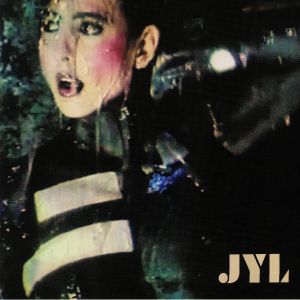
Minimal Wave presents a reissue of Jyl‘s self-titled full-length album from 1984, originally released on Klaus Schulze’s Inteam label. Born and raised in California, Jyl travelled to Europe in her twenties to dance and met several talented and like-minded collaborators along the way. She ended up in Germany, and worked with Ingo Werner, Angela Werner, and Klaus Schulze, on what would become one of the most important and forward thinking electronic albums of the time. Shortly after its release, the song “Computer Love” became a mini-hit along with the album’s opening track “Mechanic Ballerina”. The lyrics of “Silicon Valley” and “Computer Generation” are reflective of the times and have become even more relevant now, 36 years later. The production and song arrangement on the album is immaculate. The synthesizers, drum programming and vocal contributions complement Jyl’s voice perfectly. The album contains an incredible depth beyond a regular dance album likely due to the spirit of the people behind it – the list of contributors add to its significance and near-mythological mystery.

Suction Records presents the first new album since 2014 by the legendary, and somewhat underrated electronic project of Mark Van Hoen, Locust. The album is called “The Plaintive”. Earlier this year, Locust released “The Plaintive” as a 15-track CD/digital album, part of Touched Music’s “Touched By Silence” boxset, and the CD was sold out in a matter of hours. Having heard Locust’s contribution to the set, the Suction crew was immediately smitten with the material, which sounded very much unlike the Locust of old, yet absolutely complimentary to Van Hoen’s murky, analog-synth past. Produced intermittently over a 5-year period, the tracks were created with a largely-digital eurorack modular system, alongside a selection of analog synthesizers, notably a newly-acquired Prophet 12 polysynth. While tracks like “If You Knew” and “Out Here” are reminiscent of classic Locust, much of “The Plaintive” shows us a new side to Locust – melodic, playful, and melancholic, with clear nods to the melodic electronic sounds of early pioneers like Cluster, early-Kraftwerk, or even OMD’s late-70s output.

Exhausted Modern’s debut full-length titled The Year of the Rat is a proof of the thought-provocation that author’s name generates. Released on his own Endless Illusion imprint, the album doesn’t have all the answers, it simply offers Exhausted Modern’s perception of the modern times and also the energy to do something with them. The title, borrowed from the Chinese zodiac calendar, doesn’t slip to mere esoteric prognosis, it fittingly and provocatively comments on broken mechanics of society, capitalistic hierarchisation and emotional frustration of its victims. Despite the dystopian character of Exhausted Modern’s sound, which ranges from fast melancholia through suspicious calmness to slowly bubbling rage, it doesn’t feel like the end of the world. It’s critical artistic statement of a person who despite seeing all the darkness, also sees the way out of it.
Marcos Cabral returns to L.I.E.S. with a new six track mini LP after a run of cult releases for The Trilogy Tapes as Chemotex. Here we get Cabral in top form falling somewhere in-between his last works for L.I.E.S. and Chemotex tracks. Through the record we get a rough yet refined style moving from metallic gnarled electro to melodic IDM and/or destructive the electronics as heard on “Secret Air”. Our favorite being the introspective closer “Wearing Petrichor”.
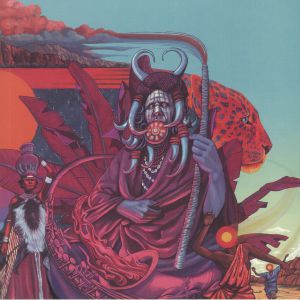
Influential jazz collective Idris Ackamoor and The Pyramids return with an epic new opus, ‘Shaman!’, featuring a fresh line-up including original 1970s Pyramids member Dr. Margaux Simmons on flute, Bobby Cobb on guitar, long-term associate Sandra Poindexter on violin, Ruben Ramos on bass, Gioele Pagliaccia on drums and Jack Yglesias on percussion. The band transitions from the political and social commentaries of 2018’s acclaimed ‘An Angel Fell’ into more introspective themes. “I wanted to use this album to touch on some of the issues that we all f ace as individuals in the inner space of our souls and our conscience,” explains Ackamoor. “The album unfolds over four Acts with personal musical statements about love and loss, mort ality, the afterlife, family and salvation.” Evolving around Ackamoor’s intricate compositions, the album takes us effortlessly across moods and emotions through a series of expansive, extended pieces. Starting with ritual, soul-searching, and masculine vulnerability on the title track, the band explores timeless existence on ‘Eternity’ and mourns the sudden loss of loved ones in the prescient ‘When Will I See You Again?’, a track which gains new relevance amidst the current COVID-19 crisis. Ackamoor pays tribute to his mentor Cecil Taylor on the angular ‘Theme For Cecil’ and renders homage to the ancestors on ‘Salvation’ and ‘The Last Slave Ship’, recalling the last ship to bring slaves to the US from Africa, the Clotilda. The superb ‘Virgin’ is an anthem of forgiveness, new beginnings and self-healing.
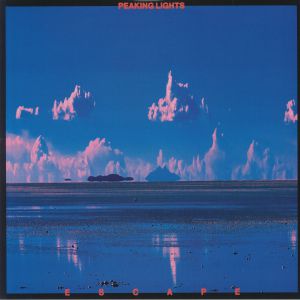
With their first LP in over three years, Californian psych-dub duo Peaking Lights offer an outlet from the mundane with a kaleidoscopic collection of lo-fi, escapist-electronic pop. Over their illustrious twelve-year-plus career, the husband and wife duo of Aaron Coyes and Indra Dunis have set themselves apart with their characteristic dreamy, and melancholic sound that blends together elements of dub, and delicate-but-quirky electronics. E S C A P E, Peaking Light’s sixth album, and first for Dekmantel, finds them at their finest, replete with atmospheric landscapes crafted out of homemade-percussive loops, that sit alongside wondrous electronic pop and krautrock-like hooks, all tied together by Indra Dunis’ composed and hypnotic vocal charm.
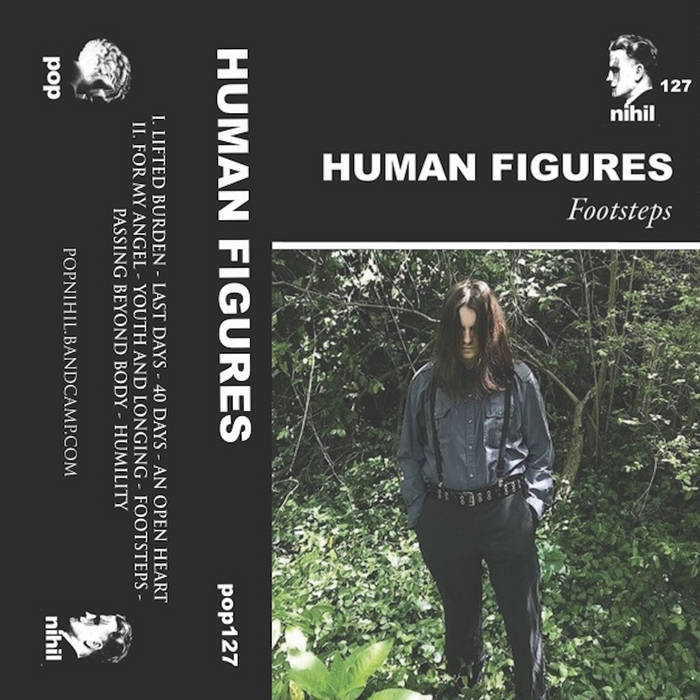
Popnihil returns with an album of intricate postpunk from Daniel Holt’s new project Human Figures. Besides running Ardetha Records, Holt has impressed with dungeon synth and ambient projects, his dark synth duo Vault, and a mind-melting techno 12″ for L.I.E.S. Records. But Human Figures is a completely new and personal avenue of expression. “Footsteps” features hymnal, meditative post-punk from musical polymath Daniel Holt.

Polytechnic Youth return with the whacked out synth-punk mini LP “Es Una Bestia” by Wladyslaw Trejo. Trejo is a Spanish musician, and a key figure in the European underground electronic scene; and despite this being his first solo album since 2015’s self titled debut, he is eternally busy, especially as part of ‘avant-wave’ dueo Slovenska Televiza. Trejo says of the record: “Es Una Bestia is a settling of personal accounts with the ghosts and fears of youth. Digging through the wounds, exploring the cursed soul, inviting his monsters to come to the surface and they do so in the form of vitriolic and hallucinated synth-punk. For this bloody task he has aquired the best possible help, the complicity of the prestigious (and Nick Cave favourite) Polish painter Aleksandra Waliszewska, who provides vocals, as well as the director and musician Wiktor Stribog, the brain behind the ‘Kraina Grzybów’ phenomenon, who collaborates on the lyrics. In his solo project Wladyslaw reveals himself as a crooked line, a faustic anomaly that invites to a dark and psychotropic journey in the form of feverish electronics, industrial rhythms, and almost paranoid sound walls through certain life risks”.

A year has passed since Cyan85 first graced the VOITAX catalogue with his successful summer debut EP – “Bay Of Sampieri”. His dreamy pads, avant-garde take on retro arpeggios and slamming 808 beats have been continuously conquering our ears ever since, making him a young talent to watch within the electro circuit. He now returns to the imprint with his very first album – “Lucid Intervals”, demonstrating his knack for crafting ambitious pieces to establish himself as a respected producer. The LP aims to explore a variety of dystopian atmospheres and energies throughout nine infectious and carefully crafted tracks that build on electro’s rich heritage without failing to infuse it with Cyan85’s very own remarkable, dreamy electronic signature.
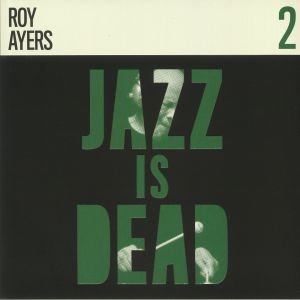
In February 2018, Roy Ayers performed four sold out shows in Los Angeles as part of the Jazz Is Dead Black History Month series. It wasn’t until 2020 that fans of Ayers discovered that in addition to those shows, the legendary vibraphone player had also recorded an entire album of new material with Adrian Younge and Ali Shaheed Muhammad. Over the course of its eight original compositions, written collaboratively by Younge, Shaheed Muhammad & Ayers and recorded at Younge’s Linear Labs in Los Angeles, the resulting album sounds both like an unearthed an unreleased album from Ayers’ classic period in the 1970s (which produced the oft-sampled “Red, Black & Green,” “We Live In Brooklyn, Baby,” “Everybody Loves The Sunshine,” and “Running Away), as well as something startling, new and unexpected. Joining Ayers, Younge & Shaheed Muhammad onthis musical journey are drummer Greg Paul, vocalists Loren Oden, Joy Gilliam, Saudia Yasmein, Elgin Clark & Anitra Castleberry, as well as Phil Ranelin & Wendell Harrison of the legendary Spiritual Jazz label Tribe Records. The 8 tracks on this album testify to the love not only of a legendary musician’s legacy, but to the vitality & necessity of this music and these sounds in the present era, a thread that will likely run throughout all of the upcoming releases from Jazz Is Dead Records.

Strut kick off a brand new deal with the seminal independent black jazz and soul label Black Fire in May with ‘African Rhythms 1970-1982’, a comprehensive 2CD / 3LP compilation of Oneness Of Juju, led by Plunky J. Branch. Tracing their career from the band’s earliest work in 1970 with South African exiled jazzman Ndikho Xaba in San Francisco, the compilation covers the band’s journey to New York’s loft jazz scene, forming Juju and releasing two landmark albums of hard-hitting percussive jazz on Strata-East. “I saw myself as a cultural warrior,” explains Plunky. “We studied about Africa and tried to infuse our music with an African spirit.” Moving back to his hometown of Richmond, Virginia during the mid-’70s, Plunky drew in a superb new group of musicians and vocalists and created the band’s new incarnation, Oneness Of Juju, retaining the African influence but fusing his sound with funk and R’n’B on the classic ‘African Rhythms’ album. “We realised that, if we put a backbeat to the Afro-Cuban rhythms, people in Richmond and Washington D.C. could be drawn into it; it didn’t change anything about our message.” The change would lead to a series of enduring soul-jazz classics on Jimmy Gray’s Black Fire label, including ‘River Luv Rite’, ‘Plastic’ and ‘Don’t Give Up’ and their biggest crossover international hit, ‘Every Way But Loose’ in 1982, later famously remixed by Larry Levan. The band received renewed interest in their music during the mid-’80s as Washington D.C.’s go-go innovators cited the band as a major influence and rare groove DJs revived their albums for London dancefloors.

Detroit composer John Beltran returns to Delsin with The Season Series. A collection of subtle and colorful compositions of beautiful synth melodies creating heavenly atmospheres. A blissful walk through breezy spring fields where the gentle sunrays thaw frosty winter scenes. Whether offering up club-focused Motor City techno, futuristic tech-jazz, bubbly electronica or sofa-bound ambient compositions, John Beltran always wrings the maximum amount of beauty and soul from the machines he uses to make music. He’s at it again on “The Season Series”. Variously fusing swelling, almost classical chord sequences, stirring melodic refrains, effects-laden shoegaze guitars, effected vocal snippets and beats (when used) that touch on many of Beltran’s main influences (think IDM and Detroit techno), Beltran has produced a simply stunning album that amply rewards those who give themselves in to its positive, emotion-rich charms.

