Traxx – Studio Insert 4: Sanctuary


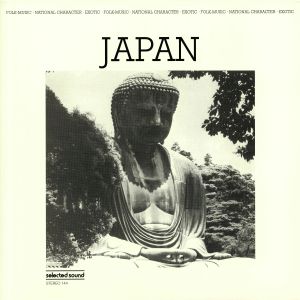
The first Be With foray into the archives of revered German library institution Selected Sound is the super in-demand Japan from Victor Cavini, originally released in 1983. Rare and sought-after for many years now, this is one of those cult library LPs that never turn up. With Daibutsu the giant Buddha of Kamakura’s presence gracing the hefty front cover, this is a record bursting with dope samples for adventurous producers: it’s koto-funk madness. Victor Cavini was the library music pseudonym of prolific German composer and musician Gerhard Trede. He was known for exploring instruments and styles from around the world (he played over 50 different instruments himself) and Japan is his collection of 14 musical sketches painted with traditional Japanese wind and string instruments. These are the sounds of traditional Japanese folk music re-interpreted through Western ears, with the occasional contemporary twist. Contemporary for 1983, of course.

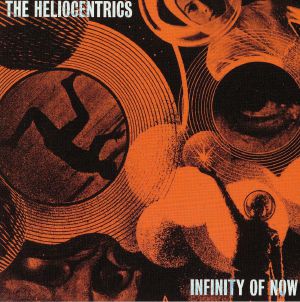
The UK’s cosmic, psychedelic-funk ensemble issue their first album on maverick producer Madlib’s label, Madlib Invazion. The Heliocentrics’ albums are all confounding pieces of work. Drawing equally from the funk universe of James Brown, the disorienting asymmetry of Sun Ra, the cinematic scope of Ennio Morricone, the sublime fusion of David Axelrod, Pierre Henry’s turned-on musique concrète, and Can’s beat-heavy Krautrock, they have – regardless of the label on which they’ve released their music – pointed the way towards a brand new kind of psychedelia, one that could only come from a band of accomplished musicians who were also obsessive music fans. Drummer Malcolm Catto and bassist Jake Ferguson are the Heliocentrics’ masterminds and producers, and they are obsessive weirdos in today’s musical climate, searching, progressive humans who are often out-of-time with current trends. They have been playing together for nearly two decades and their collective drive is to find an individual voice. The Heliocentrics search for it in an alternate galaxy where the orbits of funk, jazz, psychedelic, electronic, avant-garde and “ethnic” music all revolve around “The One.” With Madilb’s label Madlib Invazion for Infinity of Now, the Heliocentrics have returned to develop their epic vision of psychedelic funk, while exploring the possibilities created by their myriad influences, Latin, African, and more.

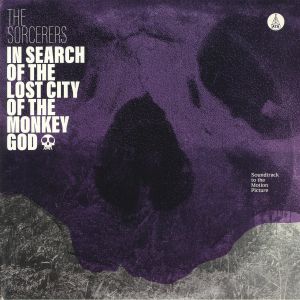
The Sorcerers began working on the new album during the winter of 2018 and it was during the writing sessions for this album that the concept for the LP began to take shape. The name for the album was taken from the title of a National Geographic article read by Bassist Neil Innes and was used as the starting point for the entire concept. The library music scene of the 60s and 70s has always been an intrinsic part of the sound of ATA Records and so it made perfect sense to envisage the album as a soundtrack, given the cinematic quality of The Sorcerers music. Each track was written with a particular scene in mind and the music was then shaped in the studio to best reflect the essence of that scene. Drums, Bass and Percussion provide the solid foundation onto which Flutes, Bass Clarinets, Xylophones and Vibraphones add the atmospheric and melodic counterpoint, deftly weaving between one another to conjure up images of the unforgiving environment of the dense jungle, unknown eyes watching the protagonists of the imagined film as they make their way towards their ultimate goal, their pursuit by unseen assailants, the arcane mysticism of undiscovered cargo cultists and the ancient ruins of long passed civilisations.

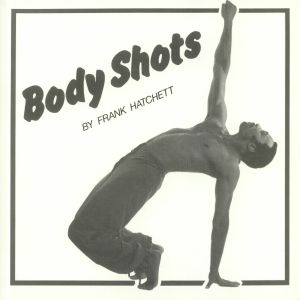
Frank Hatchett was a legendary dance instructor and originator of VOP. VOP is not an abbreviation but, as he himself puts it: “VOP is a style”. It’s used to flavour the choreography and to communicate and translate emotions to the audience. The record produced by Don Alan Tipton is a wonderful complement of said VOP style. It features 11 tracks made for dancing that are produced and arranged in a moving and funky fashion.

‘Summoning The Monkey God’ covers a wide range of influences: Ethiopiques Ethio-Jazz rubs up against European library music of the 60s and 70s. The Sorcerers seamlessly blend these disparate elements into one cohesive sound. Based in ATA Records’ home of Leeds, The Sorcerers form the backbone of the ATA Records house band including drummer Joost Hendrickx (Kefaya, Shatner’s Bassoon, Abstract Orchestra) and ATA label heads Neil Innes (Bass & Guitar) and Pete Williams (Woodwinds & Percussion). Bass clarinets, flutes, and esoteric percussion that sit alongside bass, guitar and drums are essential to The Sorcerers sound providing cinematic textures on top of a solid rhythmic foundation.

Private Records is back with the archives of SONY Music and the library archive of Ambros Seelo. The German musician Ambros Seelos recorded this psychedelic Disco, Afro Funk and Jazz magic during the 1970’s and early 1980’s.

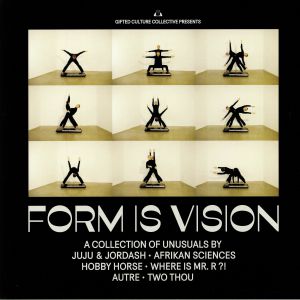
Form is Vision is a collection of music unified by the same vision but not by the same form. It’s the vision making the form, without being influenced by the form itself. Here, visionary electronic artists as Afrikan Sciences and Juju & Jordash meet cross over jazz bands like Hobby Horse and Where is Mr. R?!. The music was compiled by Autre & Two Thou, whose productions here form a bridge across different moods. The result is a synergistic leap away from genre-bound music.

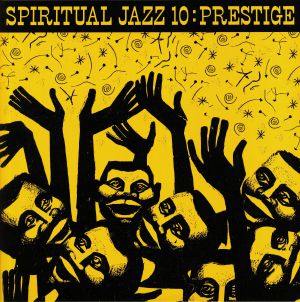
‘Esoteric, modal and deep jazz from Prestige Records, 1961-73’. The tenth edition of Spiritual Jazz takes a closer look at the music Prestige was recording at the start of the 1960s. This was the period when the modal jazz sound pioneered by Miles and Coltrane was starting to percolate through the jazz underground. In its heyday, Prestige was the only jazz label that could hold a candle to Blue Note. Prestige was always quick off the mark to record new artists, and in the years after Kind of Blue the label was quick to release some of the most innovative early explorers of the new style. Founded as New Jazz in 1949 by 20-year old jazz fan and entrepreneur Bob Weinstock, Prestige was the only other imprint besides Blue Note to capture the iconic jazz sounds of the 1950s, and like its rival it grew to be an icon itself. If Blue Note documented the sound of hard bop in its most carefully crafted and beautifully presented form, the low-key, jam-session approach that Weinstock preferred meant that the music captured by Prestige has a tough, unfiltered energy that was a lot closer to the way it was being played live, night after night, by New York’s most prominent jazz musicians. Featuring Afro-Eastern visions from Yusef Lateef and Ahmed Abdul-Malik, deep modal excursions from Mal Waldron and Walt Dickerson, and essential spiritual jazz grooves from Gary Bartz and Idris Muhammed, Spiritual Jazz vol. 10 documents the sound of modal jazz in full flight, unabashed and authentic from the pioneers.

Recording at Malcom Catto’s analogue studio has been an ambition of Greg’s for a long time, not only for the studio itself but for Malcolm’s skill using this vintage equipment, very few people can achieve such an incredibly big sound. Moving to a more rhythmic space, you could call it Jazz funk or Fusion, but labels suck so just listen and appreciate the pure sense of space Malcom achieves with this recording. Instruments float in space, aided by the Vintage EMI desk and a host of valve equipment which has taken Malcolm a lifetime to collect. In amongst the more rhythmic pieces we also have some classic Foat style compositions; ‘Lake Kussharo’ and ‘The Dreaming Jewels’ as emotive and personal as ever, a feeling that can only be expressed and articulated in music. These past few years will no doubt be looked back on with great favour in musical history, with prolific and high quality output in all his various projects this LP is his crowning achievement of 2019.

Linking the ancient and the modern across time and space, the Sokratis Votskos Quartet presents ‘Sketching the Unknown’ – a modern jazz journey into the folk and modal music of ancient Greece. Playing rich original compositions, the Quartet draw freely on Greek and Balkan folk sources, jazz idioms, and the classical makams of the near East. Returning to ancient Greek modes such as Dorian, Phrygian and Lydian, a fresh perspective is brought to the modal style. ‘Sketching the Unknown’ links today’s jazz back to the ancient modes and microtonal folk music of Greece and the Near East. Deep modal jazz sounds from an ancient source.

Surprise Chef is a 4-piece instrumental jazz-funk group from Melbourne, Australia. ‘The College Of Knowledge’ is their self-run label and ‘All News Is Good News’ album was recorded straight to tape in the band’s home studio.

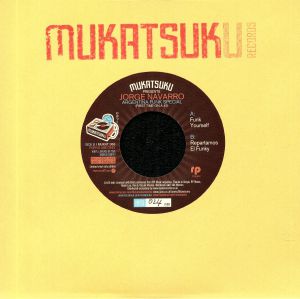
Mukatsuku struck gold again on this latest first time on a “45” issue. It boasts a couple of lesser-known jazz-funk fusion jams which originally featured on Argentine musician Jorge Navarro’s 1977 album “Navarro Con Polenta”, an LP that has never been issued outside of South America. A-side “Funk Yourself” is a bustling, high-octane jazz-funk Hammond licks and spiralling horns jumping above a Blaxploitation style backing track. “Repartamos El Funky” is a more laid back but no less musically intricate affair, with a variety of high-grade electric piano and guitar solos riding seemingly endless jazz style drum solos and rubbery bass. Juno hand-numbered copies come in exclusive sleeves and this 45 not be repressed. DJ Support comes from Ge-ology, Dom Servini, DJ Food,The Allergies,45LIVE.net ,Dr Bob Jones and more

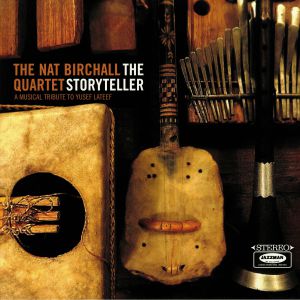
With 20 years passing since his first foray into recorded jazz, Nat Birchall now ranks as one of the premier saxophonists of his generation. With several highly acclaimed albums in the locker, he now returns with his most ambitious project yet – a tribute to the legend that is Yusef Lateef. ”When Jazzman Gerald first mentioned to me the idea of doing an album as a tribute to the jazz giant Dr Yusef A. Lateef, my first thought was ”Where on earth do I start?” Lateef was such a colossus of music, and his scope so broad, that I couldn’t hope to begin to cover his musical universe. He was a master of the tenor saxophone, a master of the flute, a master ballad player, a master blues player. Not to mention his skills as a composer and arranger and of course his exploration and use of musical methodology and instruments from all over the world.” ”I’ve always been a great admirer of Lateef, and the challenge was intriguing, so I decided to give it go. We interpreted some of his own compositions (Brother John, Morning & Ching Miau) as well as some compositions by others that he made his own by careful arrangement and interpretation (Love Theme from Spartacus, Ringo Oiwake). I also wrote some original songs that, while certainly not written in his style, might be said to fall into his very broad approach to music making.” ”I also wanted to utilise as many different instruments as possible, something I hadn’t explored too much until this album. So it was a nice opportunity to finally get around to playing some of the many small instruments I’ve collected over the years; the Turkish zurna, the mbira from Zimbabwe, the balaphon from Mali and the arghul from Egypt. We have also tried to use varied time signatures in the music, so we have songs in 3/4, 5/4 and 7/4 time, as well as the standard 4/4.” ”Ultimately the best music tells a story to the listener and takes them to places they might not have imagined themselves. Yusef Lateef certainly did that, and as such was a master storyteller.” Nat Birchall

If ever a record be called a lost masterpiece then this record more than deserves that epithet. First released on an obscure French label in the 1970’s it might have sunk further into obscurity and left no trace of it’s passing but somehow a handful of copies turned up in various Jazz shops in London where it was snapped up by DJ Paul Murphy who was then playing to the embryonic jazz dance scene, based at the very first Jazz Room club: The Horseshoe in London’s Tottenham Court Road, a decaying, seedy, sticky carpeted old West End ballroom that had seen better days. This and a select few records in a similar vein were being played to an appreciative audience who demanded tough raw percussive rhythms overlaid with some furious jazzy soloing and whenever this record hit the turntable it left even the most demanding groover sated. It’s a really fantastic collection from this barely known reedman and his excellent band which also features a guest appearance by American Legend Horace Parlan who is best known for his Afro-Cuban session ”Headin’ South” on Blue Note Records. Superbly produced by drummer Peter Schmidlin, who has conjured up a spiritual modal mixdown of Afro-Cuban & Jazz extended percussive workouts that are uncompromising in their groove and which manage to sound both timeless and modern. The record is being re-released with the original striking artwork, guaranteed to be a talking point.

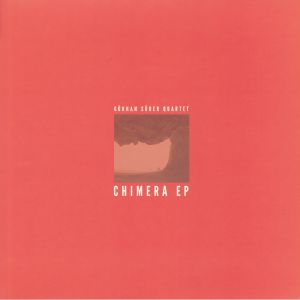
This latest Rocafort EP is an exciting, international jazz affair stretching across time and continents. Consisting of musicians from Mexico, Serbia, Catalonia and Turkey, the Gökhan Sürer Quartet delivers a new perspective on the oriental jazz genre. Gökhan Sürer is a young Turkish pianist, composer and arranger whose musical education reaches from Istanbul, to NYC and currently Barcelona. ‘Chimera’ is like the soundtrack to a modern mythological journey across all sides of the Mediterranean and beyond. Anatolian magic is woven throughout the four titles, most of them filled with an elegant urgency and tension in the rhythmic composition with the intension of giving a modern jazz twist to Turkish and Armenian melodies along with elements of rock, funk and reggae. This is possibly Rocafort’s most ‘mature’ release to date, in the sense that, as with most jazz, it requires intense listening in order to get the most out of the musical journey and detail in the composition.

Rabih Beaini’s Upperground Orchestra (Beaini, Alvise Seggi, Tommaso Cappellato. Piero Bittolo Bon) back with their first studio material since 2008.

We Release Jazz presents the official reissue of the original soundtrack of Jean-Pierre Melville’s 1970 film noir classic Le Cercle Rouge composed by French soundtrack master Eric Demarsan. Eric Demarsan’s compositions for Le Cercle Rouge draw from the orchestral spirit of the Modern Jazz Quartet (as requested by Melville who loved John Lewis’ work), abstraction and minimalism to create a suspenseful and hypnotizing audio landscape which elegantly underlines the tense atmosphere of unavoidable fate that shrouds the movie and the doleful beauty of its characters. Simply put, it’s the finest combination of underworld existentialism, coldblooded chic, and crime jazz! Le Cercle Rouge boasts the participation of celebrated jazz players Guy Pedersen (bass), Daniel Humair (drums), Georges Arvanitas (piano), and Bernard Lubat (vibraphone). Starting as a collaborator of François de Roubaix and Michel Magne in the 60s, Eric Demarsan went on to become a mainstay of French cinema soundtracks, composing for directors such as Jean-Pierre Mocky, Costa-Gavras, and Patrice Leconte among others. He also recorded the cult album Pop Symphony (for Pierre Cardin in 1970) under the Jason Havelock pseudonym.