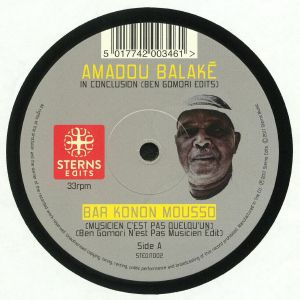
Sterns Edits returns after the sell-out success of its debut edition with another two catalogue reworks from Ben Gomori. This time he turns his attention to Burkina Faso’s much-loved taxi-driver- turned-singer, Amadou Balake´.

Sterns Edits returns after the sell-out success of its debut edition with another two catalogue reworks from Ben Gomori. This time he turns his attention to Burkina Faso’s much-loved taxi-driver- turned-singer, Amadou Balake´.

This 2XLP album, Europa, is dedicated to and inspired by events in 2015 & 2016, which saw the spectre of global crisis come knocking at Europe’s doorstep. During this time, more than a million migrants and refugees fled their homes in the Middle East, Northern Africa, sub-Saharan Africa and other conflict ravaged areas in search of a better life. For many, hopes of a future for themselves and their families lay in continental Europe. One of the most well- trodden paths on this journey was the Balkan route, a trail leading through Turkey, Greece, and the former Yugoslavia. This route was not without its dangers, and the dreams of thousands upon thousands were dashed by impassible security fences and discordant EU politics, as one by one they were turned away at borders, or worse, forcibly returned to their countries of origin. Europa was recorded during long jam sessions in Belgrade as the media spotlight started to dim. The city became the purgatorial destination for a large number of migrants, whose journeys had been cut short. This double LP reflects the atmosphere of disillusionment and uncertainty about the future, which descended on the Serbian capital. Dark and melancholic saxophone playing on top of heavy kicks and Mediterranean percussions dominate the epic 17 minutes title track. The collaboration with Jerusalem in My heart continues the melancholic atmosphere, adding to it JIMH signature delayed baglama sounds, to create a 12 minute emotional journey, tearing away abstract concepts of ‘longing’ and ‘home’ with ever growing tension and magnitude. Genre-less, illusive and not easy to categorize, Tapan’s debut album on Malka Tuti is an original soundtrack of a fragment in time and space, capturing a moment and transcending it musically for the rest of the world to experience.

Along with Moggi, Rovi or Tusco, M Zalla was one of Piero Umiliani’s most revered monikers from his early period. Starting off in the early 70s, the legendary Italian electronic wizard began to release weird and wonderful shapes of kinetic electronics, often inspired by the anthropology of Africa, the Mother continent. Africa itself is one of his works from ’72, released just before the iconic Problemi D’Oggi, and it has clearly inspired whole generations of different sorts of musicians. It’s polyrhythmic waves of euphoria rarely tire of cease to provoke wonder, and this whole piece of work is a treasure chest that will simply not stop giving. For some, it’s a source for samples and inspiration, while for others it’s the perfect tool to add life to DJ sets, whether at the beginning, in between tracks, or at the end.

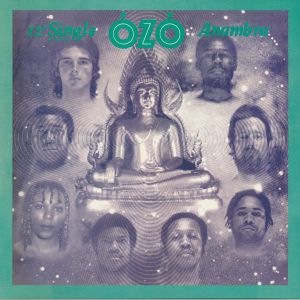
Isle Of Jura go back to 1976 to resurrect ‘Anambra’, the jewel in the crown of Dub, Soul & Funk outfit Ozo. ‘Anambra’ is something of a classic, a unique song that’s slow, ritualistic and spiritual, mixing African & Nyabinghi drumming with a Buddhist Sanskrit mantra ‘Om Mani Padme Hum’. An alternate version ‘Anambra River’ appears for the first time on the same 12”.

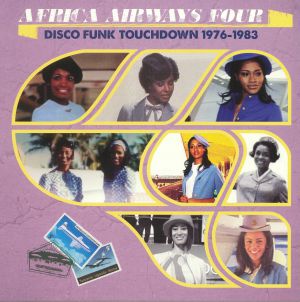
To date, each volume in Africa Seven’s thrilling Africa Airways compilation series has been little less than essential. It goes without saying that this fourth installment is also exceptionally good. Whereas previous volumes have focused on Afro-funk and “Afro-psych” (think Sly Stone, Nigerian style), this set drills down into African disco-funk released between 1976 and ’83. Highlights come thick and fast throughout, from the solo-laden, slap bass-boasting bounce of Tala AM’s “Get Up Tchamassi” and Charly Kingson’s squelchy, synth-laden Blaxploitation number “Nimele Bolo”, to the righteous, piano-driven thrills of Kemayo and K-System’s brilliant “Biram” and the superior boogie business of Jake Sollo’s “Tinini Yasana”.

Late 80s South African dance floor winners only. Selected by DJ Okapi and Antal, the compilation holds tracks by Jivaro, The Hard Workers, Ayobayo Band, S.Y.B. & many more. This is the sharp electronic music that fuelled the local Pantsula dances during the 80s and 90s . A must have for fans of Bubblegum and Kwaito music. The 12 tracks selected for Pantsula! come from a very unique, very different time and place. They represent the birth of electronic dance music in South Africa, through the songs of one particular independent label from the time: Music Team. The sound represents the culmination of the bubblegum era, when South Africa’s disco artists outgrew their American influences and forged an increasingly electronic and ‘local’ pop sound. Evolving over time since long before the 80s, the distinctly South African subculture of Pantsula is more closely associated with an attitude, a style and a signature dance, rather than any specific sound. In the late 1980s and early 90s, Pantsula was also the name given to a new type of dance music taking over the streets of South Africa, influenced by earlier bubblegum and the rise of Shangaan Disco, but with a far broader appeal and a harder, purely electronic sound.

Few years ago label manager Nik played in France and the promoter pulled out a Biosis now 45 that he never knew existed up till then and was generally thought to be a long album track only. An extensive search revealed nothing online including popsike/discogs/ebay except a tropical seller who’d just bought a huge caribbean collection with the record included saying he’d never seen it before either and he was keeping it…Failing to secure a copy themselves the label licensed it instead and created their own 45 edit which retains all the funk & soul of the elongated album version into a 7 inch friendly format. On the flipside and 1973 Tumba Safari from Afro Train get’s a funky afrobeat re touch for peak time club play that would save you several hundred pounds on an original if you could actually find a copy!

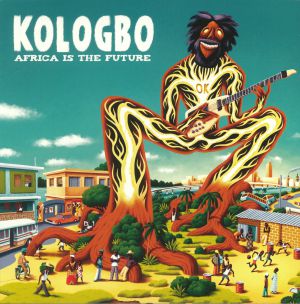
Guitar legend Oghene Kologbo was born in Warri, Nigeria in 1957. His father was the well known highlife musician Joe King Kologbo. When Kologbo was a teenager, he began performing with the revolutionary Afrobeat master Fela Kuti. He played the hypnotic tenor guitar lines, but often recorded bass and rhythm guitar too. Kologbo was Fela’s personal assistant and “tape recorder”. That is, it was his job to remember the melodies Fela would sing to him late at night, then teach them to the band at rehearsal the next day. In 1978, after a show at the Berlin Jazz Festival, Kologbo left the band (along with Tony Allen and a few others) and stayed in Berlin. “Africa Is The Future” is a true collective effort, with many guests gathering forces on the project: Tony Allen, playing drums on 5 tracks out of 8 (Nigeria/France), singer Pat Thomas (Ghana), deejay Joseph Cotton (Jamaica), singer Ayo (Nigeria/Germany), horn players from the Afrobeat Academy (Germany) or from Les Frères Smith (France), members of Antibalas (USA), Newen Afrobeat (Chile), etc. This is afrobeat from the 21st century at its purest, blending the originators and the descendants together.

Emotional Rescue and Malka Tuti join forces to bring a collection of the music of C Cat Trance. Drawing on the rhythms and melodies of Africa and the Middle East to produce a World Beat across some 6 EP and 4 LPs, here drawn together on a special double LP compilation. From the legendary Shake The Mind to the percussive, ethnic meets club inspired songs like Sudaniyya or the previously unreleased Some Day Soon, the album highlights a project that stood out from the post-punk haze with striking scales and time signatures to develop a unique sound. Formed by world music fan and multi-instrumentalist John Rees Lewis upon leaving post post-funk pioneers Medium Medium, the group retained the intensity of the former, but in a considerable new direction. Teaming up with fellow ex-band member Nigel Kingston Stone, together they formed the backbone of the band around a continual stream of guest players. Exotic, dense, tribal rhythms propel a mixture of club, pop and world music, creating an atmospheric fusion that can be heard across the 12 pieces. The alt-industrial feel of She Steals Cars and Screaming With You is countered by avant-percussive Dalbouka and I Looked At You or the Balearic vibes of Take Me To The Beach and They Made Them Up.

Matsuli Music is releasing another forgotten gem of the South African jazz diaspora – the 1976 Istanbul session featuring Johnny Dyani and Okay Temiz fusing deep roots and new routes, integrating folklore and rhythm within an experimental, avant-garde vision of love and life. Available for the first time since Yonca Records originally released only 1000 copies in Turkey, this album has remained an elusive and sought after landmark in South African exile Johnny Dyani’s discography. The recording captures a complex, funky and musically together exploration of folk themes, jazz messages and popular directions. After many years together discovering both South African and Turkish sources, Temiz and Dyani were intimately versed in each other’s traditions. Side one features material arranged by Temiz, and the second has material arranged and composed by Dyani – including a stunning arrangement of Don Cherry’s Elhamdulilhah Marimba with Dyani on piano and voice.
Continue reading “Okay Temiz / Johnny Dyani- Witchdoctor’s Son [MM110]”

Fortuna Records deliver a stellar compilation of real-life magic created by immigrants from Yemen, in Tel Aviv, from the mid seventies to the early eighties. Ranging from extremely rare to previously unreleased, these tracks are a result of a unique scene which blended funk, soul, jazz & disco with traditional Yemenite rhythms & sounds. It cannot get more obscure than this.

Afro funk and Political Soul from Togo. Recorded in the beginning of the 80’s and self-produced by Itadi in 1983 , this obscure album contained deep soul and controversial rare grooves backed by the 5 band members called the “Afro Funk Band de Lomé”. Itadi’s music is unique, in his second album, he kept the same recipe: a mixture of soul, reggae, hi-life and Funk, with heavy lyrics which sounds like slogans and caused him big trouble after its release. He was obliged to escape the country to USA. A real definition of a revolutionary musician.

Africa Seven is on fire recently, and this new compilation of rare and untapped material from Cameroon’s Joseph Ekambi Tongo Mpondo has to be the pick of the lot. The talented multi-instrumentalist was famously studying medicine in Paris throughout he 60s, but it’s clear that down the music path was the only sensible option for this man. African Funk Experimentals brings together some of his most obscure material from the years 1968-1982…and some new gear from 2017! Aside from the absolutely killer artwork featuring on the sleeve, this is a ten-track masterpiece, reaching all corners of the afrobeat heritage, while still retaining something very personal and symbolic of Cameroon’s often underrated influence on African funk and boogie.

Themes From Great Cities’ latest chunk of inspired, hard-to-define goodness comes from Mekine U Teksi, a fresh outfit formed by Murat Goktas and Irfan Derin. Dedicated to legendary, currently closed Dusseldorf venue Salon Des Amateurs, the mini-album – the duo’s debut release – is shot through not only with the arpeggio-driven pulse of vintage ’80s new wave, but also the chugging attitude of psychedelic nu-disco and the exotic, intoxicating melodies of traditional Arabic music. Of course, there are other influences that make their presence felt throughout – krautrock, dark Italo-disco, punk funk and dub disco – but these merely serve to enhance the duo’s core sound, which is rarely less than enthralling.

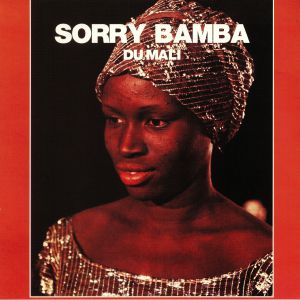
One of the most pivotal figures in the history of Malian music is Sorry Bamba. His work spans five decades and his music bridges the gap between Mali’s cultural traditions and new the music which arose from the musical cross overs which occurred in Mali’s post-Colonial period. Bamba was born in 1938 in Mopti. This is dissected by both the Niger and Bani rivers and known for its rich cultural diversity. Bamba’s father was a distinguished veteran of Emperor Samory Toure’s military and a nobleman in Malian society, however, this meant young Sorry was forbidden to make music, as under the nation’s caste system, music was an art form reserved for the Griots.

Having thrilled dusty-fingered crate diggers with a reissue of Denis Mpunga and Paul K’s impossible-to-find mid-’80s cassette album Criola – an unusual but rather fine combination of post-punk and traditional Congolese music – Music from Memory has decided to give some of the tracks the remix treatment. As you’d expect, there’s many more hits than misses. Dutch rising star Dazion delivers a wonderfully cosmic revision of “Intermezzo B” full of fluttering new age synth lines and drum machine polyrhythms, while Tolouse Low Trax turns “Veronika” into a woozy and dreamy chunk of dub-flecked, loved-up downtempo bliss. Late night dancefloor thrills are provided by Interstellar Funk’s intergalactic tribal techno take on “Intermezzo 2” and Prins Emmanuel’s tactile take on “KWEI!”, which sits somewhere between dub disco, boogie and proto-house.

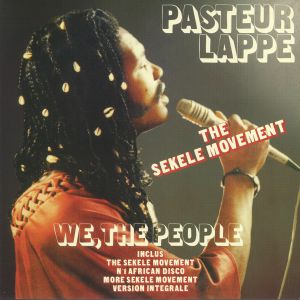
Now Analog Africa returns to put the record straight. Pop-Makossa shines a light on a glorious but largely overlooked period in the story of Cameroonian makossa, when local musicians began to replace funk and highlife influences with the rubbery bass of classic disco and the sparkling synth flourishes and drum machines of electrofunk. The resultant compilation, which apparently took eight years to produce, is packed full of brilliant cuts, from the heavily-electronic jauntiness of Pasteur Lappe’s “Sanaga Calypso” and horn-totin’ Highlife-disco of Emmaniel Kahe and Jeanette Kemogne’s “Ye Medjuie”, to the dense, organ-laden wig out that is Clement Djimogne’s “Africa”.
The Pop Makossa adventure started in 2009, when Analog Africa founder Samy Ben Redjeb first travelled to Cameroon to make an initial assessment of the country’s musical situation. He returned with enough tracks for an explosive compilation highlighting the period when funk and disco sounds began to infiltrate the Makossa style popular throughout Cameroon.

Emotional Rescue starts its 5th year by shining a light on one of Europe’s best underground 80s’ label in Spain’s Auxilio De Ciento. Their Terra Incognita Volumes I and II collated an international mix of synth-pop, new wave, world and industrial sounds to a small but appreciative following. Released in 1985 and 1986, the Volumes have become highly regarded and rightly sought after, finding a place in discerning playlists from London to Amsterdam and Dusseldorf to Glasgow. Here, taking a premise of avoiding the songs unearthed on other recent reissues, is a unique album itself. Starting with Denis Mpunga & Paul K’s esoteric Criola, a fusion of fourth world ideals and poly-rhythmic funk. The music of Mal, Bene Gesserit and La Caida De La Casa Usher, however, soon highlight that the decade also belonged to dark, minimal synth as to shiny balearic ideals. The inclusion of Hector Zazou with Bony Biyake and their contribution Komba, is a fitting continuation from their cult Noir Et Blanc LP before, things continue with US avant-artist Danny Alias and his humorous Big Brother “response” to Laurie Anderson’s Superman O. Image Pour Image loose indie-pop and the inclusion of seminal Beast Of Burden lead again to a Zazou contribution, this time in his collaborative Stranger In A New Light, before the compilation eclectically ends with the dadaesque Lakota and the post punk dub of Instead Of’s closer, Angels .

Kalita Records announce their first release, the three choice cuts from NST Cophie’s 1980 private press Ivory Coast Afro-disco album ‘Mon’Da Center’. After moving to Paris in 1976 and having played with other well-known bands such as N’Bamina, Osibisa, and with numerous artists including Jimmy Hyacinthe and Papa Wemba, ‘Mon’Da Center’ was Ernest’s first solo album. Pretty much unknown except to the most hardened of diggers, ‘Bian Kou’, ‘E Clolo’ and ‘Mioukouna’ are guaranteed to set any dance floor alight, with hypnotic Afro-disco grooves, killer drums and angelic female vocals.