Released in 1979, Tete Mbambisa’s ‘Did You Tell Your Mother’ delivers the ultimate blend of African groove with American modal grace, making it one of the all-time classic albums of South African jazz. With Mbambisa presenting original compositions at the piano alongside Basil ”Mannenberg” Coetzee on tenor sax and flute, the acoustic quartet featured here is rounded out by Zulu Bidi from the band Batsumi on bass locking in with Dollar Brand drummer Monty Weber. This 2026 reissue presents a flat transfer of the master tapes with album artwork restored using illustrator Hargreaves Ntukwana’s original ink drawing.
ARMOR, a new alias by Pascal Pinkert (Ambassade / Dollkraut). A few years ago he visited Turkey and Lebanon to collaborate with artists such as trip-hop legend Zeid Hamdan and Egyptian singer Maii. While many of these recordings found their way into Dollkraut releases, revisiting the material sparked the need for a new outlet. With ARMOR, Pinkert dives deeper into the space between folk traditions and electronic experimentation. Hypnotic drones merge with Middle Eastern percussion, while subtle rhythmic structures fuse with immersive soundscapes.
Belgian electronic body-music pioneers A Split-Second deliver an expanded reissue of their influential 1987 debut ‘Ballistic Statues’, a landmark of the New Beat and EBM movement. Blending dark electronics, cold-wave tension and precision-driven sequencing, the album helped define a pivotal moment in the late-80s European underground. This new edition brings together all tracks from the original album and enhances them with essential recordings from the same era, including the band’s complete 1986 debut EP (A Split-Second), the cult Smell of Buddha, and additional period material. ‘Ballistic Statues’ remains a defining statement—raw, innovative and far ahead of its time. This reissue brings together the core foundations of A Split-Second in one essential collection making it ideal for both long-time followers and new listeners discovering the band.
The 10th release on Dungeon Module is ‘Bunco Trax’ by Timothy “J” Fairplay a double length collection of raw House and beat tracks produced in anger at the Dungeon Module studio. 16 tracks of Chicago influenced proto jak box jams, disjointed rhythms and metal on metal. Made with TR808, TR707, TR727, Casio RZ-1, Casio CT-510, Korg SR-120, Juno 106, JX-3P, Poly Six, SH-09, SH-5, Syncussion, Pro One, A/DA Flanger, RE-201, EP-100, CE-2, DD-3, Soundcraft 200B, Boss KM-60, Teac 2A.
In 1991, Rome, Francesco Chicco Furlotti founded Male Productions, an independent record label – small, determined, and far removed from the commercial logic that dominated at the time. Male was not a label like any other: it was a workshop, a gathering point, a creative hub where DJs, producers, friends, and wanderers converged. Within that environment, an artistic core took shape – Stefano Di Carlo, Leo Young, and Mauro Tannino, along with other collaborators orbiting around Furlotti. From their synergy emerged a project whose very name declared its mission: The True Underground Sound of Rome. The collective did not simply aim to release music; it sought to tell a story of Rome through sounds that defied categorization: house, techno, ambient, electronic mysticism, psychedelic visions… a unique blend, instantly recognizable, emotional, and experimental. Space Echoes presents – at last in a complete and faithful form – the first two mixes created for Male Productions, now released on a double vinyl that brings back into the present the exact moment when it all began: the nomadic nights of the raves, Furlotti’s vision, the creativity of Di Carlo, Young and Tannino, and the sonic identity of a Rome in the midst of transformation.
The eight long play on the Exarde label comes from none other than UK electro royalty – Transparent Sound. If you have been following the music world for a while, then you would know this name as it’s been on the radars since the 1994. From the beginning it was a synergy between two artists Orson Bramley and Martin Brown, now the project solely run by Orson and he is presenting us Potent Mystery, an electro album in the best possible execution of this genre filled with melody and mystery. For the remix duties stepped up Acidulant the Maltese based hardware guru and the master of live sets from Bristol – Ben Pest. Each of these men and stellar artists have spent numerous years perfecting the craft of the electronic music which have resulted of this album being born as we can hear it now.
Circuitry Electronic launches with a release that stands as a statement of intent – an artist with few true peers within English electronic music, with an album that jumps out of the speakers and slaps you around the chops. G-Man is Gez Varley – one half of Sheffield pioneers LFO, and thirty years into his solo career, with his first vinyl album release since Avanti on Force Inc way back in 2002.
Patricia clocks back in at Acid Test with ‘Y Try’, a six-track Mini-LP, neatly packed, no detours. The brief was never complicated. Big room Patty business, plain and simple. The A-side aims straight for the main room, the flip takes things deeper.
Marking 50 years since the live launch of one of Britain’s most influential electronic bands (at the Sheffield Students Union Refectory on 13 May 1975), Stephen Mallinder and Chris Watson reactivated the Cabaret Voltaire name for an exclusive live performance at the Forge Warehouse, Sheffield. A 4 date tour of the UK followed in November 2025. They were joined by Eric Random and Oliver Harrap. “But What Time Is It Really?” was recorded on the Oct-Nov 2025 UK Tour and perfectly captures the mood of the UK dates. Fans travelled across the world to see the band present new arrangements of classic Cabs tracks such as ‘Sensoria’, ‘Crackdown’, ‘Do Right’ and ‘Spies in the Wires’ alongside ‘Tinsley Viaduct’, a contemporary piece of musique concrète composed by Chris Watson.
Stephen Mallinder: Vocals, bass, keyboards, samples Chris Watson: organ, modular synths, samples, field recordings Eric Random: Keyboards, guitar Oliver Harrap: Electronic percussion
Cititrax presents Sand Clock, the new full-length album by Men With Secrets – the Italian trio of Donato Dozzy, Lino Monaco, and Nicola Buono (Retina.it). Born from a shared background in experimental techno under the name Le Officine Di Efesto, the three found themselves drawn toward something slower and more deliberate: the emotional directness of classic post-punk, minimal wave, and synth-driven pop. Sand Clock is the fullest expression of that devotion. Recorded in Rome and Pompeii in 2023, the album channels the melodic clarity and romantic tension of late-80s and early-90s darkwave while never losing the cool precision the trio carries from their electronic roots. Icy synthesizers curl around shuddering basslines; drum machines land with quiet authority; baritone vocals move between intimacy and quiet apocalypse. The result is music that breathes between the shadowed dance floor and solitary headphone listening—structured, emotionally exposed, and impossible to place in any single moment. This is not revivalism. It is the recognition that certain emotional territories were mapped but never fully inhabited—and a determination to go further in.
Nearly three years on from their self-titled debut, Psyché return with a new album that reinvigorates and expands their singular blend of groove and psychedelia. The band’s name itself—the ancient Greek word for ‘mind’ or ‘soul’—signals a deep-rooted love for psychedelic funk, while pointing towards a vast array of Mediterranean influences spanning Southern Europe, the Balkans, Anatolia, and the Maghreb. While their first record explored a mythical, timeless Mediterranean as a sort of ‘elsewhere’—reimagining ancient musical traditions through modern styles and sensibilities—Psyché II adds a subtle political dimension and shifts the focus toward a wider, more contemporary geography. Here, the Mediterranean becomes a modern lingua franca —a fluid bridge uniting diverse peoples, cultures, and musical legacies. In this vision, the band’s native Naples serves as a vibrant crossroads where sounds from North Africa and the Middle East meet the echoes of distant shores like Brazil and Colombia.
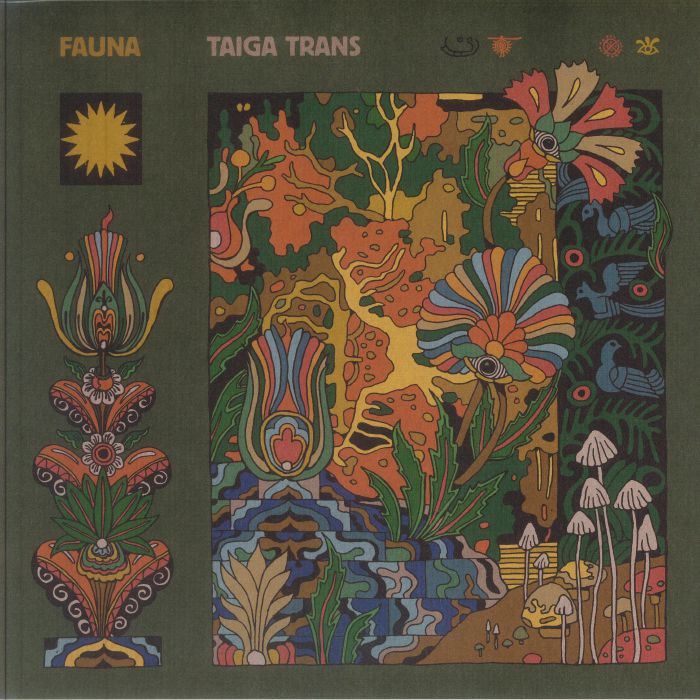
Taiga Trans, the debut album from Gothenburg-based group Fauna, is a hypnotic collision of krautrock propulsion, psychedelic ritual, and subterranean rave energy. The eight-piece Swedish outernational collective channels a multicultural, multidimensional sound that feels both deeply rooted and otherworldly. Think Goat’s feral mysticism, Can’s motorik drive, and a dancefloor at its most transcendental. Electronic textures whoosh like solar winds. Quiet percussion sighs and chatters. A jaw harp sets up a twanging bounce. An ancient saz introduces a taut riff. Suddenly a high-strung electric guitar scorches and a deep, booming bass groove drops with a four-to-the-floor kick drum thud.
For over four decades Mr. Fingers has been shaping the core of House Music. Now he returns with a new album that continues this timeless journey through deep rhythms, soulful melodies, and immersive atmospheres. Crafted with the warmth and musicality that define him, the record blends deep house, jazz-infused harmonies, and subtle R&B textures. On ‘Leev Ur Mynd’ Mr. Fingers once again reminds us why his music remains essential: hypnotic grooves and heartfelt compositions. Not just music for the club, but also for the quiet spaces.
The Wheel of Rituals, ‘Contextual Devices and Systems’ (2026). Concept and art by R.A. User. Digital audio, digital photography (and found footage), music composition, album, two-sided lathe cut recorded and riso print. Duration: 58 minutes (album), 10min 35s (lathe), 24 pages zine. This publication presents two modalities of archaeological inquiry: various items and material remnants salvaged from post-conflict landscape of northern France, and recontextualized digital captures extracted from contemporary popular media. Through processes of cut-up poetry, these temporal artifacts generate new intertextual configurations: audio graphics. The juxtaposition of geographical and media archaeologies functions as a literary methodology for examining conditions of contemporary culture – each fragment serving as contextual device within a speculative system of meaning.
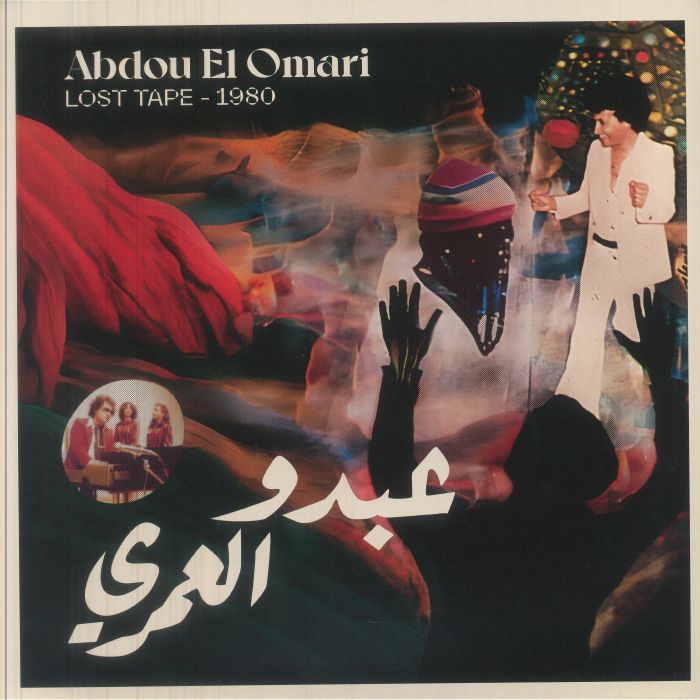
Abdou El Omari was born in 1945 in Tafraout, south of Agadir — a village suspended between the pink granite peaks of the Anti-Atlas and the waves of the Atlantic. A landscape already musical in itself. He grew up in the dry mountain light, surrounded by the rhythms of nature and Berber’s culture. Very little is known about the man — a veil of mystery still surrounds his life, only deepening the fascination. His name remains discreet, but his music continues to travel. It seems to drift from another time, another world, or perhaps from a dream shared between the blue nights of Casablanca and the silent dunes of the Sahara. In the 1970s, as Morocco was transforming, Abdou El Omari shaped a sound of his own — a visionary blend of spiritual jazz, psychedelic funk, Moroccan traditions, and early electronic experimentation. Today, his work is resurfacing, rediscovered by a new generation of listeners in search of lost horizons. This record stands among its rarest and most precious fragments.
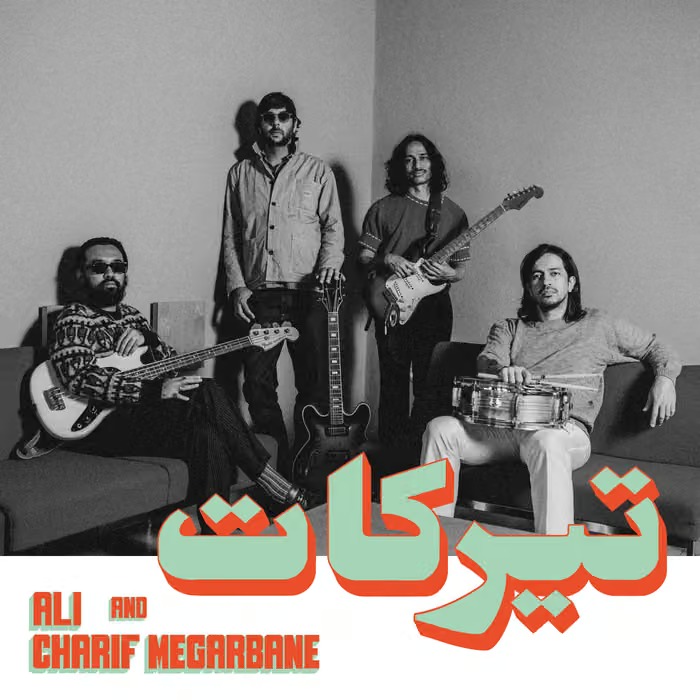
‘Tirakat’ brings together Jakarta-based trio Ali and Lebanese composer and multi-instrumentalist Charif Megarbane in a collaboration shaped by long-standing cultural exchange between Indonesia and the Arab world. Ali’s blend of 1970s Indonesian psychedelic funk, Melayu traditions, disco grooves and Arab melodic forms meets Charif’s long-running exploration of cross-regional sound, rooted in a shared musical vocabulary rather than genre. Rather than approaching the project as fusion, Tirakat reflects a way of making music that feels already interconnected. Melodies, grooves and textures move fluidly without signalling their sources, grounded in a performance-led process shaped by intuition, repetition and trust. Western instruments are played through techniques and sensibilities formed in Indonesia and Lebanon, emphasising circulation of influence. The title ‘Tirakat’ refers to a Javanese practice of discipline, patience and devotion, derived from the Arabic tariqa (“path” or “method”). This layered meaning mirrors the album’s focus on process and continuity. The result is a record that feels both contemporary and timeless, where Indonesian and Arab sounds intersect naturally through groove, texture and melody.
Nu Vision is a modern salon for visionary leaders, fighting for their art, standing by truths, defending voices, honoring progenitors, whilst pushing forwards towards a new paradigm. The band all have their own stories and extensive discographies, records released on labels you might know, gigs played in places you might have attended but none of that matters. This is a new beginning. A group. A collective. A movement. Nu Vision is a band in the classic do-you-believe-in-alchemy sense. Equal parts rhythm, damage, and deep feeling. The palette of ‘The Seed’ is defined and refined in the best way. It’s an album that opens up many pathways. Brisker, freakier tracks like “Shadow In The Dark,” “R U Serious?” and “Humanity” run towards a softer finish with “Somedays” and the seven-minute, eyeliner-smearing closing ballad, “Lullaby Garden.” These are proper songs made with vintage machines, with a sound that carries obvious influences. It’s important to note the emotional core of ‘The Seed’ album is the song ‘Synchronicity’ that is filled with both love and regret, the story of losing a friend without properly making amends. It is unquestionably heartbreaking, but is also delivered with a pang of hope, the feeling that with so many sunrises caught, so many additions and subtractions in life, a perspective has been gained. This is no freshman effort; but rather, a masterclass in continuing sonic education, delivering a unified experience from beginning to end.
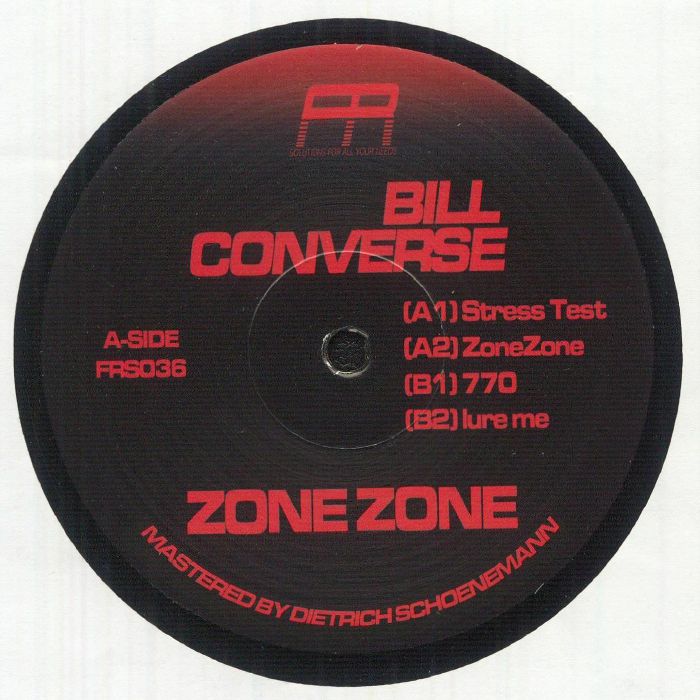
Bill Converse should be a household name in every heads abode. He’s been DJing live with 3+ turntables since he was a teenager, always under the same name. Unfathomably envious record collection. Your favorite DJs as well as very likely your favorite DJ. Whether it is DJing or a live set, his presentation is head-spinning, hard-edged but hypnotic. His avalanching drum programming is as recognizable as Coltranes timbre. His records have been released on Dark Entries, Fit Sound, Texas Recordings Underground, Tabernacle Records, Immortal Sin, Acid Test, Feral Colony and Obsolete Future. Now Fixed Rhythms presents a 2×12 pack of Bills characteristically bewildering excellence. The first 12” has four cuts. Woozy, heavy, bombastic machine workout opener “Stress Test” followed by the tension peaking sustainer “ZoneZone” on the A side. On the B side, “770” brings us to a new place of plucky bass lines and unconventionally tuned drum workouts, with “lure me” closing the first 12” with flexing low-end, percussive stabs syncopated with heavy snaredrum riffing.
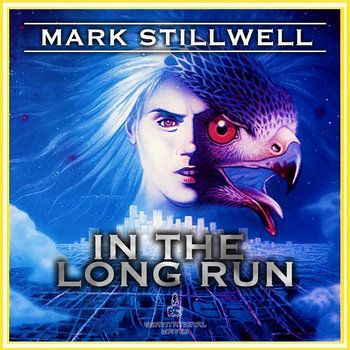
Mark Stillwell is an electro producer from Sydney (AUS). Inspired by the new generation of electro producers, his gear speaks for itself: 808, 606, Monopoly, Polysix, Juno 60, lot of pedals and creativity. His release adds something important to the Gravitational Waves catalogue: dense, dramatic, influenced by 80’s European wave but blending an US electro feeling. A release inspired by cyberhospitals, eagles, revenges, wicked murderers using phone lines to kill, redemption but with a straight and loyal way. Telling the story of a man who hates this world, passing days in his bedroom to make music. The use of atonal and dissonant arpeggios, the tone changes, the robotic voices and this sense of oppression, anxiety and loneliness are all part of the crazy world of Mark. A vision that it’s like a mirror of the world we are living on.