Space Dimension Controller catches everyone by surprise with the release of ‘Redemption Of The Cryonauts’, a new 13 tracks double-LP out of nowhere that lands on no label and little is really known about this release.
Space Dimension Controller catches everyone by surprise with the release of ‘Redemption Of The Cryonauts’, a new 13 tracks double-LP out of nowhere that lands on no label and little is really known about this release.
“Dreams, as we all know, are very curious things: certain incidents in them are presented with quite uncanny vividness, each detail executed with the finishing touch of a jeweller, while others you leap across as though entirely unaware of, for instance, space and time. Dreams seem to be induced not by reason but by desire, not by the head but by the heart, and yet what clever tricks my reason has sometimes played on me in dreams!” says Fyodor Dostoevsky in his anti-hero novella “Notes from Underground” from 1864. Also, the three Hamburg based art lovers of the band Giraffe like to play on their dreams. Since 2017 the trio released their deeply collective reveries on one album called “June” and one EP called “Climate”. Both are featuring brief and epic sensitive shifting conversations between Charly Schppner on percussion, Sascha Demand on electric guitar and Jrgen Hall on synthesizers. “We compose and produce everything together. The ideas of each single member become better through the influences of the others.” they reveal about their meandering creative activity. The result is a sublime tension of itself: a psychoacoustic distillation of improvisation, composition and experiment in which clattering percussion, synthesized transcendence and dreamily electric guitar serialism transform into radical poetic journey music. For their new album “Shine & Dark” Giraffe built their music around acoustic drums, frame drums and electric percussions, that evoke spiritual jazz emotions and percussive ethnic vibes while dark synth layers and mesmerizing guitar microtonality dances around the rhythmic tension. Suspenseful wondrous story-telling, that opens a gate to an elaborated executed, multi-layered musical paradise, that is entirely induced by desire.
Despite sounding like an 80’s cassette only wave outfit La Stèle des Pleurs is a contemporary band from the north parisian suburbs. They’re mostly inspired by the underground tape scene of this period and use a 100% analogue set from synth and drums machines to tape recorders according to their unkwnown masters. The 7 tracks of this mini-LP are only instrumentals somewhere between the melancholia of Enno Velthuys and the heady sound of Stratis. Their music seems untouched by contemporary world and influences, recorded in order to compose their own enigmatic but familiar universe. Gloomy landscapes and feelings may appear but surrounded by a glimpse of hope.

The piece de resistance of the ‘Collected 1984 – 1989’ project, all the music on this LP has never been heard before, except for a single tune released on a rare 7” in 1988. The track selection and sequence is the result of Ducret & Isar closely listening to the many hours of unreleased material Desaever shared with them. Saved from oblivion and irremediable decay, the music on this LP is now just waiting to be played and listened as well as to inspire.
The 27th reissue in Jazzman’s ongoing “Holy Grail Series” comes courtesy of Infinite Spirit Music, an undeniably obscure, one-off project helmed by pianist, producer and arranger Soji Ade. “Live Without Fear” was recorded in 1979 and tops the “wants list” of many spiritual jazz collectors. This time round, the album – which originally ran to an hour over two sides of one LP – has been expanded to a double-album in order to guarantee greater sound quality. It sounds fantastic, and it’s hard not to fall in love with the heady bongos, rich double bass and snaking saxophone of “Children’s Song”, the gentle warmth of “Rasta” and the Afro-fired, tribalistic free-jazz experiments of “Ritual” and “Father Spirit, Mother Love”.

OK:KO is a fresh quartet from Helsinki led by drummer Okko Saastamoinen. The band’s spiritual and searching sound is characterized by their highly personal musical language and genuine teamwork, honed by continuous touring in between the band’s 2017 debut and their second album “Syrtti”, released on Helsinki’s We Jazz Records. The OK:KO band sound has its origins on the spiritual pool of jazz, historically speaking, but the band brings forth a strong personal musical statement thanks to Okko Saastamoinen’s memorable compositions and each musician’s ability to bring their own vocabulary into the common musical language. Already a live favourite on the local scene, on “Syrtti” OK:KO shows that it’s not a band of mere promise any longer – they deliver in the here and now.
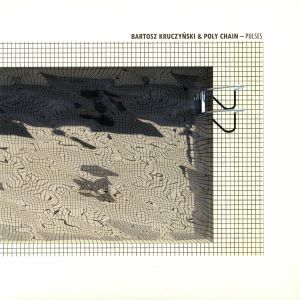
For the second instance in their international parallel series, Into The Light Records treat us with seven lush, rich and warm recordings by currently Warsaw-based producers Sasha Zakrevska (Poly Chain) and Bartosz Kruczynski. Soon after releasing their debut albums – Baltic Beat’ and ‘Music For Candy Shops’ – and realizing similar interests and traits in their solo music, Zakrevska and Kruczynski sketched out a plan for an album and live performance. The record is to a large extent fashioned after the show, with most of the tracks performed live and edited down. ’Pulses’ is a result of hours spent in studio with a minimal set-up of Prophet ’08, Moog Sub 37 and Korg Minilogue; The work present their mutual attraction to minimal synth, repetitive arpeggios and drone music. A perfect blend of poly-rhythmic patterns, ambient textures and beat-less acid moments by one of the most fresh and unique collaborations.

‘Gulden Onversneden’ is the out-of-the-blue debut of Klein Volk, a cozy quatre-mains that used to brighten up birthdays and bedroom parties before it all got out of hand. The ten tracks of ‘Gulden Onversneden’ capture Klein Volk’s cherished naïveté during the drawling heatwave days of June 2018, when the world cup frenzy ravaged the streets, squares and minds of tiny Belgium – a brief window in time that diffracted everything unwaveringly into black, yellow and red.

Claudio Mate and Francesco Mazzocco introduce the 5th release of Dub-ito, a selection from Wolfgang Reffert’s project, from the end of the 80’s, Dark Star. ‘Mix Tape 1989 -1991’ is a exclusive collection of Dark Star past tapes works. Dark atmosphere influenced by Post Punk , EBM, Noise, Industrial, it’s Wolfgang’s trademark in over 30 years of career, which makes his debut on vinyl.
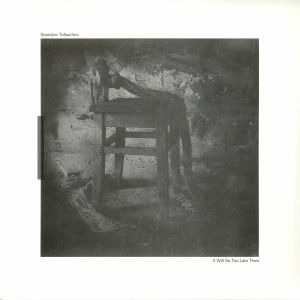
Stanislav Tolkachev is releasing a new double-LP through Krill Music called “It Will Be Too Late Then”. The Ukrainian techno artist says he made the album by assembling tracks recorded over a three-year period, and he notes somewhat cryptically, ”I think this record represents a phase.” As with most of Tolkachev’s releases, the album will feature his own visual art on the cover. He previously appeared on Krill Music with a track on a sampler 12-inch nearly two years ago. Krill Music, a Berlin-based label originally founded six years ago in Buenos Aires, is having it pressed in Argentina to support ”the growth of the Latin American vinyl industry.”

“New Atlantis” is the fourth full-length album by longtime Berghain resident Efdemin aka Phillip Sollmann. Long drawn to utopian musical traditions, Sollmann took inspiration for New Atlantis from Francis Bacon’s unfinished 17th century novel of the same name, which describes a fictional island devoted to social progress through the synthesis of art, science, technology and fashion. In the story, Bacon imagines futuristic ‘sound houses’, which contain musical instruments capable of recreating the entirety of the sounds of the universe; a 400-year-old prophesy of today’s digital sonic reality. Over eight tracks, “New Atlantis” oscillates between fast, kaleidoscopic techno, multilayered drones and acoustic instrumentation, fusing for the first time Sollmann’s deep dancefloor productions as Efdemin with his sound art and experimental music projects.
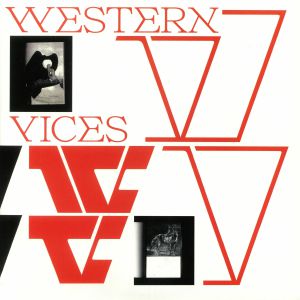
Private Selection’s first full length LP comes in blistering form from Santiago Leyba. Recorded in L.A. and his hometown of Albuquerque, New Mexico, the songs on ‘Western Vices’ are a reaction to some of the bleaker circumstances that exist in these places. Not unlike Santiago’s past work, this music reflects the paranoid and altered states that some people live in as a result of their surroundings. It lies in contrast to escapism and revels in dreadful realities to bring to life a highly rhythmic, woozy and disenchanted collection of tracks. The 12 songs are named after characters, landmarks and phrases associated with L.A. and Albuquerque, acting as reference points for the dialogue of sounds that hold them together. Santiago Leyba has been producing music as a solo artist and in collaborative affairs since 2010. Raised in New Mexico, he currently lives and works in New York City. Leyba has recorded and performed most recently as Santiago (Unknown Precept, Private Selection Records), Western Versions (Pastel Voids), and U.S. Hard (Pastel Voids, Blankstairs).
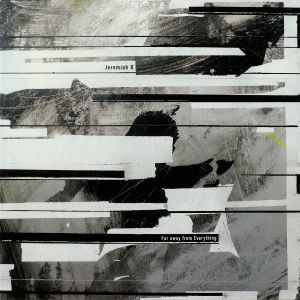
Jeremiah R is back again on Voodoo Gold with a collection of intergalactic machine funk tracks.
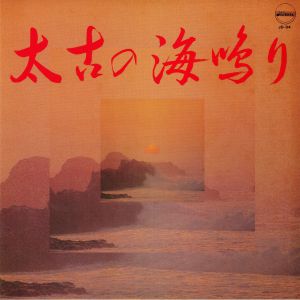
Johnny’s Disk Record is an independent jazz label run by the owner of jazz cafe Kaiunbashi No Johnny located in Rikuzentakata city in Iwate prefecture, Japan. The legendary label released a string of albums of high quality but down-to-earth music, spanning from modern jazz, avant-garde jazz to left-field pop. This is the only solo record drummer Yoshimi Ueno released before passing.
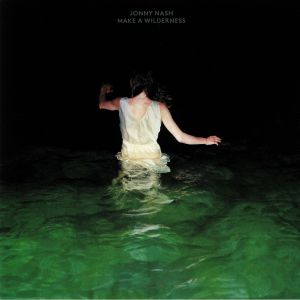
‘This album was created over the course of 2017-2018 and is heavily influenced by descriptions of landscape and environment in the work of authors Shusaku Endo, J.G. Ballard and Cormac McCarthy. Fragments from a land that is a largely silent place. An ancient place. A non-place. A wilderness.’
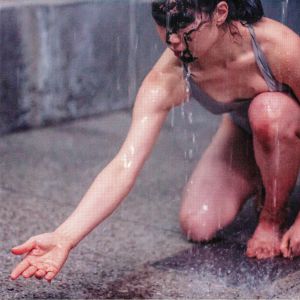
‘Futuro’ is Not Waving’s sublime synth/ambient soundtrack to one of the world’s most intense art/theatre experiences: Sean Rogg’s radical immersive artwork ‘The Waldorf Project’ – fusing choreography, spatial design, music and performance into a cohesive experience.
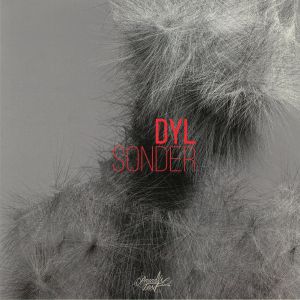
“Sonder” is DYL’s second album, the first on vinyl and features 6 dark ambient tracks. This album is an open-ended story, which is edgy, dystopic and often disharmonic while progressing sonically throughout.
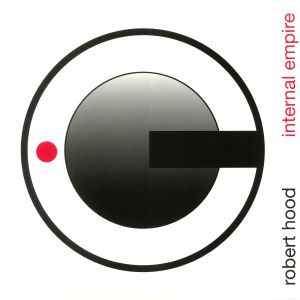
Originally released in 1994, Tresor Records is proud to announce the reissue of Robert Hood’s ”Internal Empire”. A masterwork, then and now. ”Internal Empire” marks a point of transition for Robert Hood moving on from his previous collaborations within Underground Resistance. Robert Hood advanced uncovering the power of true minimalism. Deep soul through a simplicity that showed how much could be done with so little. The devastating rhythms of this album forge the unmatched spirit of this sound, influencing generations to come.

The first and the only album by Droids, “Star Peace” is a fascinating music exploration of the outer space conceived by the brilliant mind of one of the protagonists of the French disco scene, Yves Hayat. “Star Peace” came out – years ahead of its time – in 1979, and it’s a magisterial blend of groovy, funky, and electrojazz sounds mixed with an old-school analogue touch. A cosmic disco gem featuring the proto-techno essential, ‘Shanti Dance’, the space synth classic “(Do You Have) The Force”, and the album’s killer piece, “Tchoung Fou”.