
Electro break, a pinch of funk and a pinch of nostalgia. For those who seek the truth.
Sumerian Fleet is a trio formed by Dutch producers Alden Tyrell and Mr Pauli, joined by Zarkoff after their 2010 debut EP. Sumerian Fleet have returned to release their sophomore LP ‘Pendulum’ of all new material as well as a remixed version of “This Game Has No Name” from Zarkoff’s other band, FFFC. ‘Pendulum’ contains 80’s Dark Wave/EBM inspired tracks with an industrial tinge, 8 songs of vintage dark electro with a Gothic tinge and a touch of bass guitar. The album’s been put together in a way that the listener can connect the dots, create a narrative, and become immersed in this attitude that the band’s trying to convey, such as Vigny’s idea of accepting despair: ”A calm despair, without angry convulsions or reproaches directed at heaven, is the essence of wisdom.” All songs were initially recorded at Mr Pauli’s studio in Den Haag, with overdubs and additional recordings at Zarkoff’s Sensorium Studio in Croatia, and then final mix downs at Alden Tyrell’s studio in Rotterdam.

Keine Ahnung was a quartet from Wörth am Rhein, Germany formed in 1980. The original line up was Rolf Schmuck, Franz H. Rodenkirchen, Elke Fuchs and Olaf Schumacher. Hermann Kopp from Stuttgart, a friend of the band, contributed a composition on their first LP and became a full member in 1985. The band members shared a common interest in industrial, pop, avant garde literature and cinema. They recorded three LPs in 6 years, two of which remain unreleased. In March 1983, Keine Ahnung recorded their self-produced and financed debut LP in two days in a small studio in Stuttgart (12 hours total). The mixing was done in one day in a studio in Karlsruhe, April 1983. The self-titled LP was released later that summer on their own PASSIV label in an edition of 1000 copies. This record obtained recognition far beyond the German borders. Keine Ahnung in the studio and live were completely different. Studio time was expensive in these days, so the music was minimal electronic pop, expertly crafted and razor sharp man machine music. The live sound utilized more complex synthesizers, tapes, guitars, metal percussion and custom built electronics. The beats and bass lines came from the Roland 606/303 duo triggering a KORG MS-20 for the bass drum. The track “Funkbild DPA” is a spontaneous “live in the studio” recording, that gives a hint of what the live sound was like. All four members would take turns singing and playing the instruments.

Savage Grounds released their first three records with Lux Rec, of which one of the members from this Swiss duo is the label boss. This new EP is the first release coming out elsewhere. Savage Grounds have created a sound of their own, a sort of post-techno which combines elements of techno, elektro, EBM, acid and industrial, but these tracks will for sure also appeal to lovers of analogue synth music. The whole EP sounds like it has been recorded in an one take synth jam, raw and fierce synth sounds for the body and soul.
NEP was a loose multimedia collective formed in 1982 Zagreb, ex-Yugoslavia. The founder Dejan Krsic collaborated with various artists in a quest of re-thinking the stale concepts of art history, position of the author and the barriers between pop and elitist high culture. Deeply immersed in pop-culture, politics and art theory Krsic’s search for perfect pop music with cutting critical edge peaked in 1989, the year Decadance track was conceived in studio, but has never been published. Pumping Roland 808 beats, with sampled vocals from Linda Cooper asking herself “How do I dance to this music?” were chosen by Fox & His Friends label owners Leri Ahel and Zeljko Luketic for a 12″ opener of the unknown NEP’s pop history. All material is restored and mastered from original reel-to-reel tapes and presented on wax for the first time and for this occasion, deconstructed and reinvented in a remix B-side by Snuffo. Snuffo splitted the title vocal into a new cut-up, now telling “Dance to this music” to its audiences.
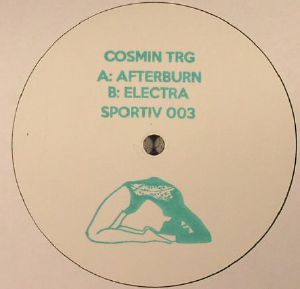
Cosmin TRG is back on Sportiv with two tracks of stark, angular beauty. ‘Afterburn’ harks back to 90s era Techno of the hyperkinetic variety. The obsessive vocal mantra adds to its hypnotic, frantic rhythm. ‘Electra’ on the flip is on a trance-inducing mission, with it’s cavernous 808 kick driving a tribal groove, carried by a pulsating bassline and eerie percussion. Sportiv is a dexterous white label operation that brings you heavy-weight rhythmic performances from the world of techno athletics.

For the thirteenth release, Construct Re-Form invite the Argentinian prodigy Jonas Kopp. The Cosmic Control Center Ep starts with “Cognitive Process” and “Metaprogramming” which are more introspective and abstract whereas “Vortex” is the climax, the release of energy. To conclude “Human Bio Computer” adds something tragic, the final touch to the picture.
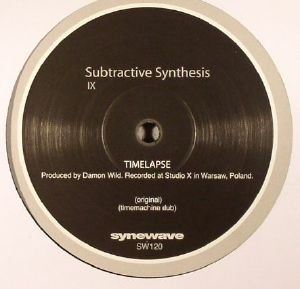
Damon Wild’s Synewave label is still going strong, plunging ever further into the hinterland of looped up techno and dragging your consciousness with it. On this new release Wild is pinging bleeps around the sequencer grid through the course of “Timelapse”, and highly immersive it is too. The “Timemachine dub” of the track is even more seductive with its Sleeparchive-style synth oddities and sparse arrangement. Function comes on board for an un-easier remix of “Timelapse” that veers towards the full-blown paranoid, and then Postscriptum drops a killer version to finish the EP off, all jagged off beat kicks and heavy textural swells.

On the fifth release on the Grotto Editions X We Jazz 10” EP series, sax man Pauli Lyytinen steps up with a strong 4-tracker featuring Verneri Pohjola on trumpet, Eero Tikkanen on bass, and Mika Kallio on drums. ”Artist of the Year” at the 2017 Pori Jazz Festival, Finland’s premiere jazz event, Lyytinen displays his ability of writing melodic fire music with ever-evolving momentum. The quartet pools together their creative resources, presenting four original compositions by Lyytinen. They rely on their individial soloistic strengths and get a lot of mileage out of the group’s strong interplay.
Field Records looks to L’estasi Dell’oro (Christopher Ernst, aka Penalune) for a new three-track EP for sound systems that once again takes us down the rabbit hole. Following on from his previous ‘I Look Upon Nature While I Live in a Steel City’ album in 2015, this is another masterfully drawn out and engaging affair. “Either to please or to educate” is the intended purpose of this EP release, utilizing guitar, tabla, and other electronic and acoustic instruments. The incessant movement of the metronomic tremors felt underneath our plains lay the rhythm. The threadbare dialogue we use to communicate frays slightly further. These spirals are given an explicit voice through Leader Annabelle Kuwe’s dispassioned public address to the remaining world at the Great Meeting of 2166, as recounted by Sadie LaPierre on closer ‘Achieve Ignition’.

Dempa is back with a four track EP that remains faithful to his particular brand of deeply twisted beat-smithery. Trusted into the hands of Little Beat Different, there was no way these ruff and ready dance floor ready demos were going to slip away.These four tracks delve deep into techno territory . Built for the dancefloor and dancers who possess a somewhat acquired taste. Both sides of the record are perfectly balanced. The first is quicker in tempo, with the second one focusing on the more psychedelic side of things. Dempa cooks with the finest ingredients and naturally the results are full of the right flavours.

The second release in Endless Illusion’s series of Split EPs comes from Marcos Cabral & Daniel Araya and features two tracks from each artist. New York’s Cabral is known for his experimental IDM and techno on labels like L.I.E.S. while Daniel Araya has recently released an album of acid, techno and industrial on the Classicworks label. Araya’s ‘We Almost Lost Detroit’ is first and is a truly haunted deep techno cut with sparse acid undulations and a real sense of manic in the rasping synth lines. Softer pads in the background only add to the spooky nature of the track. ‘Ghost Bass’ is the other Araya cut and this one is more up on its toes, with mid tempo kicks down low and wonky chords up top. It’s a mind melting tune that trips deep into the night. ‘Live At The Egg’ is Cabral’s first effort and is a lonely and icy techno track that is supple and seductive in its long lines and paddy drums. After getting you into a state of hypnosis, some freaky vocal sounds only add to the unsettling nature of it all later on. ‘Cuts & Bruises’ rounds things out in squelchy and depraved techno territory. Muted acid stabs are off in the distance as swampy drums suck you in from the front. It’s a brilliantly odd tune that close out a fine EP.
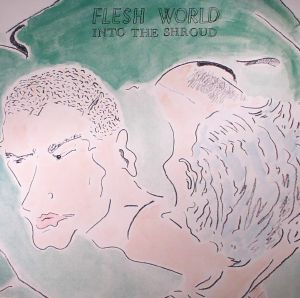
Flesh World is a dream punk group formed in the summer of 2012 in San Francisco. The quartet includes Scott Moore (Guitar, Synths), Jess Scott (Vocals, Guitar), Andrew Luttrell (Bass, Backing Vocals), Sam Lefebvre (Drums). Jess and Scott met while loitering around the Panhandle district, listening to records, gossiping, and playing live shows around town with their bands (Scott plays in hardcore group Limp Wrist and Jess played in the indie pop band Brilliant Colors). The pair immediately bonded over a shared love of The Velvets and The Mary Chain. They began writing songs in Scott’s lofted bedroom in the City and took their name from a XXX magazine. The fully formed band released their first self-titled 6-song EP in December 2013 for London punk imprint La Vida Es Un Mus Discos. Two 7” singles were followed by their debut album ‘The Wild Animals In My Life’ released in 2015 on Iron Lung Records. ‘Into The Shroud’ is Flesh World’s fifth release and sophomore album, and their first for Dark Entries Records. Each of these songs speak to a chaotic or sometimes eclectic period of influence of different books, ideas, drawings, saints, stories, and aims gathered in the two year writing process since the previous album. Themes of this record include writer, advice columnist, and Dreamland actress Cookie Mueller, the youth’s effect on the general political psychosis of nostalgia, icon Billy Fury, and the writings and drawings of Jean Cocteau as a hovering guide for living with less rules. The record is a topological map showing the cities of the Bay Area and Los Angeles in rapid change, looking to the books, records, and artists paid study to in order to create continuity in the constant flux of the city, the punk show, the gay world, and the rest of the environments Flesh World insulate themselves in for survival. The group’s dynamic has greatly solidified on this album with a brilliant new rhythm section.
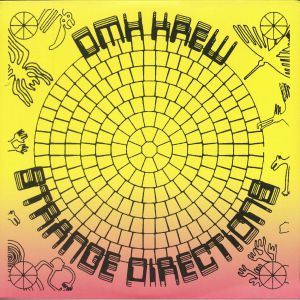
23 years have passed since Edward Upton first donned the DMX Krew alias, but the prolific British producer shows no signs of slowing down. Astonishingly, Strange Directions is the electro stalwart’s 21st full-length excursion. Predictably, it’s rather good, with Upton delivering a set that effortlessly body-pops between vocoder-laced electro workouts, melodious IDM, bass-heavy intelligent techno, gnarled Drexciyan throbbers, Artificial Intelligence style home listening fare and even a dash of muscular, tongue-in-cheek Italo-disco (the deliciously sleazy “Soft Networks”). As usual, the distinctive, off-kilter swing of original analogue hardware is present throughout, as Upton showcases his full range of talents.
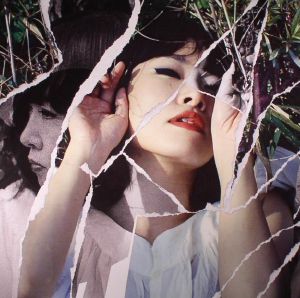
With the Asexual EP by YobKiss, Electronic Emergencies is back with a true electronic delight. YobKiss consists of Dutch instrumentalist and producer Paul Borchers, currently based in San Fransisco, and Tokyo resident Yuko Araki on vocals. Their music balances on the edge of avant-garde electronics and flirts with acid pop in dreamy soundscapes, with an analogue synth sound and beautiful vocals in Japanese and English. Or, in their own words, a pitch-dark, filth-ridden tour de force into the worlds of acid house and electro.

 The Hipodrome Of Music