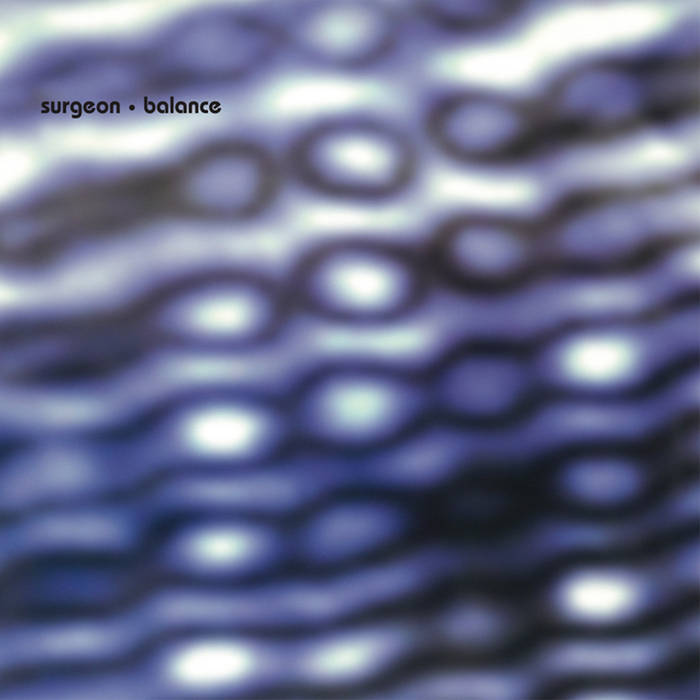
Tresor Records is fortunate enough to be sitting on a catalogue of past releases that no other label in electronic music would turn down. One of the finest in this collection were contributed by Surgeon. His inimitable combination of Detroit techno and post-industrial sounds emanating from his British homeland found its fullest expression in these masterful trio of releases. Tresor Records have decided that its time to give ‘Balance’ another airing.
Tresor Records is fortunate enough to be sitting on a catalogue of past releases that no other label in electronic music would turn down. One of the finest in this collection were contributed by Surgeon. His inimitable combination of Detroit techno and post-industrial sounds emanating from his British homeland found its fullest expression in these masterful trio of releases. Tresor Records have decided that its time to give ‘Basictonalvocabulary’ another airing.
The Romanian duo Le Brouf presents “Pattern” a 11 songs LP released by Diffuse Reality’s sublabel Periphylla Records. The band goes through several musical genres and styles, from post punk to alternative rock with electro and industrial influences. Composed of Edward Nicoara and Mircea Floruț, Le Brouf was founded in 2017 in Oradea, Romania.
Timothy J. Fairplay presents a new 8 track album ‘I Lay Awake At Night Scheming’. This is to some extent a lost album, the bulk of the album was made for a project which never came to fruition, and there’s a few tracks which have been in Timothy’s live sets for a few years, but have never had a proper release. Raw emotional synth and rhythm tracks for late nights in the dungeon.
Veyl presents an experimental sonic experience from Llimbs, the project of Hagen Ebejer. He began making music in the early 2000’s and started Llimbs in 2016 and now he arrives on Veyl with “Midnight Amber”, an 8-track album which fully realizes the Llimbs sound and vision. Inspired by dark and experimental sounds, “Midnight Amber” is a tour de force of genre-bending compositions, conjured using downtempo and dreamlike sounds which explore both the organic and digital. The result is an undefinable affair which is both haunting and infectious at once.
Known previously for his contributions of deep and hypnotic techno, Toki Fuko presents on Astral Industries a further development of his sound in this long-form work. A two-part sojourn into vibrant organic soundscapes and liminal sonic archaeologies, ”Spirit Medicine” is an ethereal yet human-centric venture into the realms of consciousness. Soft chimes mark the opening, making way for expansive pads and the emergence of a bristling jungle panorama. Solitary flute melodies call out to the valley, riding over a bed of drones and earthy rhythms. Later juxtaposed with broadcasted voice samples, the natural fabric ruptures with exposed layers spilling through, only to fade back into the ether. Perhaps a memory, or the momentary glimpse of a parallel reality. Part Two adopts an equally atmospheric flavour, substituting fauna and flora for deconstructed, psycho-somatic mysteria. Overall darker in tone, broken beats combine with avant garde adornments, underpinned by a subtle existential narrative. Wading through a wilderness of eerie remembrances, their starkness is counterbalanced with a peaceful return – a form of clarity and reconciliation that the listener is offered in the final act.
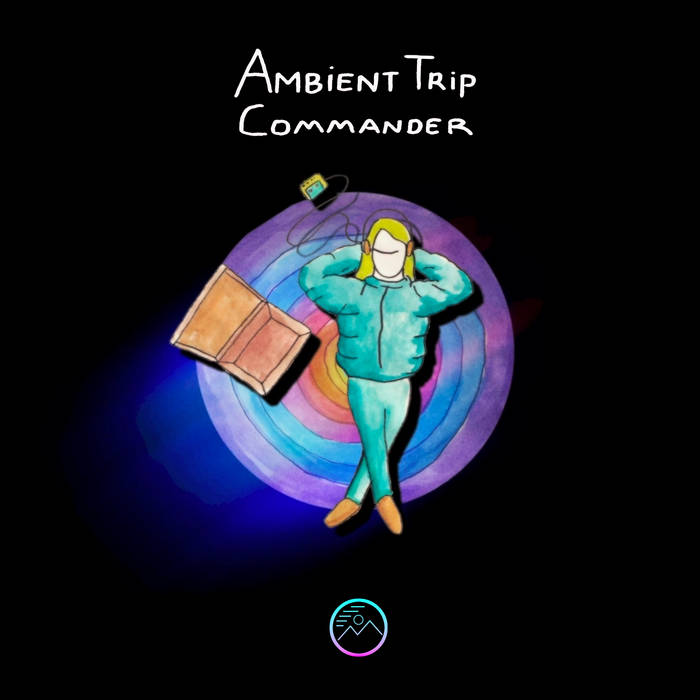
“Ambient Trip Commander” is a hand drawn/painted feature animation film made by Danny Wolfers. The film premiered on 28th of May 2022 at the EYE film Museum in Amsterdam Holland with a live soundtrack on synths by Legowelt. This is the soundtrack album of my 2022 Ambient Trip Commander animation film on cassette tape and digital.
Levon Vincent released on Novel Sound bandcamp a follow up of his cassette album “Silent Cities”. “Silent Cities II” is a perfect extension is Levon’s private moods and states.
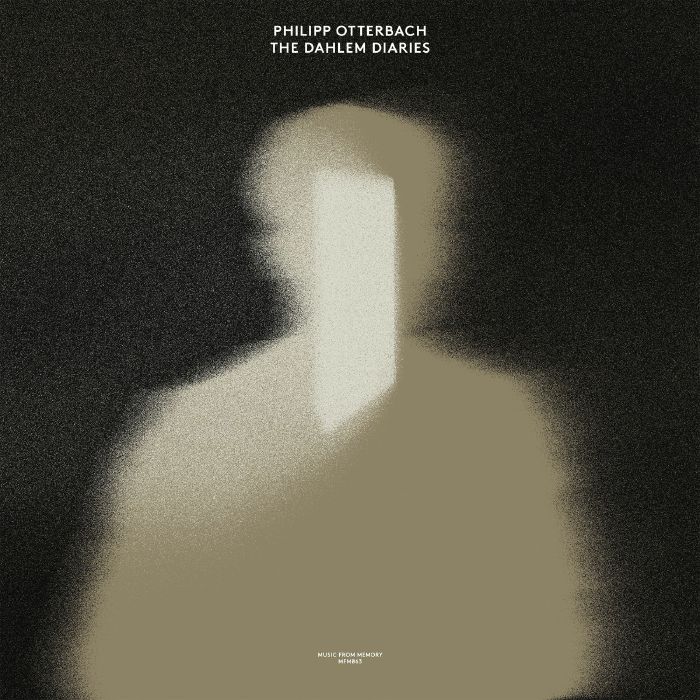
The new LP by Krefeld-born, Berlin-based artist Philipp Otterbach entitled ‘The Dahlem Diaries’. Recorded in a little-visited corner of the German capital, ‘The Dahlem Diaries’ is a convergence of ideas, sketches and tracks, both old and new, most of which were produced between 2020-2022. Whilst eerie atmospheres, electronics and drums have played a pivotal role in Philipp’s earlier releases, his latest is a rather more introspective affair, in which the guitar takes a leading role. A role Otterbach uses to quietly bring light and hope to his music. Combined with a strong use of effects and field recordings, ‘The Dahlem Diaries’ feels somewhat like a scene or fragment from a story, in which the narrative remains undefined. It is a playful album that is something of a blurred underwater adventure, sounding as bright as it is hazy, even psychedelic at times, yet with an almost melancholic positivity.
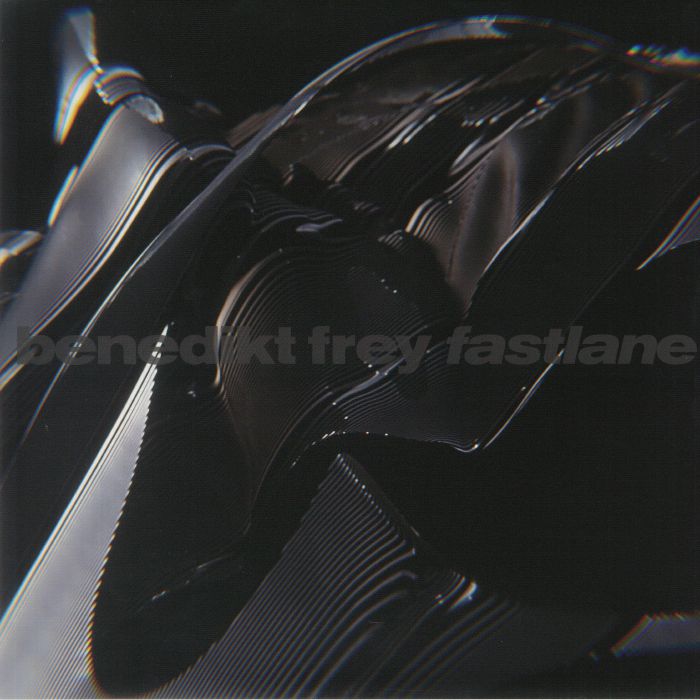
Close your eyes and merge into Benedikt Frey’s ‘Fastlane’. Imagine sitting in the driver’s seat of a an automobile, one with exceptional horsepower and torque, as you stare out the windshield at the red light, warping in fata-morgana a mile down the road. It’s a straight-away, a black top with two lanes, and against your better judgment you decide to floor the gas. No hesitation in your muscle, your ankle or the ball of your foot, which you now realize is some kind of universal pivot, the first point of contact fusing your body with the will of machine. In this moment you’re in awe that you, a human, an animal, grew from pond scum into something so advanced as to engineer this thing, a mechanical beast capable of overwhelming power and exhilaration. But you also feel a seductive dread, an outside force diverting you from caution toward a dangling carrot of curiosity, asking yourself, ‘How far can I take this thing?’ The dread, now a constant, is numbed, equalized by an adverse intoxicating gratification. You feel both sensations in real time, however, rather than take responsibility for yourself, friends, family and innocent bystanders, you cement your foot to the floor and lean your head back. Noise around you fades to mute. Smell the benzene-scented air, feel the wind on your face, the menacing vibration of the vessel you control beneath you and every grain of asphalt under its tires. This mile has now lasted an eternity and you’ve left your body for some objective view, as if watching climax of a film. Past the point of no return, you embrace abandon and lean into fate. The film becomes slow motion, a crawling pace so mesmerizing you convince yourself of an option to eject yourself from this madness, but as you finally let go of your last morsel of fear, you run the red light head-on into the nucleus of a fantastic glistening sculpture of torn metal, glass, oil, broken dreams and heartache. ‘Fastlane’ may be just drum machines and synthesizers if you’re timid, but listen harder and know the catastrophic reality of existence, a wreckage so gruesome we dare not rubberneck, but afterall it is our nature to stare.
“Marzipan” is Habibi Funk’s first full length contemporary release courtesy of Beirut’s multi-instrumental phenom Charif Megarbane, also known as the man behind prolific Cosmic Analog Ensemble. The LP is a journey into Charif’s styling, one he terms ”Lebrary”: a vision of Lebanon and Mediterranean expressed through the kaleidoscopic sonics of library music. Drawing from artists that encapsulates the HF sound, such as Ziad Rahbani, Ahmed Malek and Issam Hajali, Charif translates these influences into an LP that is equally at home in 2023. “Marzipan” is a sonic journey that seeks to capture the full scope of Charif Megarbane’s habitus in 17 tracks. Megarbane finds a sonic through-line in his surrounding soundscapes as he draws on the chaotic energy of the crowded Beirut metropolis (“Souk El Ahad”), the warm atmosphere of the Lebanese countryside (“Chez Mounir”), or the lushness of a Mediterranean beach resort (“Portemilio”). Reflecting the aural composition of his direct surroundings into kaleidoscopic instrumentation provides a unique insight into how one musical phenomenon transposes sight into sound.
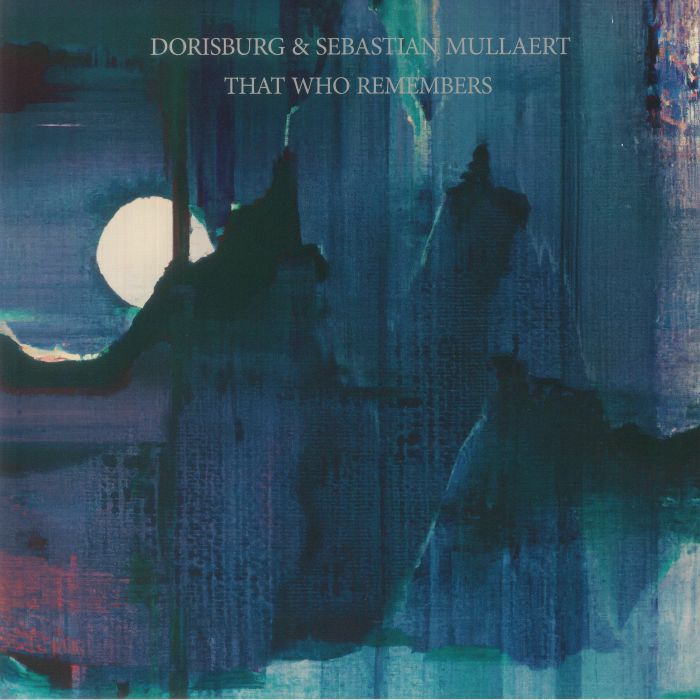
To prepare for “That Who Remembers”, Dorisburg (aka Alexander Berg) and Sebastian Mullaert set up their equipment in Malmo’s empty Inkonst venue, spending several days immersed in its atmosphere, using the lights, smoke machine, and Soundsystem to create an authentic club environment where they could freely improvise. The result is a suite of free-flowing sounds that draws on both artists’ backgrounds in reduced techno and ambient music, sailing thoughtfully through near-future landscapes and punctuating them with shimmering, kosmische textures, decaying sonic memories, and fragile rhythms. Not dance music exactly, it’s music that instead considers the spirit of an empty dancefloor, wondering which elements might remain when feet have left the building entirely.
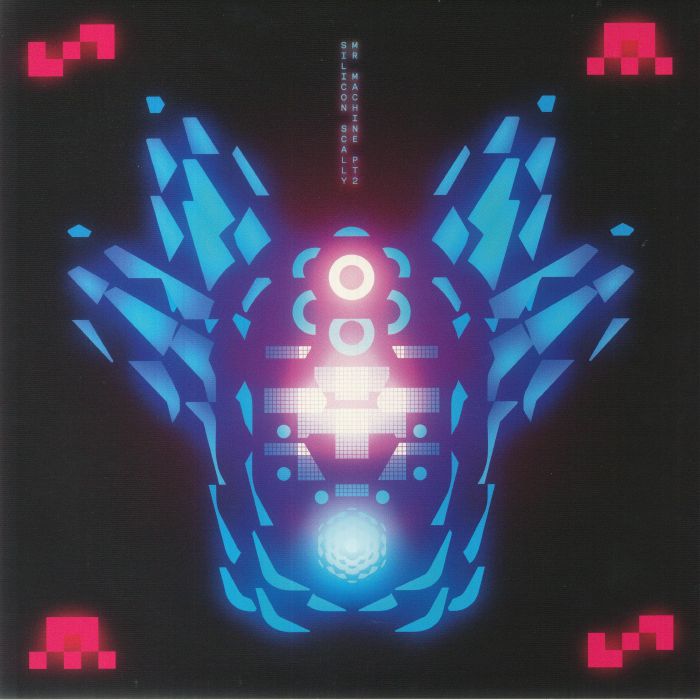
Silicon Scally, the alias of electronic music producer Carl Finlow, released his critically acclaimed album ‘Mr Machine’ in 2002 on SCSI-AV. The album was a masterful blend of electro and sci-fi soundscapes, showcasing Finlow’s unique style and production prowess, which took the listener on a journey through a futuristic world of machines and technology. It ranks as one of the finest electro records of the early noughties. Fast-forward to 2023 and Sync 24’s Cultivated Electronics label is proud to present ‘Mr Machine PT 2’. Like its predecessor, the new album is filled with intricate synth melodies, driving rhythms, and pulsating basslines, all perfectly balanced to create an immersive listening experience. ‘Mr Machine PT 2’ once again showcases Finlow’s ability to not only create relentless beats for the dancefloor but also dynamic soundscapes that transport the listener to another world. Created using a mixture of both old analog gear and very modern plugins, both albums were written with a very strong emphasis on the machine aesthetic, reflecting the cutting edge of what was available at their respective times. Futuristic and timeless. The album will be released on triple-pack vinyl and digitally.
Blotter Trax was a collaboration between two storied artists, techno titan Magda and serial underground aggravator (and man of many aliases) Jay Ahern. Now they are back in updated and expanded form, a trio thanks to the addition of bassist Hannes Strobl. The band will release their far-sighted, funk-fuelled debut album, “Superconductor”. A pulsating, thrill-in-minute ride includes contributions from a swathe of notable guests (Nina Hynes, Ilhem Khodja and David Moss provided vocals, Shigeru Tanabu played guitar, Matthew Styles mixed the set and John Tejada mastered it). While rooted in electro and acid, the album is impressively low-slung, stylish and funky, with nods towards Blotter Trax’s mutual love of Arthur Russell, early ‘80s NYC downtown disco, leftfield new-wave pop and flash-fried punk-funk.
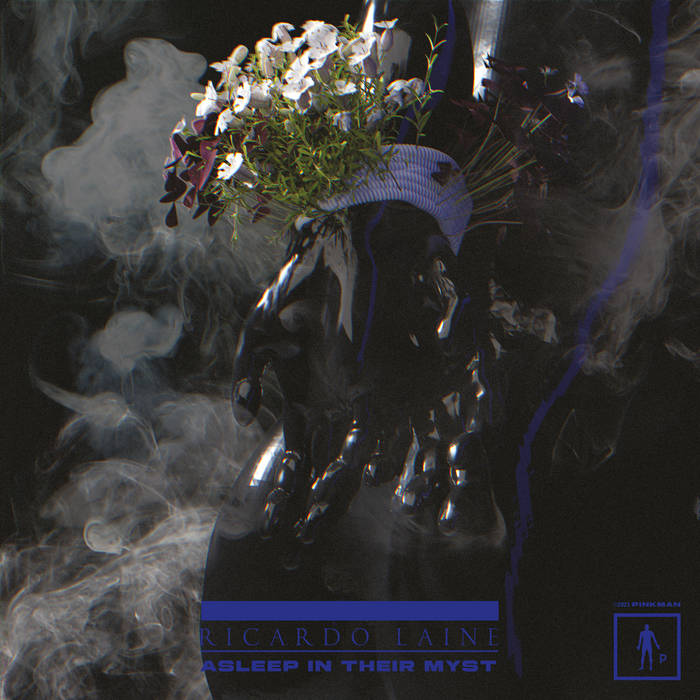
Ricardo Laine debuts on Pinkman with 10 tracks of cinematic new beat that are captivatingly packed with tension and high drama. From the opening synths of breakbeat-laden chugger ‘The High Tide’, an unnerving sense of dystopian dread builds from track to track and doesn’t let off until the very end. ‘Asleep In Their Myst’ is another chapter in the evolution of the mysterious Toronto-based artist Andre E-R – also known under the techno moniker R-oderick – and an emotionally charged reflection on self-discovery and shame. Filled with industrial jack and twisted electronics, the album is a wall-to-wall collection of club-ready compositions that are all killer, no filler.
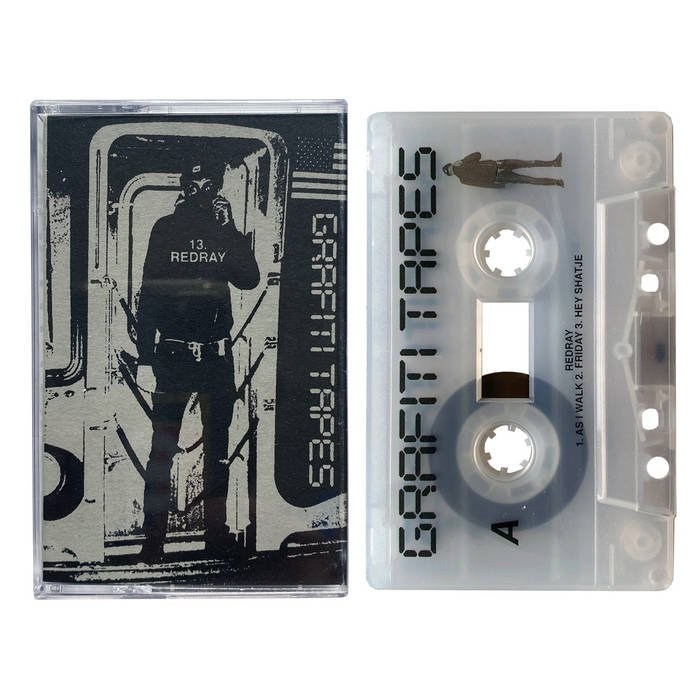
Klasse Wrecks’ Grafiti Tapes series continues on at its own pace with a new release from Antwerp based graffiti writer, tattoo artist and musician Redray. Aside from being active in the Belgium scene in the late 2000s, Redray is also enjoying great success as a tattoo artist, having co-founded Brabo’s Hand Tattoo in the center of Antwerp. For GT13 Redray turns in a charming 6 track mini-album, with all individual songs are produced by a limited pallet of sonic tools. A tried and tested combination of vocoder, 808 drum machine, keys and screwed samples of old funk and soul records provide the solid foundations. Comfortably sat in-between the genres of G-Funk and Screwed + Chopped Rap, Redray elevates the beats with catchy vocal hooks sung through a Roland SVC-350 vocoder. The result is some of the sleaziest and greasiest sauce to ever adorn a Grafiti Tape.
Clone Records releases the new sci-fi electro-techno album by The Exaltics. Its the 3rd album project for Clone Records after the 2014 ”Some Other Place” and critically acclaimed 2019 album ”2 Worlds”. The Exaltics deliver an album full of futuristic modern techno tracks with beautiful distant atmospheres, alienating techno tracks and energetic robotic electro beats. Joined by Paris the Black Fu & Mr. Remy for a critical view on the current state of affairs on our home planet.
With distorted arpeggiated synthesisers and cold metallic drum-machine patterns, William Wiffen from Yorkshire invites you to his sonic warzone. Höga Nord Rekords presents R.E.D. (Rapid Ear Damage), a stripped and harsh take on postpunk, motorik and EBM. With haunting and reverbdrenched synthesizers, Wiffen’s new project sometimes resembles acts like Two Lone Swordsmen in their dirtiest moments. R.E.D. is not a wholesome and pleasant experience. Heavily modified vocals, used more like an additional instrument, breaks through the distorted, hard, backbeat, contributing to the feeling of being trapped in a mental slit trench or bomb shelter: no light coming in – only sound.