Black Seed – Sonidos Subterraneos Episode 174

Optimo Music continue to dazzle with their increasing experimentation, this time welcoming Finnish producer and K-X-P frontman Timo Kaukolampi to the fore. Exploring the concept of sound as a physical and spatial phenomenon, the LP explores Kaukolampi’s idea of “the sphere”: his metaphysical and/or musical analogy for being subject to an undetectable outside force, as if being manipulated by an unseen cult. Hypnotic, eerie grooves play out in a muted, time-crystalline fashion, all tracks evoking the feeling of being locked in spherical amber, unwitting.

The new digital single from Italian duo Dressel Amorosi, like many of their previous productions, is perfect as a theme for the soundtrack of an imaginary film inspired by the great Italian horror films of the 70s and 80s. Indeed, it has all the sonic ingredients of that fascinating and yet disquieting world and its inextricable mixture of suspense, dream and adventure. The theme starts at the piano, originating from a sweet but haunting melody that seems to evoke distant memories, and then developing into a brilliant arrangement that combines the warmth of the prog bass played by Federico Amorosi (former bassist of Claudio Simonetti’s Goblin and a recurring collaborator of composer Fabio Frizzi) and the coldness of the razor-sharp synths played by Heinrich Dressel (aka electronic music composer Valerio Lombardozzi).
Pinkman’s resurrection of its Broken Dreams series is marked by a release of Dolphins – Benedikt Frey’s project with Markus Woernle and Nadia D’Alo. 40G evokes landscapes of doom, disorienting pleasure, and the surreal visions that occupy a sleepless night; the soundtrack to a Lynchian fantasy about the creatures that haunt the murky waters of the modern mind. It’s an album for finding yourself on a stranger’s couch, tearing at the fraying edges of another endless night, wrapped beneath a blanket of drugged-out kraut.
MTLP0012 ‘Transmissions’ will be divided into two separate releases – Part 1 and Part 2. Part 1, presented here, is released in June, while Part 2 will be released in the 2nd half of September 2023. The album was written and produced by Khidja over the last several years. Part 1 consists of 5 gems showcasing the diversity in the Romanian duo’s production – from shuffle to slow mow, to ‘chugging’ to new age 4th world…
Aufgang B never disappoint with their rough sound excursions. Finally they continue the infamous Demo series with three techno tools rich in mind-melting sound design.
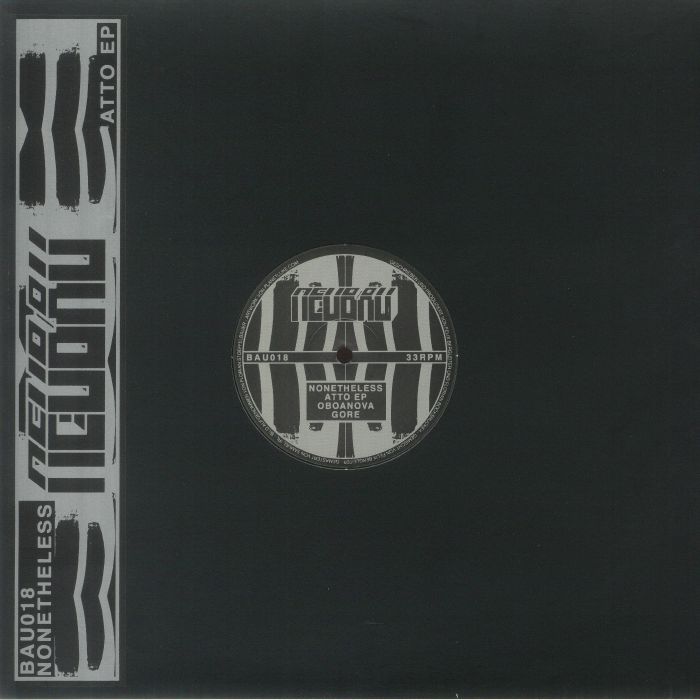
Nonetheless come forward with another sound lecture in Intelligent Downtempo Music, this time with an EP consisting of four cuts well balanced in between the dancefloor and a high fidelity sound installation.
To relaunch his seminal imprint, Infrastructure New York, Function presents his new 12″, Green EP. Celebrating 27 years of Function releases this year and the label’s 25th anniversary, the label will serve as an outlet for his new material, reissues of out of print classics from Synewave, Sandwell District and Ostgut Ton (and of course, Infrastructure), as well as developing new artists. Green EP encapsulates the same raw power and hypnotic energy of his genre defining Sandwell District releases updated with a modern flair.

‘2023’ is the rather unexpected new project of the Dutch cult hero Wladimir Manshanden. 32 years ago, in 1991, Wladimir M founded together with techno icon Stefan Robbers, one of the first Dutch techno labels: Eevo Lute Muzique. While Robbers (as Terrace and Acid Junkies) pursued an international techno career in the years that followed, Manshanden preferred to remain in the shadows. His discography is as small as it is peculiar. But his track ‘Evil’ is an undisputed classic. On ‘2023’ he disassembles the eighties pop hits of his youth into sober, futuristic spoken-word techno. On the one hand, he does not shy away from some cringe (Dire Straits, Simple Minds, Tina Turner). On the other, he pays tribute to some genuine electronic heroes like Kraftwerk, New Order or Master C&J. The path to the bare essentials leads through a futuristic labyrinth. Along the way, you get hints of monotone voices, cipher codes and wondrous Dutch titles like ‘Privé Onderzoek.’ The outcome is alienating and magical at the same time.
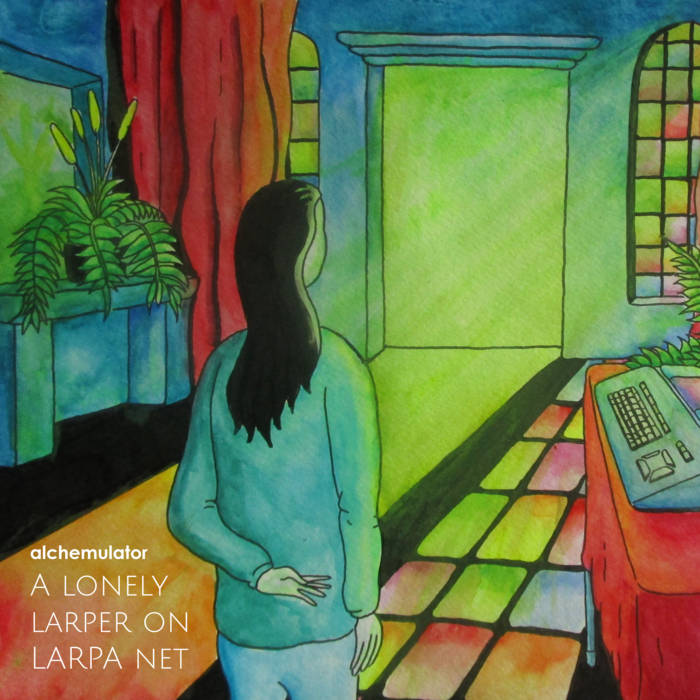
This is the follow up the 2021 Alchemulator – “Larping At Fairsnake Hamlet” album that was released on Hunger! records. The sound goes in a bit of a different direction, the cheap digital FM homekeyboard is replaced with simple FM synths, old “obsolete’ samplers and some other stuff. There are a lot of vocals and experiments with them. I would describe them as synthesizer ballads…or hauntological hypnogogic synthesizer folk songs….a bit of a devotional psychedelic spacejazz influence. Instruments used: AKAI X7000, S900, Yamaha DX100, Yamaha DX21, Arturia Microfreak, Korg Microstation, Yamaha PSR373, Alesis Quadraverb, Alesis Midiverb II ZOOM mS70CdR, zILog Vocoder, Soundcraft Mixing desk, computer running Ableton Live.

Mule Musiq dives into the archives of humanoid Ambient music history, bringing the vinyl premiere of a classic work by German DJ, producer, and musician David Moufang, globally known as Move D. Released in 1995 on Pete Namlook’s fabled Fax +49-69/450464 label, the album marks his only output as Solitaire, featuring heroic, supple ambient scenes, that some people call one of the best works by Move D.

The Black Dog exploring the old ways… ”We pushed further by adopting old practices, working with one synth per person and limiting the use of our computers. We only stopped short of putting everything on beer crates. It seems like madness these days, but there is raw creativity within these confines.”

Natural Sciences Recs and Harsh Reality Music team up for the first reissue of Henry Hektik’s Motion P. Music. A figure who collaborated with M. Finnkreig and active in the 80’s German underground and tape trading circuit, he disappeared off the grid, leaving few documents of his music behind, with the handful of remaining tapes swallowed by mould or fried in electrical accidents. What is left is true unhinged tracks from the edge, with six cuts of jacking proto-house (Haiwasa, T.B.A), night-stalker surveillance wave jams (Hong Kong Wedding Night), Black ops narco paranoia (Private Apocalypse) and static knuckle-dragging workouts (Here Comes Escape).

An intriguing and revealing hypnotic immersion from the enigmatic duo JUNA. “Archetipo” explores the landscapes of the unconscious. The word “persona” in Latin means mask: thus the personality, the scenery of the ego, is transformed into a theatre of archetypal images, merging word and music, like a rhetorical figure, a synesthesia. The aesthetic-musical research is a poetic-sound journey into the psyche, to tell and celebrate it.

After her debut on Mannequin in 2019, Dissemblance now arrives on L.I.E.S. with her second full length of somber, cold wave and emotional bedroom pop infused songs. This time around we hear the Parisian artist add a new arsenal of instrumentation to her repertoire, incorporating live drumming and a wide array of synthetic instrumentation on top of her drum computers providing a backdrop to showcase her stark vocal performances throughout the album. Meticulously constructed, this record displays the full range of Dissemblance’s musical dynamics as she pulls the listener into her universe where dreams and reality tread a thin line, one blurring into the next with no beginning nor end. She expertly brings together a diverse group of styles and sounds from different areas of the electronic spectrum making them her own. An extremely unique and strong display of modern minimal synth pop that pulls equally from the past whilst propelling towards the future.

On 26 February, hundreds of Israeli settlers went on a violent late-night rampage in Huwara and other villages in the northern West Bank, leaving one local resident dead and 100 others injured and the town ablaze. This compilation of music was put together in order to raise funds that can hopefully give some aid to the residents of Huwara, all of the proceeds Confused Machines make from digital sales will go directly to Physicians For Human Rights – Israel (PHRI) www.phr.org.il An NGO that works in the occupied Palestinian territory, promoting Palestinians’ right to health and providing direct medical and humanitarian assistance. The compilation hosts a roster of both local and international artists spanning a wide spectrum of leftfield electronic music. Acid, Drone, Noise, Downtempo, Techno, SoundCollage and more. All of these tracks are new and have not been heard before, many of them have been created with Huwara and Palestine in mind.

“Recreational Kraut”, the latest release on the recently relaunched Source Records label, is a collaboration between Jordan Czamanski (aka Jordan GCZ) and David Moufang (aka Move D). “Recreational Kraut” was recorded live in in three sessions in Jordan’s Amsterdam studio in 2018 and 2019. As the title suggests, the album flirts with the term and the “genre” krautrock and it’s prolonged, often improvised instrumental passages. The equipment used in the late 60s and early 70s was often rather conventional like electric piano, old synthesizers and electric bass guitar. The two instruments shaping the album and giving it a coherence, despite the varied styles and tempos are Czamanski’s Fender Rhodes and Moufang’s lyra-8, an 8 oscillator drone synthesizer which is played manually via touch sensors, giving it a very expressive sometimes violin-like other times outer-worldly, atonal character. The album’s 11 tracks span beat-less ambient soundscapes to jazzy psychedelia, as well as hints of house, techno, broken beat and funk.
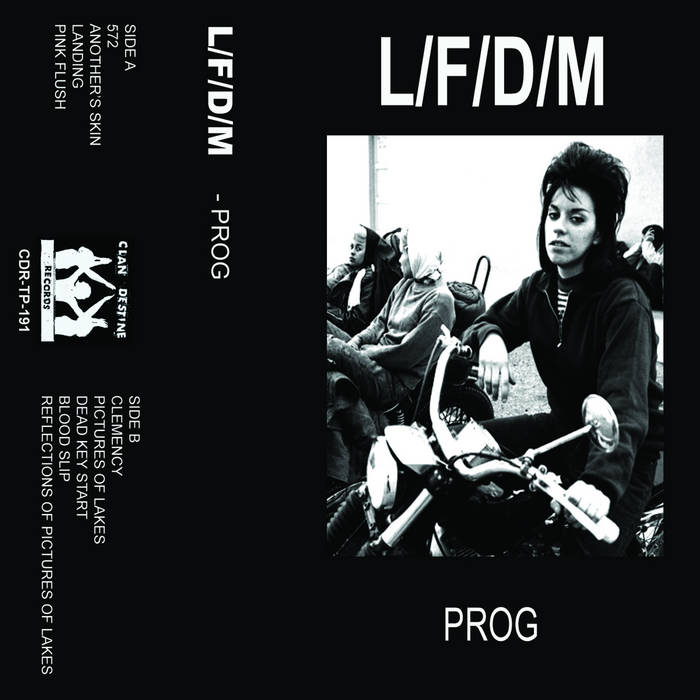
L/F/D/M returns with yet another stellar album of underground house and techno.

New imprint Silver Triplet enters the world with a rocket of a collaborative album from two of electronic music’s most free-spirited mavericks. Combining the surrealist punk ethos of Scotch Rolex and the bass heavy psychedelia of Shackleton, Death by Tickling is ten tracks full of wild and unpredictable changes, incorporating odd time signatures, cosmic synth freak outs and dubbed out space vibrations. At times the album lulls the listener into a zoned out trance whilst at other times it startles with its ferocity, Death by Tickling has the whole range in its Helter Skelter approach.

 The Hipodrome Of Music