Funken Wavetropi busted onto the scene last year with his debut release on his then brand new imprint, Perfect Straight. This is his second release featuring some funky and bouncy bassline house. The EP inclused a Ben Houghton remix.
Funken Wavetropi busted onto the scene last year with his debut release on his then brand new imprint, Perfect Straight. This is his second release featuring some funky and bouncy bassline house. The EP inclused a Ben Houghton remix.
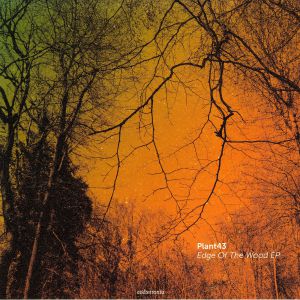
Edge of the Wood is the first release on new label Eudemonia. Emile Facey lives in Penge, South East London. ‘When writing this music I became very interested in the history of the area I live in, imagining what it had been like when the ancient Great North Wood was still standing and the now busy urban area was a tiny hamlet sitting at the edge of a vast forest. I read that Penge was first recorded under the name Penceat in an Anglo-Saxon deed dating from 957 and that many historians believe the name of the town is derived from the Celtic word Penceat, which means “edge of wood”. The Porcupine Meadow and a toll gate were important landmarks in the area.’
Final part in the series “Soul of the Automaton” by Versalife closing it in style and with fine electro orientated elegance and crispy sounddesign.

Luxus Varta makes his debut on brokntoys with “Then We Fall”. The mysterious producer delivers 6 tracks of intricate, experimental, weirded out electro & electronica.

One of the most pivotal figures in the history of Malian music is Sorry Bamba. His work spans five decades and his music bridges the gap between Mali’s cultural traditions and new the music which arose from the musical cross overs which occurred in Mali’s post-Colonial period. Bamba was born in 1938 in Mopti. This is dissected by both the Niger and Bani rivers and known for its rich cultural diversity. Bamba’s father was a distinguished veteran of Emperor Samory Toure’s military and a nobleman in Malian society; however, this meant young Sorry was forbidden to make music, as under the nation’s caste system, music was an art form reserved for the Griots. At the age of 10, Sorry’s parents died and in traumatic times that followed the young teen found solace in music. He first taught himself to play am African six-holed flute. As he progressed he began to absorbed the rich tapestry of music of his surroundings; traditional Malian music, highlife from Ghana, local accordion master Toumani Toure, European singers and musicians. In 1957 Sorry formed his first band, Group Goumbe, named after a popular Ivory Coast dance style. In 1960 Mali gained independence from France, Bamba and his group benefited from a new openness toward local music on the state-run radio network Radio Mali. Sorry then went on to form two award-winning, further collectives Bani Jazz and later the Kanaga Orchestra. They fused Latin jazz, Western R&B, Psychedelic and funk, and traditional Malian styles made them a favourite in Mali and beyond.

In the late 1990’s label manager Nik Weston was working for Island Records and in particular the label imprint Island Blue set up by Ross Allen. It was here that he first heard the timeless jazz version masterpiece of Amalia from Kirk Degiorgio’s As One. The track featured on a promo CD but never made it to a commercial release for Island Blue and was later featured on the full length album release for San Francisco label Ubiquity Records a few years later in 2001. ‘Amalia’ is a sultry jazz classic featuring gorgeous keys from Jamie Odell aka Jimpster. As relevant today as it ever was when initially made and here presented as a single in it’s own right for the very first time. On the flipside another track that never made it to single in this version was the unique jazzual ‘Spiritual Rotations’ by Butti 49 from Norway. Nik had later worked with Butti 49 whilst working for Exceptional Records for the Habit album in 2004 but ‘Spiritual Rotations’ itself initially featured as an exclusively album only track for Future Sounds Of Jazz Volume 8 in 2001 for German label Compost.

Three expansive edits of Turkish funk and psychedelia, each dubbed out through tape delays and spring reverbs, as well as carefully EQ-ed and mastered for an enhanced sonic experience. Side A kicks off with the low slung funk of ‘Ayçiçegi’, featuring an infectious bassline which weaves between subtle flashes of spring reverb, whispered vocals, each underpinned by pounding drums. Side B begins with ‘Biz Burdayiz’ , a relentless drum loop and singular vocal hit looped around and manipulated with tape delays, and the record closes with ‘Günesi Kesin’, a tense funk break which builds before reversing inside of itself.

Steve Parker’ continues to raise awareness off what he can do in the scene. This ”Interplanetary Dust LP” is another example of what he is capable of. A 2×12” containing 8 powerful tracks that fits right into the resume of our widely ranged techno collection.
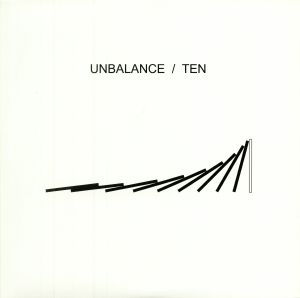
Seven years ago, Unbalance created his own label as a base for his musical ideas; a platform to play around with the conception of what ”techno” is and would be alongside his own creative progression. Come to present day and the label is now at its ninth release, reaching a point where the line of accumulated experiences must be drawn in the sand — and the experiences of previous projects and releases lead to venerable conclusion. Enter Ten, an album of internalized strife that was created during a period of big changes in the artist’s life. Between enduring personal experiences, his creative output veering between his straightforward club eccentricities and subdural sensibilities; Unbalance cultivates a symbiotic link between sounds played and sounds portrayed — whilst paying tribute to the essence of groove, vibration and the hypnotic unknown that exists to balance the scales. This album will be the final point in the label’s journey into the depths of multifaceted techno music.
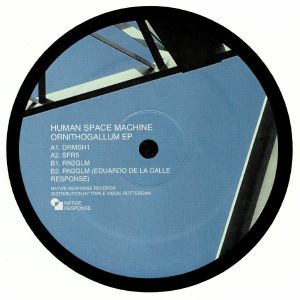
Human Space Machine steps up for the third Native Response release, including Eduardo de la Calle remix. Functional techno grooves with cosmic synths and arpeggios.

Mannequin’s 100th – a compilation looking forward featuring an international and serious cast. The modern synthwave scene would be significantly poorer without the keen ear and tireless efforts of the Mannequin label run by Alessandro Adriani. Mannequin continues to go on exploratory missions to find the best and most relevant aspects of genres like acid, industrial, EBM, post-punk, coldwave and still more. Which brings us to Mannequin’s newest project and 100th release overall: the Waves of the Future double LP compilation, which itself is not a conventional retrospective collection. Case in point – none of the artists appearing on this collection have put out their own releases on Mannequin yet, despite acting as Mannequin’s unofficial ambassadors (via DJ sets and other means). This makes the set even more compelling rather than less so, since it shows how Mannequin fits into a larger picture that includes other scene leaders and label owners including Beau Wanzer, Willie Burns, Silent Servant and Ron Morelli.

Body Music LP produced by a man who needs little introduction. Thomas P. Heckmann has flexed his prowess across all shades of electronic music, but it’s his contributions to EBM-techno, acid, industrial, and experimental that has earned him his notoriety. Heckmann has utilised 30 years worth of acquired knowledge to create a hard-hitting album which bears all the grit he is known for – harmonising analogue and digital wares to create an utterly immersive 14 track album.

After a first EP of the year from STL, the Solar Phenomena label now welcomes Romania’s Romansoff. The Raw Tools label boss hails from Bucharest and has also released his gritty, stripped back house and techno on Creme Organization and Sportiv. Here he offers four new tracks, with one remix from Timedance man Ploy completing the package. ‘Halo’ epitomises Romansoff’s style with its slow, heavy drums and sparse, scattered perc sounds. A lo-fi melody adds colour, while ‘Coach Jacket’ ups the ante with busier claps and crashing hits laid over a turbulent, unsettled bassline. Increasing the pressure further, ‘Graded’ grows manic with punchy drums, layers of fuzzy synths and bass and distant cries that are dark and unsettling. Ploy flips this one into a prickly and atmospheric drum track that keeps you on edge and Romansoff’s digital exclusive ‘Michigan Lake Tapes’ is a slow motion workout with unsettling synths and tortured pads that grows ever more unhinged. It rounds out a leftfield house EP in style.


Cómeme starts 2018 by proving again to be a safe haven and a sanctuary for sensitive plants and unique characters devoted to music – just like Miruna Boruzescu aka Borusiade – from Bucharest. This is the first album of Borusiade, in which she takes her music to a new level, finding her very own expression, that is making us first shiver then sweat, then chill and finally melt. Her visions unfold through 8 pieces of music that follow a dreamlike narrative of associations and transformations. Somber synthetic atmospheres, sparse and spatial rhythmical arrangements, strangely seductive melodies and lysergic ally pulsating bass lines lead us away from a dystopian present towards a sensorial experience we long to repeat as soon as it’s over. ‘A Body’ is a deeply poetic work in which again and again you will hear Borusiade’s voice, sometimes dissolving and recreating meanings in mantra-like repetitions, sometimes layering itself to pagan choirs of smooth ecstasy. Then again you will also hear that voice close to you, singing, sharing an experience or a thought. It is always soft, effortless and unpretentious, but always strong, clear and precise, like the voice that speaks to you in an altered state of consciousness. It seems to come from the same person that is holding your hand, when everything else seems to fade into uncertainty while wandering through strange times and places.
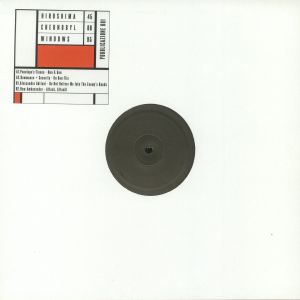
New label from Italy Hiroshima 45. Chernobyl 86. Windows 95. The first release comes with four tracks from Penelope’s Fiance, Rawmance + Security, Alessandro Adriani and Raw Ambassador.

Inversions announce their fourth record release – a further collection of unreleased tracks from Rodion Roșca’s archives, credited to his three-piece band Rodion G.A. The tracks are culled from several studio recording sessions, and one track recorded in Rodion’s home studio. The first sessions, at Radio Cluj over the period 1978-79, produced the basic instrumental backing for what would become “Nu Tu Vei Fi,” “Ore,” “Bătrânul Cais,” and “Moment.” Rodion applied the triplicate vocals and effects that would transform them into the finished tracks at home on his Tesla reel to reel machine. When the last session was complete, Rodion asked the engineer if he could record the instrumental tracks directly from the mixing console on to his Tesla machine. A genius stroke, as he was subsequently able to create many further tracks using various repeated rhythms and loops from this same material, tracks equally individual and unrecognisable from the source, such as “Uneori.” This earned him the accolades “Orchestra Man,” and the “First One-Man Band in Romania.” The second session, at the radio station in Bucharest in 1983, was more straightforward, with the tracks “Tamburași, “Satul De Roua” and “Tic Tac” all finished then and there. “Singur Pe Drum,” although written in Rodion’s teens, was not recorded until 2010 in his home studio. The record is a collection of tracks with a slightly rougher garage or psychedelic rock edge than the more electronic sounding works that have re-surfaced on recordings in the last few years.
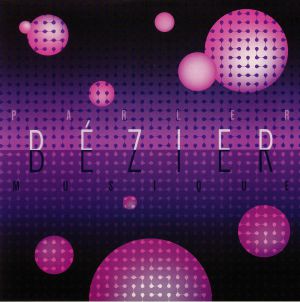
Dark Entries release the debut album from Bézier titled ‘Parler Musique’. Bézier is Taiwanese-American musician Robert Yang who is also part of the Honey Soundsystem crew. A multi-instrumentalist, Robert grew up in Southern California then planted his roots in San Francisco in 2005. Over the years in SF he has built an impressive analog synth-based studio, which also serves as the creative hub for his riveting live performances. Parler Musique clocks in at over 52 minutes with 8 tracks are spread across four sides for maximum loudness. The album title is a French transliteration on the phrase “Parlor Music” and is evening music for a meeting of minds in a drawing room or a literary salon. To ‘talk about music’, the actual translation of the title, the album is a hotbed of ideas. Different genres are crisscrossed: punk, synthpop, jungle, new romantic, industrial and new wave. Airy melodies, surging arpeggios and symphonic breakdowns counterpoint cold digital drum sounds to convey beauty within inescapable and impending daily processes.

A Compilation of Minimal Wave From Around The World (1980-1991), The Bedroom Tapes features rare, unreleased, and licensed tracks all the way from Belgium to Australia to Japan. The Bedroom Tapes excitedly marks Minimal Wave’s 66th release and is a follow up in the series to The Lost Tapes, The Found Tapes, The Hidden Tapes and of course The Minimal Wave Tapes. The twelve artists on this compilation mostly recorded their music onto 4-track tape in their bedroom studios. The sounds on this record range from German new wave to experimental electronic, to early industrial body music from the Swedish countryside, to dreary melodic minimal synth. The theme is music recorded in the bedroom for listening in the bedroom. The Bedroom Tapes presents songs from Pink Elln, Karen Marks, Disque Omo, Vorgruppe, Iham/Echo, Perfect Mother, Arvid Tuba, Subject, Denial, Unovidual, Aural indifference, and Autumn all lovingly remastered.
 The Hipodrome Of Music